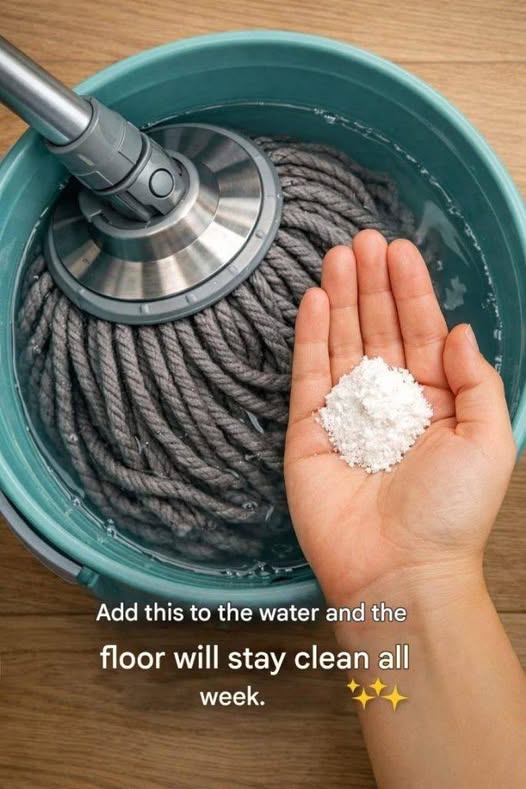
Put This Ingredient in Your Bucket and Your Floor Will Stay Clean All Week
Keeping floors clean can feel like a never-ending chore. You mop, everything looks fresh, and somehow a day or two later the floor is covered with footprints, dust, and dull-looking marks again.
One simple cleaning habit can make your routine easier: adding a small amount of white vinegar to your mop water. Vinegar’s mild acidity can help cut through certain residues and leave some hard, non-porous floors looking fresh.
But there’s an important catch: vinegar isn’t suitable for every type of flooring, so knowing where and how to use it matters.
The Simple Floor-Cleaning Mix
For suitable sealed floors, you can make a basic cleaning solution with:
- 1 bucket of warm water
- About ½ cup of white vinegar
Mix the solution well and use a well-wrung mop rather than soaking the floor.
After mopping, allow the surface to dry naturally or use a clean microfiber cloth for areas that tend to show streaks.
Why Vinegar Can Help
Vinegar contains acetic acid, which can help dissolve certain mineral deposits and residues. This can make it useful for cleaning some sealed, hard surfaces.
However, it isn’t a magical barrier that prevents dirt from returning for an entire week. How long your floor stays clean depends on foot traffic, pets, cooking activity, dust, and the type of flooring you have.
The Most Important Part: Don’t Use It Everywhere
Avoid using vinegar on natural stone surfaces such as marble, limestone, and some types of travertine, because acids can etch or dull these materials.
You should also follow your flooring manufacturer’s cleaning recommendations, especially for hardwood, laminate, luxury vinyl, and specialty finishes.
If you’re unsure, test any homemade solution on a small, inconspicuous area first.
A Better Way to Keep Floors Looking Clean
The cleaning solution is only part of the equation. A few simple habits can make a bigger difference:
Use a Doormat
A good doormat at entrances can capture dirt and grit before it reaches your floors.
Remove Shoes Indoors
Shoes can bring in dust, mud, oils, and other debris. A no-shoes policy can significantly reduce the amount of dirt that needs to be cleaned.
Mop With Clean Water
If your mop water becomes visibly dirty, replace it. Otherwise, you may simply spread the dirt around.
Don’t Overuse Cleaning Products
More cleaner doesn’t necessarily mean a cleaner floor. Excess product can leave behind a sticky residue that actually attracts dust.
Use Microfiber
A clean microfiber mop can pick up fine dust and debris effectively while using relatively little cleaning solution.
Never Mix Vinegar With Bleach
This is especially important.
Never mix vinegar with chlorine bleach or products containing bleach. Combining acidic products with bleach can produce dangerous chlorine gas.
If you’re using a commercial floor cleaner, don’t add vinegar to it unless the manufacturer specifically says the combination is safe.
Final Thoughts
A little white vinegar in the right amount of water can be a useful, inexpensive cleaning option for certain sealed, acid-safe floors. But the idea that one ingredient will keep every floor perfectly clean for seven days is more of a cleaning myth than a guarantee.
For the best results, match your cleaner to your flooring, avoid excessive moisture, use clean tools, and deal with dirt at the door before it ever reaches the floor.