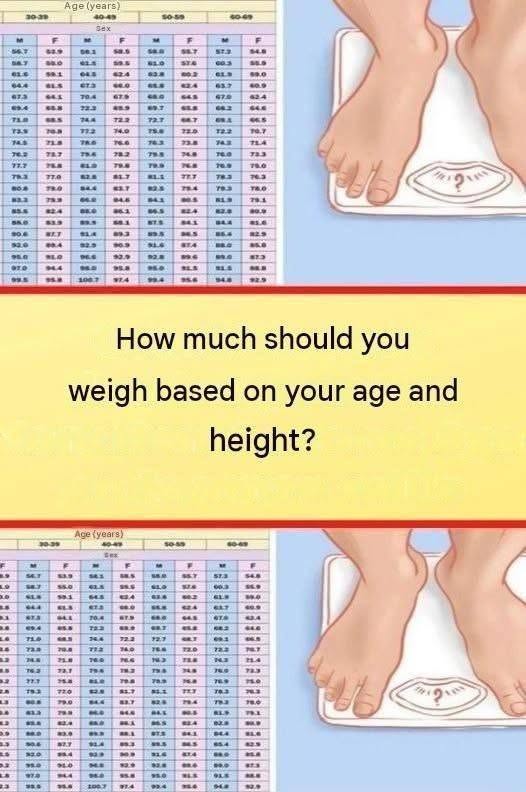
Many people wonder, “What should I weigh for my age and height?” The answer isn’t a single number. Your healthy weight depends primarily on your height, body composition, sex, muscle mass, and overall health. Age can influence body composition and metabolism, but it doesn’t create one universal “ideal weight.”
Why Height Matters More Than Age
For adults, one commonly used screening tool is Body Mass Index (BMI). BMI compares your weight with your height:
BMI = weight (kg) ÷ height (m)²
For most adults, a BMI of 18.5–24.9 is considered the healthy-weight range. However, BMI is only a screening measure—it doesn’t distinguish between muscle, fat, bone, or differences in body composition.
For example, two people who are the same height and weight can have very different body compositions and fitness levels.
A General Adult Weight Guide
Here is an approximate weight range corresponding to a BMI of 18.5–24.9:
| Height | Approx. healthy-weight range |
|---|---|
| 5’0″ (152 cm) | 43–58 kg |
| 5’2″ (157 cm) | 46–61 kg |
| 5’3″ (160 cm) | 47–64 kg |
| 5’4″ (163 cm) | 49–66 kg |
| 5’5″ (165 cm) | 50–68 kg |
| 5’6″ (168 cm) | 52–70 kg |
| 5’8″ (173 cm) | 55–75 kg |
| 5’10” (178 cm) | 59–79 kg |
| 6’0″ (183 cm) | 62–83 kg |
These are general adult ranges, not personalized medical targets.
Does Your Age Change Your Ideal Weight?
Not necessarily.
For adults, there isn’t a separate official “ideal weight” for every age—for example, one perfect weight for someone aged 25 and another for someone aged 45.
As people get older, however, they may naturally lose muscle and gain body fat. That’s why strength, physical activity, waist circumference, nutrition, and overall health can be just as important as the number on the scale.
check this weight machine on amazon

What About Children and Teenagers?
BMI is interpreted differently for people under 20. Children and teenagers are assessed using BMI-for-age percentiles, which account for age and sex. Adult BMI categories should not simply be applied to children.
Your Waist Size Can Tell You More
Weight alone doesn’t tell the whole story. Where your body stores fat also matters.
A larger amount of abdominal fat is associated with a higher risk of conditions such as type 2 diabetes and cardiovascular disease. Measuring your waist circumference can therefore provide useful additional information alongside weight and BMI.
Don’t Chase a “Perfect” Number
A healthy weight isn’t necessarily the lowest weight you can reach.
Instead of focusing only on the scale, consider:
- Eating a balanced, nutritious diet
- Getting regular physical activity
- Maintaining muscle strength
- Getting adequate sleep
- Keeping blood pressure and blood sugar in a healthy range
- Maintaining a waist size appropriate for your body
- Discussing significant weight changes with a healthcare professional
The Bottom Line
There is no single ideal weight for a particular age. For adults, height and body composition are much more useful starting points. BMI can help estimate a healthy weight range, but it should be interpreted alongside other health measures.
If you’re trying to determine a healthy target weight for yourself, a doctor or registered dietitian can consider your height, age, sex, muscle mass, medical history, and lifestyle rather than relying on the scale alone.