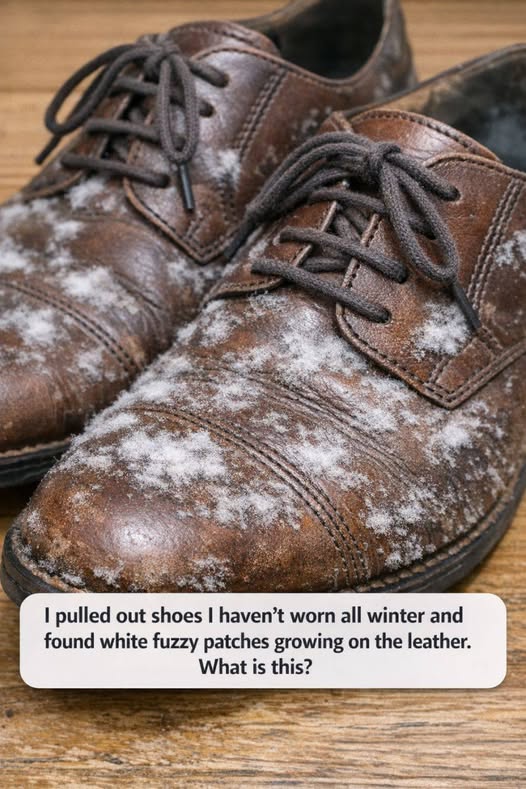
Found white fuzzy patches on leather shoes after storing them all winter? Learn whether it is mold, mildew, or leather bloom, what causes it, how to clean it safely, and how to prevent it from coming back.
You pull your favorite leather shoes out of the closet after months of winter storage, expecting them to look exactly as you left them. Instead, you notice strange white fuzzy patches spreading across the leather.
At first glance, it can look alarming. Is the leather ruined? Is it some kind of chemical reaction? Can the shoes still be worn?
In many cases, those white patches are a sign of mold or mildew, particularly if the material looks fuzzy, has a musty smell, or appeared after the shoes were stored somewhere damp or poorly ventilated.
However, not every white substance on leather is mold. Another possibility is leather bloom, a harmless waxy or fatty deposit that can sometimes develop on certain types of leather.
Understanding the difference is the first step toward deciding how to clean and protect your shoes.
What Are the White Fuzzy Patches?
If the patches genuinely look fuzzy, hairy, cotton-like, or slightly raised, mold or mildew is the most likely explanation.
Mold is a type of fungus that grows when it has access to moisture, organic material, and suitable environmental conditions. Leather is particularly vulnerable because it is an animal-derived material that can retain moisture.
Shoes that spend several months in a closed cupboard, basement, storage box, or other poorly ventilated area can develop fungal growth if even a small amount of moisture is trapped inside or around them.
The problem can be made worse when shoes are stored immediately after being worn. Sweat and moisture from your feet can remain inside the shoe, even when the exterior appears completely dry.
Why Does Mold Grow on Leather Shoes?
Mold doesn’t necessarily mean your shoes were dirty. Often, it is simply a consequence of the storage environment.
Several factors can contribute:
1. Moisture
Moisture is one of the biggest contributors to mold growth.
Shoes may pick up moisture from rain, snow, wet floors, perspiration, or humid air. If that moisture doesn’t evaporate completely before storage, it can remain trapped in the leather or lining.
2. Poor Airflow
A tightly closed closet or storage container can create a stagnant environment.
When there is little air circulation, moisture evaporates slowly, increasing the possibility of fungal growth.
3. High Humidity
Even shoes that were perfectly dry when stored can develop problems if they’re kept in an area with consistently high humidity.
Basements, garages, enclosed wardrobes, and storage rooms can sometimes have higher humidity than expected.
4. Long-Term Storage
Leaving shoes untouched for months gives mold plenty of time to develop if the conditions are suitable.
This is why the problem may seem to appear suddenly when you take your shoes out after winter, even though the growth actually developed gradually.
5. Storing Shoes While Damp
This is particularly common with winter footwear.
Shoes exposed to snow, rain, or wet conditions should be allowed to dry thoroughly before being stored. Simply wiping off visible water isn’t always enough.
Is It Mold, Mildew, or Leather Bloom?
This is where things get interesting.
White material on leather isn’t automatically mold.
Mold or Mildew
Fungal growth is more likely if the substance:
- Looks fuzzy or hairy
- Has an irregular appearance
- Appears in patches
- Has a musty or earthy odor
- Seems to spread over time
- Is concentrated around damp areas
- Appeared after prolonged storage in a humid environment
Mold can appear white, gray, green, black, yellow, or other colors, so color alone isn’t enough to identify it.
Leather Bloom
Leather bloom is different.
It can appear as a white, cloudy, powdery, waxy, or slightly greasy-looking coating on leather. It is associated with waxes, oils, or fats within certain leather finishes migrating toward the surface.
Unlike mold, bloom generally isn’t fuzzy or hairy.
It may also disappear or reduce considerably when gently wiped or warmed, although care must be taken not to damage the leather.
Salt or Mineral Deposits
Winter shoes can also develop white marks from salt and other minerals, especially if they have been exposed to salted roads or sidewalks.
Salt stains usually look more like crusty or powdery marks rather than fuzzy growth.
So, if your shoes came into contact with snow and road salt, don’t automatically assume every white mark is mold.
What Should You Do First?
Don’t immediately start scrubbing the shoes inside your bedroom or living room.
If you suspect mold, move the shoes to a well-ventilated area first.
Avoid shaking them vigorously because you don’t want to unnecessarily spread contaminated dust or particles around your home.
If the growth is extensive, wearing gloves and taking sensible precautions while handling the shoes is a good idea.
How to Clean Mold From Leather Shoes
The exact cleaning method depends on the type and finish of the leather. Always check the manufacturer’s care instructions first and test any cleaning method on a small, inconspicuous area.
Step 1: Move the Shoes to a Ventilated Area
Take the shoes somewhere with good airflow, preferably outdoors if practical.
Keep them away from clothing, bedding, and other items until you’ve dealt with the visible growth.
Step 2: Remove Loose Growth
Use a soft brush or disposable cloth to gently remove loose surface material.
Don’t aggressively scrub the leather. Excessive friction can damage the finish and push contamination deeper into textured surfaces.
Step 3: Wipe the Surface Carefully
Use a lightly dampened cloth appropriate for the leather type.
The goal is to clean the surface without soaking the shoe.
Leather generally shouldn’t be saturated with water because excessive moisture can cause additional damage.
Step 4: Let the Shoes Dry Completely
Place the shoes somewhere dry with good ventilation.
Avoid putting them directly against a radiator, heater, hair dryer, or other intense heat source. Rapid heating can dry leather excessively, cause cracking, or affect adhesives and finishes.
Give the shoes plenty of time to dry naturally.
Step 5: Condition the Leather if Appropriate
Once the shoes are completely dry, a suitable leather conditioner may help restore some moisture and flexibility.
However, not every type of leather should be treated with the same product.
Suede, nubuck, patent leather, finished smooth leather, and unfinished leather require different care.
If you’re uncertain, follow the manufacturer’s instructions or consult a professional leather-care specialist.
What Should You NOT Use?
One of the biggest mistakes people make is reaching for whatever household cleaner happens to be nearby.
Avoid using bleach or harsh household chemicals on leather unless the manufacturer specifically states that the product is suitable.
These substances can discolor leather, weaken finishes, dry the material, or cause permanent damage.
You should also avoid soaking leather shoes in water.
The objective is to remove the contamination while preserving the leather—not create a second problem during cleaning.
What If the Shoes Still Smell Musty?
A persistent musty odor can indicate that moisture or fungal contamination remains somewhere inside the shoe.
Don’t simply cover the smell with perfume or air freshener.
Instead, allow the shoes to dry thoroughly and inspect areas that are easy to overlook, including:
- The inside lining
- Insoles
- Tongue
- Seams
- Areas around the heel
- Under removable insoles
- The bottom edges of the leather
If the interior is heavily affected, replacing removable insoles may be worthwhile.
For expensive shoes or extensive contamination, professional cleaning may be safer than experimenting with household remedies.
When Should You Throw the Shoes Away?
A small amount of surface growth doesn’t necessarily mean a pair of leather shoes is ruined.
However, replacement may make more sense if:
- Mold has penetrated deeply into the leather
- The lining is extensively contaminated
- The leather has begun deteriorating
- The shoes remain strongly musty after cleaning
- The material is cracking or breaking down
- The contamination repeatedly returns
- The shoes cannot be adequately cleaned
For valuable, vintage, or expensive leather footwear, a professional leather specialist may be able to determine whether restoration is possible.
How to Prevent White Growth Next Time
Prevention is much easier than dealing with mold after it appears.
Let Shoes Dry Before Storage
Never put wet or damp shoes into a closed box or cupboard.
After wearing shoes in rain or snow, allow them to dry completely before storing them.
Give Shoes Some Airflow
Avoid packing shoes tightly together for months.
Allowing air to circulate around them can help reduce moisture accumulation.
Keep Storage Areas Dry
If your closet or storage room is humid, improving ventilation or using an appropriate humidity-control method can help.
The goal is to create a dry, stable environment rather than simply masking moisture with fragrance.
Clean Shoes Before Long-Term Storage
Before putting winter shoes away for the season, remove dirt, salt, and other residue.
Then allow them to dry completely.
Use Appropriate Shoe Trees
For suitable leather shoes, shoe trees can help maintain shape and provide some airflow inside the footwear.
Choose materials and designs appropriate for the specific shoe.
Don’t Store Them in Damp Cardboard
Cardboard can absorb moisture from the surrounding environment.
If your storage area is humid, consider a storage method recommended by the shoe manufacturer that allows adequate ventilation.
A Simple Way to Think About It
If you open the cupboard and discover white fuzzy growth, think:
Moisture + darkness + poor airflow + time = possible mold or mildew.
If the substance is instead smooth, powdery, waxy, or oily, consider the possibility of leather bloom or another surface residue.
If the shoes have crusty white marks after winter exposure, salt may be responsible.
The appearance, texture, smell, and history of the shoes can all provide useful clues.
Frequently Asked Questions
Can mold permanently damage leather?
Yes. If mold is allowed to remain on leather for a long time, it can contribute to staining, odor, and deterioration. Prompt cleaning and proper drying can help reduce the risk of lasting damage.
Can I wash leather shoes with water?
Generally, leather should not be soaked. A lightly damp cloth may be appropriate for some finished leather, but care instructions vary considerably by leather type.
Does white mold mean the shoes are completely ruined?
No. Surface fungal growth doesn’t automatically mean the shoes must be discarded. The extent of the growth and condition of the leather matter.
Why did my shoes get moldy even though I stored them clean?
Clean shoes can still develop mold if moisture and humidity are present. A dry storage environment is just as important as cleanliness.
Is every white patch on leather mold?
No. White patches can also be caused by leather bloom, salt, minerals, or other residues. A fuzzy texture makes fungal growth more suspicious, but a photograph and the shoe’s care history can help distinguish the possibilities.
Can mold come back after cleaning?
Yes, particularly if the underlying moisture problem hasn’t been addressed. If shoes are cleaned but then returned to the same damp environment, the problem can recur.
Final Thoughts
Finding white fuzzy patches on a pair of leather shoes after months of storage can certainly be unsettling, but it doesn’t necessarily mean your favorite footwear is beyond saving.
The most likely explanation for fuzzy, musty patches is mold or mildew, especially when the shoes were stored in a humid environment. On the other hand, smooth white or powdery deposits may be leather bloom or winter salt rather than fungus.
The safest approach is to handle suspicious growth carefully, avoid harsh chemicals, clean the leather according to its specific care requirements, and—most importantly—address the moisture and ventilation problem that allowed the residue to appear in the first place.
A little preparation before seasonal storage can make a big difference: clean the shoes, dry them completely, and store them somewhere cool, dry, and well ventilated.