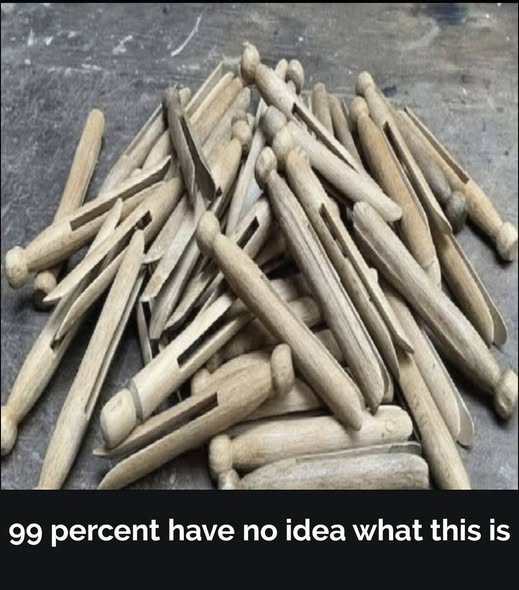
Found a mysterious old object at your grandma’s house? Discover why these unusual household items can be difficult to identify, what they may have been used for, and how to safely identify vintage treasures.
Walking through an older home can sometimes feel like stepping into another time.
Behind a cupboard, inside an old sewing box, tucked away in a kitchen drawer, or sitting quietly on a dusty shelf, you may discover an object that seems completely unfamiliar.
It might be made of metal, wood, glass, porcelain, or an unusual combination of materials. It may have a strange shape, tiny holes, a handle, a hook, or some mechanism that makes absolutely no sense by modern standards.
And that is exactly what makes these discoveries so fascinating.
One common reaction is:
“I have no idea what these are, but I found them at my grandma’s house.”
If you’ve ever had that experience, you’re certainly not alone.
Why Old Household Objects Can Look So Strange Today
Many objects that were once ordinary parts of everyday life have disappeared from modern homes.
Technology changed.
Cooking methods changed.
Cleaning became more automated.
Clothing and sewing practices changed.
Even the way people stored food, wrote letters, entertained themselves, and cared for their homes changed dramatically.
As a result, an item that was completely obvious to someone living 50 or 70 years ago may look like a mysterious gadget to someone today.
For example, older households commonly contained specialized tools for tasks that are now performed by a single modern appliance.
A person might have owned separate tools for opening containers, preparing vegetables, repairing clothing, polishing household items, or maintaining furniture.
Today, many of those objects have been replaced by multipurpose tools or machines.
The Kitchen Is Full of Mystery Objects
If you discover an unfamiliar object at an older relative’s home, the kitchen is one of the first places to investigate.
Older kitchens often contained highly specialized utensils.
Some were designed for:
- Preparing vegetables
- Removing fruit skins
- Crushing ingredients
- Separating eggs
- Opening cans and bottles
- Decorating food
- Measuring ingredients
- Serving specific dishes
- Preparing coffee or tea
- Preserving food
Some of these tools may look surprisingly complicated compared with modern kitchen gadgets.
An old metal utensil with a handle and several small openings, for example, could have had a very specific purpose that isn’t immediately obvious.
That’s why guessing based only on appearance can be misleading.
Don’t Throw It Away Yet
One of the biggest mistakes people make when finding an unfamiliar old object is immediately throwing it into the trash.
An apparently ordinary object may have historical, sentimental, or even collectible value.
That doesn’t mean every old object is valuable. Many vintage household items are worth very little financially.
But before discarding something unusual, consider keeping it aside until you know what it is.
Look for:
- Manufacturer names
- Numbers
- Engraved letters
- Logos
- Stamps
- Patents
- Country-of-origin markings
- Unusual symbols
Even a tiny marking can provide an important clue.
Look at How the Object Works
The shape of an object can tell you a lot.
Ask yourself:
Does it open?
If so, what does it open?
Does it have a blade?
It may have been designed for cutting, shaving, scraping, or slicing.
Does it have holes?
The holes might have been intended for filtering, draining, sprinkling, or gripping.
Does it have a hook?
It could have been designed for hanging, fastening, pulling, or attaching something.
Does it have a rotating component?
That could indicate a mechanical tool.
The most useful clue is often not what the object looks like, but what it physically does.
Grandma’s House Can Be a Time Capsule
Older homes can contain objects from several generations.
A drawer might hold something purchased decades ago.
A sewing box might contain tools inherited from an earlier relative.
A kitchen cabinet could contain utensils that haven’t been used for years.
A garage or storage room may contain equipment that belonged to a completely different era.
This makes old homes surprisingly interesting places for discovering everyday history.
What looks like clutter today may actually tell a story about how people lived before smartphones, online shopping, and modern appliances became part of daily life.
Some Objects Were Designed for Very Specific Jobs
Modern products often emphasize versatility.
Older tools were frequently designed around one particular task.
That explains why some vintage objects appear unnecessarily complicated.
A person might have had a dedicated tool for a job that takes only a few seconds today.
This was especially common with:
- Sewing equipment
- Kitchen utensils
- Gardening tools
- Household cleaning tools
- Barbering equipment
- Writing accessories
- Clothing accessories
- Food-preservation equipment
The more specialized the original task, the more mysterious the object may appear today.
How to Identify an Unfamiliar Vintage Object
If you discover something strange, don’t rely on one clue.
Instead, collect several pieces of information.
1. Photograph It From Several Angles
Take clear pictures of the front, back, sides, and bottom.
If there are moving parts, photograph those too.
A close-up of any markings can be particularly helpful.
2. Measure It
Write down its approximate:
- Length
- Width
- Height
- Weight
Size can eliminate many possible explanations.
3. Identify the Material
Is it:
- Brass?
- Steel?
- Aluminum?
- Wood?
- Glass?
- Ceramic?
- Plastic?
- Bakelite or another older material?
Material can provide clues about age and intended use.
4. Search for Markings
Look carefully for names, numbers, symbols, or manufacturer stamps.
Sometimes the most useful information is hidden underneath the object.
5. Ask Family Members
An older family member may recognize it immediately.
Something that appears mysterious to a younger generation may have been completely ordinary when they were growing up.
You may even discover a personal story connected to the item.
Could It Be Valuable?
Possibly—but don’t assume that age automatically equals high value.
The value of a vintage object can depend on several factors, including:
- Rarity
- Condition
- Manufacturer
- Age
- Historical significance
- Material
- Demand among collectors
- Original packaging
- Provenance
A common household item from the 1960s might be worth very little, while a rare example from an earlier period could be considerably more interesting to collectors.
Sentimental value can also be much greater than financial value.
An object used by your grandmother for decades may be priceless to your family even if an antique dealer would assign it only a modest monetary value.
Be Careful With Unknown Objects
If you don’t know what an old object is, handle it carefully.
Avoid using it until you’ve identified its purpose.
This is particularly important if it appears to contain:
- A sharp blade
- Rust or corrosion
- Broken glass
- Unknown powder or residue
- Electrical components
- Old batteries
- Chemical residue
- Pressurized components
Don’t taste, smell, heat, or dismantle an unknown substance or device simply to figure out what it is.
Identification should come before experimentation.
The Internet Has Made Identification Much Easier
Today, a photograph can sometimes solve a decades-old mystery within minutes.
Search engines, collector communities, antique forums, museum databases, and reverse-image tools can all provide useful clues.
The trick is to provide as much information as possible.
Instead of searching:
“What is this?”
try describing what you can actually observe:
“Small brass household tool with two handles and a rotating wheel.”
The more specific your description, the more useful the results are likely to be.
The Most Interesting Part May Be the Story
Sometimes the real value of an old object isn’t what it does.
It’s who used it.
Maybe your grandmother used it in her kitchen when she was young.
Maybe your grandfather repaired things with it.
Maybe it belonged to an older generation of your family.
Maybe it was purchased during a completely different period of their lives.
An unfamiliar object can therefore become a doorway into family history.
Instead of simply asking, “What is this worth?” you can also ask:
“Who used this, and what memories are connected to it?”
That question can uncover stories that might otherwise disappear.
Final Thoughts
Finding an unfamiliar object at your grandmother’s house can be surprisingly exciting.
What appears to be a strange piece of metal or an outdated household gadget may actually be a specialized tool from another era.
Before throwing it away, take photographs, look for markings, measure it, ask relatives, and research its possible purpose.
And if you still can’t figure it out, that’s okay.
Sometimes the mystery is part of the fun.
If you have a photo of the object, upload it. A clear picture from several angles—including any markings—can make identification much easier.