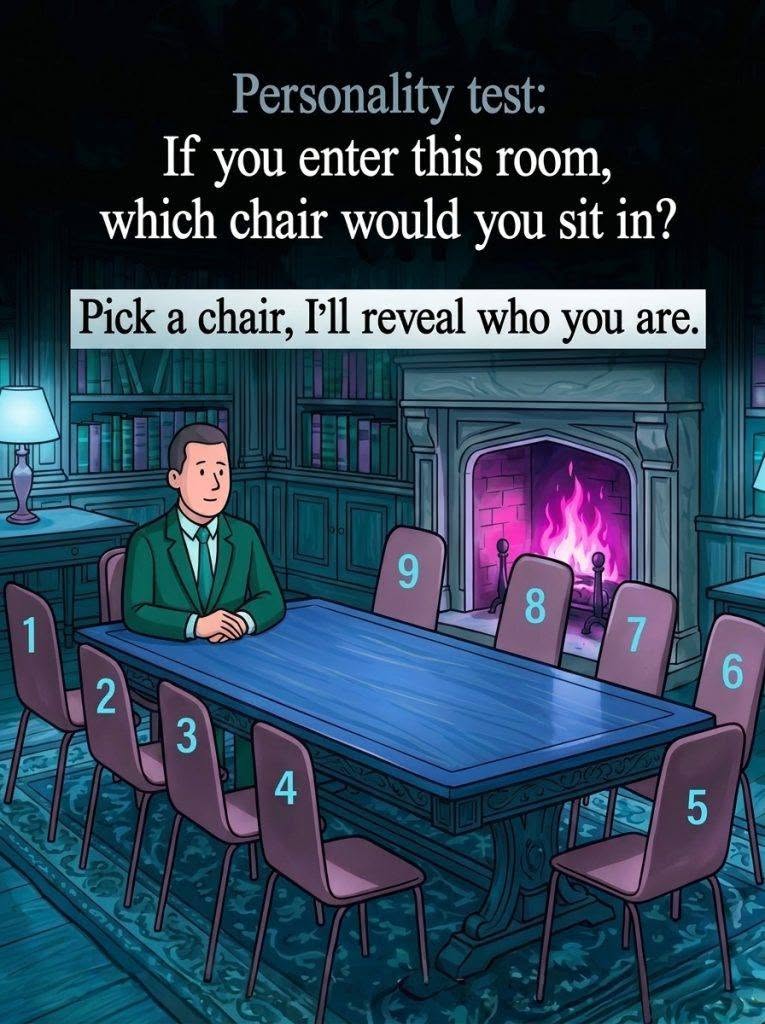
Why Your Place at the Table Changes the Way You Connect
Meta Description: Discover how where you sit at a table can influence conversation, eye contact, comfort, relationships, and the way people connect socially.
Have you ever noticed that some conversations feel effortless when you sit beside someone, while others feel surprisingly formal when you sit across from them?
It may not be your imagination.
Where you sit at a table can subtly influence how you communicate, how much eye contact you make, how comfortable you feel, and even how connected you become to the people around you.
From family dinners and business meetings to first dates and casual gatherings, seating arrangements can quietly shape social interactions.
The table may look like an ordinary piece of furniture, but psychologically, it creates a small social environment. Your position within that environment can change the way you see others—and the way they see you.
Why Seating Position Matters
Humans are highly sensitive to physical space.
We naturally notice who is close to us, who is facing us, who is beside us, and who appears separated from the group. These physical arrangements can affect our sense of belonging, comfort, attention, and social engagement.
A person sitting directly across from you is in a very different communication position from someone sitting next to you.
Across the table, you can easily see the person’s face. This makes eye contact natural and allows facial expressions to become an important part of the conversation.
Sitting beside someone creates a different feeling. Instead of constantly facing one another, you can look in the same direction, share attention toward something else, and talk with less pressure.
Neither position is universally better.
They simply create different social experiences.
Sitting Across From Someone: Direct Connection
Sitting directly opposite another person creates one of the most face-to-face forms of communication.
You can see their expressions clearly, observe their reactions, and maintain relatively easy eye contact.
This can be useful when the goal is focused conversation.
For example, two people having a serious conversation may naturally choose opposite seats because the arrangement allows both people to concentrate on each other.
But there is another side to this arrangement.
Directly facing someone can sometimes feel intense.
If you are meeting a stranger, negotiating something, or discussing an emotionally sensitive subject, prolonged face-to-face positioning may make the interaction feel more formal or confrontational than intended.
That’s one reason seating can influence the emotional tone of a conversation before either person says very much.
Sitting Beside Someone: A More Relaxed Feeling
Sitting side-by-side often creates a different psychological atmosphere.
Instead of making the other person the sole focus of your attention, both people can look forward and occasionally turn toward each other.
This can reduce some of the pressure associated with constant eye contact.
Think about walking with a friend.
You may find yourself discussing personal topics more comfortably while walking than while sitting face-to-face.
The same principle can sometimes apply at a table.
Side-by-side seating can create a sense that two people are participating in something together rather than confronting one another.
It can be especially comfortable for:
- Close friends
- Couples
- Family members
- People working on a shared task
- Conversations that involve cooperation
The physical arrangement can subtly reinforce the feeling of being on the same side.
The Corner Seat Can Create a Balance
One of the most interesting positions is sitting at a corner rather than directly across from someone.
At a rectangular table, two people sitting at adjacent corners can maintain relatively comfortable eye contact without having the intensity of a completely face-to-face arrangement.
This position allows people to turn toward one another naturally while still having some personal space.
In social settings, corner seating can therefore feel less formal while still supporting conversation.
It may be one reason people sometimes choose a corner position when they want to participate in a conversation without becoming the center of attention.
The Head of the Table Carries a Different Message
The person sitting at the head of a table can appear to occupy a position of importance.
This is particularly noticeable in workplaces, formal meetings, classrooms, and traditional family settings.
The head position can make a person more visible to everyone else. It may naturally draw attention and can sometimes be associated with leadership or authority.
However, the meaning depends heavily on context.
At a family dinner, sitting at the head of the table might simply be a long-standing tradition.
At a business meeting, the same position may communicate leadership.
The physical location doesn’t automatically give someone authority, but it can contribute to how the group perceives the arrangement.
Round Tables Change the Social Dynamic
Round tables are fascinating because they minimize obvious hierarchy.
There is no single “head” in the traditional sense.
Everyone can generally see everyone else, making the arrangement particularly suitable for group discussions.
Round tables can encourage a feeling of participation because each person occupies a position that is visually connected to the others.
This doesn’t mean everyone automatically becomes equally involved.
Personality, confidence, group status, and conversation habits still matter.
But the physical structure removes some of the obvious visual hierarchy found in long rectangular tables.
Why Eye Contact Changes Everything
One of the biggest ways seating affects connection is through eye contact.
Eye contact provides information that words alone cannot.
A raised eyebrow, smile, confused expression, nod, or moment of hesitation can tell you how another person is responding.
When people sit directly across from each other, these signals are usually easier to notice.
When people sit farther apart or at awkward angles, some of these cues become less obvious.
That can change the rhythm of conversation.
You may also feel more comfortable sharing something personal when the other person isn’t constantly looking directly at you.
In other words, less eye contact isn’t necessarily less connection.
Sometimes it can actually make conversation feel easier.
Your Seating Choice Can Reveal What You Want
Where someone chooses to sit may sometimes provide clues about their comfort or social goals.
Imagine entering a room full of people.
One person immediately chooses a seat next to a close friend.
Another chooses a position where they can see the entire group.
Someone else sits slightly away from everyone.
These choices may reflect nothing more than habit or convenience, but they can also be influenced by comfort, familiarity, and social confidence.
People often position themselves according to what feels psychologically safe.
Someone who feels comfortable in a group may move toward the center of the conversation.
Someone who feels uncertain may choose a location that allows them to observe before becoming involved.
Of course, seating alone cannot tell you exactly what someone is thinking.
It’s simply one small piece of social behavior.
Family Meals Have Their Own Seating Patterns
Family tables can develop surprisingly consistent seating arrangements.
One person always sits in the same chair.
Another avoids a particular seat.
Children may compete for a favorite position.
Parents may naturally sit where they can easily serve food or keep an eye on everyone.
Over time, these patterns become routines.
And routines can create a sense of familiarity.
A particular chair may become associated with comfort, childhood memories, conversations, celebrations, or everyday family life.
This is why changing someone’s usual place at the table can sometimes feel strangely noticeable—even when there is no practical reason for the reaction.
Seating Can Influence Group Conversations
In a larger group, your location can affect how often you participate.
If you sit near someone who talks frequently, you may become part of their conversational exchange.
If you sit beside a quiet person, the interaction may develop differently.
People sitting near each other may naturally exchange comments, jokes, or reactions that don’t involve the entire table.
Meanwhile, someone sitting farther away may need to speak louder or deliberately enter the conversation.
This means that seating arrangements can influence not only who talks to whom, but also who gets heard.
Why Restaurants Sometimes Feel More Intimate
Think about the difference between sitting across from your partner at a small restaurant table and sitting beside them at a long communal table.
The first arrangement creates a private conversational space.
The second places you in a broader social environment.
Table size also matters.
A small table makes it easier to speak quietly and maintain eye contact.
A large table creates more physical distance and may require people to raise their voices or turn their bodies toward one another.
Restaurants, cafés, and social spaces often use these arrangements intentionally because the physical environment affects how people experience the space.
Workplace Seating Can Affect Collaboration
Seating is also important in professional environments.
A traditional meeting around a long rectangular table can reinforce a formal atmosphere.
A smaller round table may encourage discussion.
Side-by-side seating can be useful when two people are reviewing documents, looking at a computer screen, or solving a problem together.
The goal isn’t simply to choose the “perfect” seat.
Instead, the seating arrangement should match the type of interaction you want.
If the objective is presentation, visibility may be most important.
If the objective is collaboration, shared orientation may be more useful.
If the objective is discussion, allowing participants to see one another can help.
Your Personal Space Matters Too
Connection doesn’t mean eliminating physical boundaries.
Everyone has a different comfort level with personal space.
Sitting too close to someone can make a conversation uncomfortable, particularly when the relationship is new.
Sitting too far away can make interaction feel distant.
The ideal distance depends on culture, relationship, personality, and circumstances.
That’s why paying attention to another person’s body language can be more useful than relying on a fixed rule about where people “should” sit.
If someone repeatedly leans away, turns their body aside, or appears uncomfortable, giving them a little more space may improve the interaction.
The Table Is More Than Furniture
A table creates a shared physical environment.
People gather around it to eat, celebrate, argue, negotiate, work, tell stories, and make decisions.
Because of this, tables have become closely connected with social life.
Think about some of the most memorable conversations in your life.
Many probably happened around a table.
A family kitchen table.
A restaurant table with friends.
A conference table at work.
A coffee table during a late-night conversation.
The furniture itself isn’t creating the relationship, but it provides the physical setting in which the relationship unfolds.
How to Use Seating to Encourage Better Conversations
You don’t need to analyze every chair before sitting down.
But if you’re intentionally trying to create a certain atmosphere, seating can help.
For a serious one-on-one conversation
Sitting across from one another can make the conversation focused and direct.
For cooperation
Sitting beside one another can create a shared orientation, especially when you’re working on the same task.
For group discussion
A round or smaller table can make it easier for participants to see one another.
For a casual conversation
A corner position can provide a comfortable balance between eye contact and personal space.
For a larger gathering
Mixing up seating arrangements can help people interact with someone they don’t normally talk to.
Don’t Read Too Much Into One Seat
Although seating can influence social interaction, it shouldn’t be treated as a psychological mind-reading tool.
Someone may sit at the end of the table because that’s the only chair available.
Someone may sit beside you because they arrived late.
Someone may avoid eye contact because they’re tired, distracted, shy, or simply looking at their food.
Human behavior is complicated.
The meaning of a seating choice depends on the broader context and repeated patterns of behavior—not one isolated moment.
The Most Important Seat May Be the One That Makes You Comfortable
Ultimately, the best place at a table isn’t always the seat with the strongest psychological effect.
It’s the place where you can participate comfortably.
If you’re relaxed, you’re more likely to listen carefully, express yourself naturally, notice other people’s reactions, and enjoy the interaction.
And that’s what meaningful connection is really about.
Your place at the table can influence the conversation, but it doesn’t determine the quality of your relationships.
The people, the shared experience, and the way you treat one another matter far more.
Still, the next time you’re sitting around a table, take a moment to notice the arrangement.
Who is sitting beside you?
Who is across from you?
Who is participating?
Who is quietly observing?
You may discover that the physical space around the table is quietly shaping the social world happening on top of it.
Final Thoughts
Where we sit can influence how we communicate, how much eye contact we make, how comfortable we feel, and how easily we engage with others.
Across from someone can encourage direct interaction. Sitting beside someone can create a more collaborative feeling. Round tables can reduce obvious hierarchy, while the head of a table can sometimes signal leadership.
But seating is only one part of human connection.
The most meaningful conversations aren’t created by a particular chair. They’re created when people feel heard, respected, comfortable, and genuinely included.
So the next time you gather around a table, don’t worry too much about finding the “perfect” seat.
Sometimes, the most important thing isn’t where you sit.
It’s who you choose to connect with while you’re there.