Think expired food is always dangerous—or always safe? Learn which foods require extra caution after their dates, how to spot spoilage, and when it’s best to throw food away.
Seeing a date printed on a food package can create confusion. Should you throw the food away immediately when the date passes, or can you safely eat it a little later?
The answer depends on what the date means, what type of food it is, and how the food has been stored.
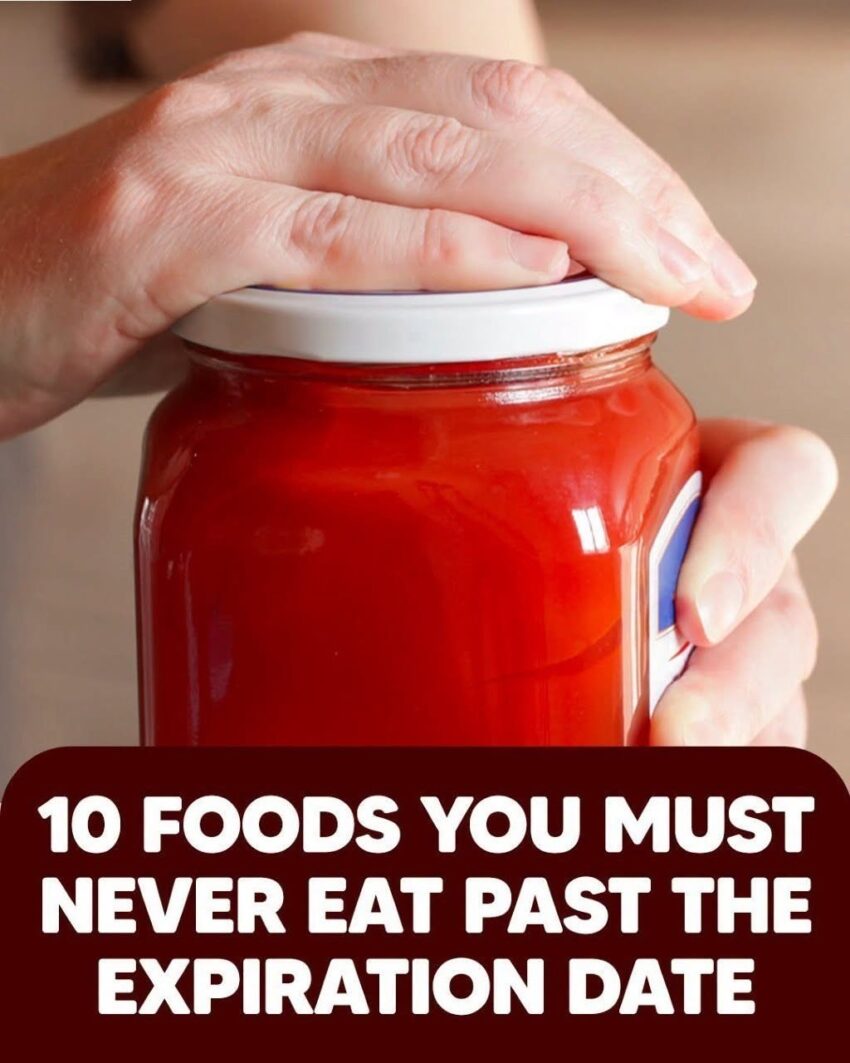
The image above warns about foods that should not be eaten past their expiration dates. However, the situation is more nuanced than simply saying that every food becomes dangerous the day after the printed date. In the United States, for example, terms such as “Best if Used By,” “Sell-By,” and “Use-By” often relate to quality rather than safety, while infant formula is an important exception.
That doesn’t mean you should ignore dates. Some foods can become genuinely hazardous when they are old, improperly refrigerated, damaged, or spoiled.
Here are 10 categories that deserve particular attention.
1. Infant Formula
Infant formula is one of the clearest cases where the printed “Use By” date should be followed.
The FDA requires a use-by date on infant formula and advises that formula should not be used after that date because the manufacturer guarantees its nutrient content and quality only through the specified date.
This is particularly important because infants are more vulnerable to serious consequences from unsafe or nutritionally inadequate food.
Bottom line: Never use infant formula beyond its labeled use-by date.
2. Fresh Meat and Poultry
Fresh meat and poultry require careful handling because bacteria can multiply when these foods are stored at unsafe temperatures.
A date printed on the package does not automatically mean the food becomes unsafe at midnight on that date. USDA explains that many product dates are primarily intended to communicate quality.
However, meat that has been improperly refrigerated, left out too long, or developed obvious spoilage should not be eaten.
Watch for:
- Unusual or unpleasant odors
- Slimy or sticky surfaces
- Unusual discoloration
- Damaged packaging
- Evidence that the food was kept warm for an extended period
When in doubt, throwing it away is safer than tasting it to investigate.
3. Deli Meats and Ready-to-Eat Refrigerated Foods
Deli meats, refrigerated ready-to-eat foods, and similar products deserve extra care because they are usually stored cold and eaten without another cooking step.
Keep them refrigerated according to the package instructions and don’t rely on appearance alone to determine whether harmful bacteria are present.
If the package is swollen, leaking, damaged, or the food has developed an unusual smell, color, or texture, discard it.
4. Soft Cheese and Other Refrigerated Dairy Products
Milk, cream, soft cheeses, dips, and other refrigerated dairy products can deteriorate when stored incorrectly.
A date labeled “Best if Used By” generally indicates peak quality rather than an automatic safety deadline.
Still, once a dairy product shows signs of spoilage—such as mold where mold isn’t intentionally part of the product, an unusual odor, separation accompanied by spoilage, or a strange texture—it should be discarded.
5. Eggs
Eggs can sometimes remain usable beyond a printed quality date when they’ve been properly refrigerated, but storage conditions matter.
Keep eggs refrigerated and inspect them before use. A questionable egg shouldn’t be consumed simply because the package date hasn’t passed.
And remember: date labels and proper refrigeration are separate issues. A food can be within its printed date but still become unsafe if it was improperly handled.
6. Leftovers
Leftovers are a different situation from many unopened shelf-stable foods.
Once food has been cooked and served, bacteria can multiply if it sits at room temperature for too long. FDA recommends refrigerating perishable foods promptly rather than leaving them out for extended periods.
Don’t assume that reheating an old leftover will automatically make it safe.
If you don’t remember when you cooked the food, it has been stored improperly, or it looks or smells questionable, it’s better to discard it.
7. Opened Jars and Sauces
The jar shown in the image is especially relevant because opening a shelf-stable product changes the storage situation.
An unopened commercially processed food may have a relatively long shelf life, but after opening, contamination and exposure to air can accelerate deterioration.
Once opened:
- Follow the manufacturer’s refrigeration instructions.
- Use clean utensils.
- Keep the lid tightly closed.
- Look for mold, unusual odors, bubbling, or other unexpected changes.
- Don’t eat directly from the jar if you plan to store the remainder.
A printed date by itself doesn’t tell the whole story.
8. Canned Foods With Damaged Containers
Canned foods can have a long shelf life, but the condition of the container matters enormously.
Never consume food from a can or jar that is:
- Bulging
- Leaking
- Severely rusted
- Cracked
- Punctured
- Spouting liquid or foam when opened
USDA specifically advises consumers not to use products showing signs such as discoloration, mold, unusual odors, or liquid/foam spurting when opened. It also warns against tasting suspicious food to determine whether it is safe.
9. Baby Food
Baby food deserves additional care because babies and young children are particularly vulnerable to foodborne illness.
Follow the manufacturer’s storage instructions and pay close attention to the package condition.
For commercially packaged baby-food jars, don’t use a container if the safety seal is compromised or the lid doesn’t behave as expected when opened. FDA specifically advises checking that the safety button on a commercial baby-food jar is down.
10. Foods That Show Obvious Signs of Spoilage
Sometimes your senses provide an important warning.
Food that has developed:
- Mold
- An off odor
- Unexpected discoloration
- A strange texture
- Unusual bubbling or gas
- A swollen container
should be treated cautiously.
But there’s an important warning: not all dangerous bacteria make food smell or look bad. That’s why proper refrigeration, handling, and storage are just as important as checking the food visually.
The Biggest Mistake: Treating Every Date the Same
One reason food-date labels cause so much confusion is that different phrases can mean different things.
“Best if Used By”
Usually indicates when the food is expected to have its best flavor or quality. It is generally not a safety date for most foods.
“Sell-By”
Primarily helps retailers manage inventory. It isn’t automatically a food-safety deadline.
“Use-By”
Often indicates the manufacturer’s recommended date for peak quality, although there are important exceptions such as infant formula.
“Freeze-By”
Generally indicates when food should be frozen to maintain peak quality rather than an automatic safety deadline.
So, Is Expired Food Always Dangerous?
No.
This is one point the viral-style headline in the image oversimplifies.
USDA and FDA explain that, except for specific products such as infant formula, many packaged-food dates are intended to communicate quality rather than safety. Properly handled foods can sometimes remain safe after a quality date has passed.
However, that does not mean every expired food is safe.
Storage conditions, whether the package has been opened, the type of food, contamination, and visible signs of spoilage all matter.
When You Should Simply Throw It Away
Don’t try to save food when:
- The container is swollen or leaking.
- You see unexpected mold.
- The food has an unusual odor or texture.
- The package is damaged.
- Refrigerated food has been improperly stored.
- You don’t know how long a perishable food has been sitting out.
- The food is infant formula past its use-by date.
- You’re unsure whether the food was safely handled.
And never taste questionable food just to see whether it’s safe. USDA specifically advises against this practice.
The Bottom Line
The date printed on a package is important, but it doesn’t tell the entire food-safety story.
For many packaged foods, a “Best if Used By” date is primarily about freshness and quality—not an exact moment when the food suddenly becomes poisonous.
At the same time, foods that require refrigeration, foods that have been improperly handled, damaged containers, visibly spoiled products, and infant formula past its use-by date deserve much stricter caution.
When you’re unsure, don’t take chances with questionable food—especially when serving babies, young children, older adults, or anyone who may be more vulnerable to foodborne illness.