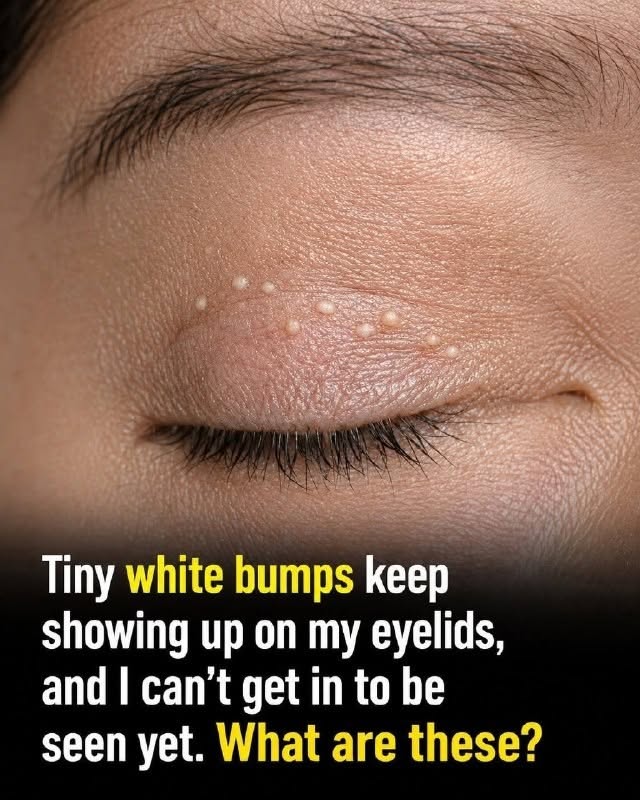
Tiny white bumps on the eyelids are often harmless, but they can have several causes. Learn what milia, blocked oil glands, styes, and other eyelid bumps may look like, what you can safely do at home, and when to see an eye doctor or dermatologist.
Tiny White Bumps on Your Eyelids? Here’s What They Could Be
Noticing tiny white bumps around your eyelids can be surprising, especially because the skin in this area is so delicate. The good news is that many small, white or skin-colored bumps around the eyes are benign and treatable.
However, not every eyelid bump has the same cause. Some are simply trapped keratin beneath the skin, while others can develop because of blocked oil glands, irritation, inflammation, or infection.
Understanding what the bump looks and feels like can help you decide whether it needs simple care at home or professional evaluation.
1. Milia: One of the Most Common Causes
One of the most likely explanations for tiny, firm white bumps around the eyes is milia.
Milia are small cysts containing keratin, a protein naturally found in the outer layer of the skin. They commonly appear as tiny white or pearly bumps and are especially common around the eyelids and cheeks.
Unlike pimples, milia usually:
- Do not contain pus
- Are not particularly painful
- Feel firm when touched
- Do not easily pop
- Can remain for weeks or months
Milia are generally harmless.
Why Do Milia Develop?
Milia can occur when dead skin cells or keratin become trapped beneath the skin’s surface. They may also appear after skin irritation, injury, or certain skin treatments.
In babies, milia are extremely common and usually disappear without treatment.
In adults, persistent milia may sometimes be removed by a dermatologist using a safe sterile technique.
Important: Avoid squeezing or poking an eyelid bump yourself. The skin around the eyes is delicate, and attempting to remove milia at home can cause infection, scarring, or injury.
2. Blocked Oil Glands
Your eyelids contain tiny oil-producing glands that help prevent tears from evaporating too quickly.
If one of these glands becomes blocked, it can lead to a small lump known as a chalazion.
A chalazion is usually:
- Firm or rubbery
- Located within the eyelid
- Sometimes painless
- More noticeable when the eyelid is swollen
- Larger than a typical milium
A chalazion may initially develop after inflammation of an oil gland.
Some disappear on their own, while persistent or large ones may require treatment from an eye professional.
3. A Stye May Start as a Small Bump
A stye, or hordeolum, is another possible cause of an eyelid bump.
Unlike milia, a stye is usually associated with inflammation or infection and may be:
- Red
- Tender
- Swollen
- Painful when touched
- Located near the eyelashes
A small yellowish or white point can sometimes appear as the stye develops.
Warm compresses are commonly recommended for uncomplicated styes because gentle warmth can help loosen blocked material and encourage natural drainage.
Never try to squeeze a stye.
4. Small Cysts Around the Eyes
Some eyelid bumps are tiny benign cysts. These can look white, translucent, or skin-colored and may remain unchanged for a long time.
Because several different types of cysts can occur around the eye, appearance alone isn’t always enough to determine exactly what a bump is.
If a bump continues growing, repeatedly returns, bleeds, becomes painful, or changes appearance, it is worth having it examined.
5. Skin Irritation or Eczema
Sometimes what appears to be multiple tiny bumps is actually irritated skin.
Eyelid skin is particularly sensitive. New makeup, eye creams, cleansers, fragrances, hair products, or even nail products transferred by touching the face can cause irritation or allergic contact dermatitis.
Other symptoms may include:
- Itching
- Dryness
- Redness
- Flaking
- Burning
- Swelling
If irritation is suspected, consider stopping newly introduced eye-area products and using gentle, fragrance-free skincare.
Do not apply harsh exfoliants or acne treatments close to the eyes unless a healthcare professional recommends them.
6. Are They Actually Cholesterol Deposits?
Yellowish patches or soft, slightly raised areas around the eyelids can sometimes be xanthelasma.
These are different from tiny white milia.
Xanthelasma commonly appears as yellow or yellowish plaques near the inner corners of the eyelids. They can sometimes be associated with elevated cholesterol or other metabolic factors, although they may also occur when cholesterol levels are normal.
If you notice this type of yellowish deposit, discussing it with your doctor and considering a cholesterol evaluation may be reasonable.
7. When Should You Be Concerned?
Most tiny eyelid bumps are not dangerous. Still, certain changes deserve medical attention.
See a doctor, dermatologist, or eye specialist if the bump:
- Keeps growing
- Does not go away or repeatedly returns
- Bleeds without an obvious reason
- Develops a persistent crust
- Causes significant pain
- Changes color or shape
- Causes loss of eyelashes in the affected area
- Is associated with significant eyelid swelling
- Affects your vision
- Is accompanied by severe eye pain or redness
A persistent or unusual eyelid lesion should not automatically be assumed to be a harmless cyst.
What You Can Safely Do at Home
If the bump is small and there are no concerning symptoms, keep your approach simple.
Keep the Area Clean
Wash your face gently and avoid rubbing your eyes.
Avoid Squeezing
Even if the bump looks like a tiny whitehead, squeezing it can introduce bacteria and damage the delicate skin.
Be Careful With Eye Products
Temporarily avoid irritating cosmetics or newly introduced creams if you suspect they may be contributing to the problem.
Use Warm Compresses for Certain Eyelid Lumps
For a swollen or blocked oil gland, a clean warm compress may provide relief. The water should be comfortably warm rather than hot, and you should avoid pressing directly on the eyeball.
However, warm compresses are not a universal treatment for every white bump, particularly when the cause is uncertain.
What About Exfoliating?
It’s tempting to use scrubs, acids, or strong acne products to remove tiny bumps.
This can be a mistake around the eyes.
The eyelid skin is thin and easily irritated. Products containing strong exfoliating acids, retinoids, or other active ingredients should not be used close to the eyes unless specifically directed by a healthcare professional.
If the bumps are milia and don’t disappear, a dermatologist can remove them safely.
Can You Prevent These Bumps?
Not every eyelid bump can be prevented, but good eye-area hygiene may reduce irritation and blocked glands.
Helpful habits include:
- Removing makeup before bed
- Avoiding expired eye cosmetics
- Not sharing eye makeup
- Washing hands before touching your eyes
- Avoiding aggressive rubbing
- Choosing gentle skincare products
- Cleaning eyelid margins if your eye doctor recommends it
If you frequently develop styes or blocked eyelid glands, an eye specialist may be able to identify an underlying eyelid or oil-gland problem.
The Bottom Line
Tiny white bumps on your eyelids are often caused by milia, which are small keratin-filled cysts and are usually harmless. Other possibilities include blocked oil glands, styes, small cysts, skin irritation, or—if the area is yellowish rather than white—xanthelasma.
The most important thing is not to squeeze, puncture, or pick at an eyelid bump yourself.
If it persists, changes, becomes painful, affects your vision, or is accompanied by significant redness or swelling, have it checked by a qualified healthcare professional. A quick examination can usually help determine what you’re dealing with and whether treatment is necessary.