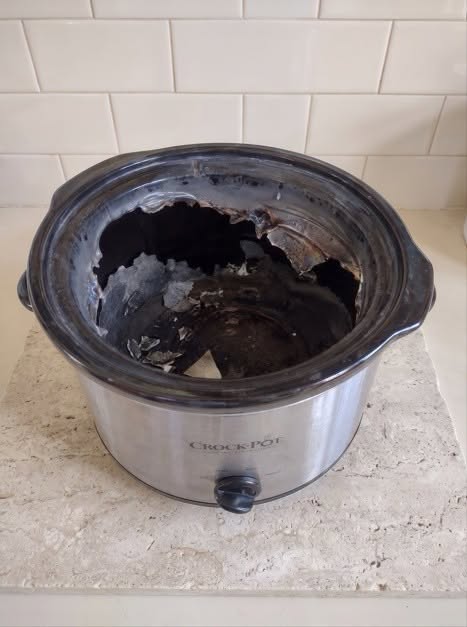
A new slow cooker quickly became the center of an unexpected roommate story when someone decided to use it for something it was definitely not designed to heat.
I bought my first slow cooker last week, and I was honestly excited about it.
I had already started imagining all the meals I could make—slow-cooked chicken, stews, soups, beans, and maybe even a few easy desserts.
It was brand new, clean, and sitting proudly on the kitchen counter.
Then today, I walked into the kitchen and noticed something strange.
My roommate was standing beside my slow cooker.
At first, I assumed they were making food.
Then I realized what they had actually put inside it.
And let’s just say it was not dinner.
“What Are You Doing?”
I asked the obvious question.
My roommate looked completely unbothered and explained that they thought the slow cooker would be a convenient way to warm something up.
The problem?
A slow cooker is designed for food, not for heating random household items.
I immediately turned it off.
The whole situation was so unexpected that I had to laugh—but it also made me realize how easily kitchen appliances can be misused when someone assumes that anything capable of producing heat can be used for the same purposes.
What Should You Actually Put in a Slow Cooker?
Slow cookers are designed for cooking foods slowly at relatively low temperatures.
They’re commonly used for:
- Soups
- Stews
- Chili
- Beans
- Pulled chicken
- Slow-cooked beef
- Vegetables
- Some desserts
- Dips and sauces
The removable crock and other components are designed specifically for food preparation.
That doesn’t mean the appliance is a general-purpose heating container.
Why Using It for Non-Food Items Is a Bad Idea
Putting something into a slow cooker that isn’t intended to be heated can create several problems.
The material could react badly to prolonged heat. It might melt, release an unpleasant odor, contaminate the cooking surface, or damage the appliance.
Even if nothing immediately appears to go wrong, you don’t want an appliance used for cooking food to become contaminated with substances that aren’t food-safe.
What If Something Unusual Was Already Heated Inside It?
If a non-food item has already been heated in your slow cooker, don’t immediately assume that washing it once makes everything safe.
First, unplug the appliance and allow it to cool completely.
Check the manufacturer’s cleaning instructions and inspect the crock for cracks, discoloration, melted material, unusual residue, or persistent odors.
If the material that was heated could have released chemicals or contaminated the cooking surface, contacting the manufacturer for advice may be the safest option.
And if the removable crock is damaged, it’s better to replace it than risk using a questionable cooking vessel for food.
The Lesson My New Slow Cooker Taught Me
I never expected my first week of owning a slow cooker to involve explaining what not to put inside it.
But apparently, a little communication between roommates can prevent a very strange kitchen experiment.
From now on, my slow cooker has one simple rule:
Food goes in. Household experiments stay out.
And honestly, after today’s surprise, I’m keeping a much closer eye on my kitchen appliances.