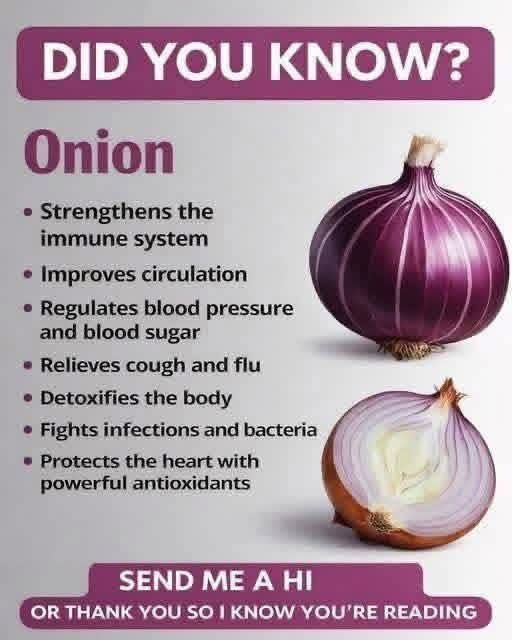
Red onions are rich in antioxidants, fiber and plant compounds that may support heart health, digestion, healthy blood sugar levels and overall wellness. Learn why adding red onions to your meals can be a smart choice for women.
Women Eat Red Onions: Here’s Why This Simple Food Deserves More Attention
Red onions are one of those everyday foods that can easily be overlooked. They are inexpensive, widely available, and usually treated as nothing more than an ingredient for salads, sandwiches, curries, burgers, and cooked dishes.
But red onions contain several naturally occurring plant compounds that make them nutritionally interesting.
For women looking for simple ways to improve their everyday diet, adding red onions to balanced meals can be a useful habit. They are not a miracle food, and they cannot replace medical treatment, but they can contribute valuable nutrients and antioxidant compounds to an overall healthy eating pattern.
1. Red Onions Are Rich in Antioxidant Compounds
One of the most interesting features of red onions is their concentration of plant compounds called flavonoids.
Red and purple onions contain anthocyanins, the pigments responsible for their deep reddish-purple color. They also contain quercetin, another antioxidant compound found in many onions.
Antioxidants help protect cells from oxidative stress caused by unstable molecules called free radicals.
Eating a variety of colorful vegetables is one practical way to increase your intake of these beneficial plant compounds.
2. They May Support Heart Health
Heart health is important for women throughout adulthood, particularly as cardiovascular risk factors can change with age.
Red onions contain fiber and plant compounds that can fit into a heart-friendly diet. Replacing heavily processed foods with vegetables, fruits, whole grains, beans, nuts, and other minimally processed foods is generally a more meaningful strategy than relying on one particular food.
Red onions can easily become part of that pattern.
Try adding thinly sliced red onion to:
- Chickpea salads
- Tomato and cucumber salads
- Whole-grain sandwiches
- Bean bowls
- Homemade salsa
- Grilled vegetables
3. They Can Add Flavor Without Many Calories
One of the easiest benefits of onions is practical rather than dramatic: they make healthy food taste better.
A small amount of sliced red onion can add sweetness, sharpness, and crunch to meals without contributing many calories.
This can be particularly helpful if you’re trying to eat more vegetables but don’t want to depend heavily on creamy sauces, large amounts of cheese, or calorie-dense dressings for flavor.
4. Red Onions Provide Prebiotic Fiber
Onions contain certain types of carbohydrates, including fructans, that can act as prebiotics.
Prebiotics are substances that can be used by beneficial microorganisms in the gut. Supporting a diverse gut microbiome is associated with digestive and overall health.
However, onions can have the opposite effect in some people.
Individuals with irritable bowel syndrome or sensitivity to FODMAP foods may experience bloating, gas, abdominal discomfort, or changes in bowel habits after eating onions.
So while onions can be a healthy food for many people, they are not necessarily comfortable for everyone.
5. They Can Be Part of a Blood-Sugar-Friendly Diet
Red onions contain relatively little carbohydrate compared with many starchy foods and can add flavor and fiber to meals.
The bigger picture matters, though.
Eating red onions alongside vegetables, protein, beans, whole grains, or other high-fiber foods can contribute to a more balanced meal. Simply eating onions does not “control” diabetes or prevent blood-sugar problems.
For people with diabetes or insulin resistance, overall dietary pattern, portion sizes, physical activity, sleep, medications when prescribed, and medical follow-up are much more important than any single ingredient.
6. They Provide Vitamin C and Other Nutrients
Onions aren’t a nutritional replacement for fruits and vegetables with higher vitamin and mineral concentrations, but they do contribute small amounts of nutrients such as vitamin C.
They also provide plant compounds that add nutritional value beyond basic vitamins and minerals.
The key is variety. Instead of trying to get everything from one “superfood,” include different vegetables and fruits throughout the week.
7. They May Help Make a High-Fiber Diet More Enjoyable
Fiber is important for digestion, bowel regularity, heart health, and overall metabolic health.
Red onions aren’t an extremely high-fiber food by themselves, but they can contribute to a meal that contains several sources of fiber.
For example, combine red onion with:
- Lentils
- Chickpeas
- Beans
- Vegetables
- Whole grains
- Avocado
- Seeds
This creates a much more substantial fiber-rich meal than relying on onions alone.
8. Raw or Cooked: Which Is Better?
Both can have a place in your diet.
Raw red onion has a sharper flavor and works well in salads, sandwiches, salsa, and wraps.
Cooked red onion becomes sweeter and softer and can be added to soups, curries, roasted vegetables, omelets, an