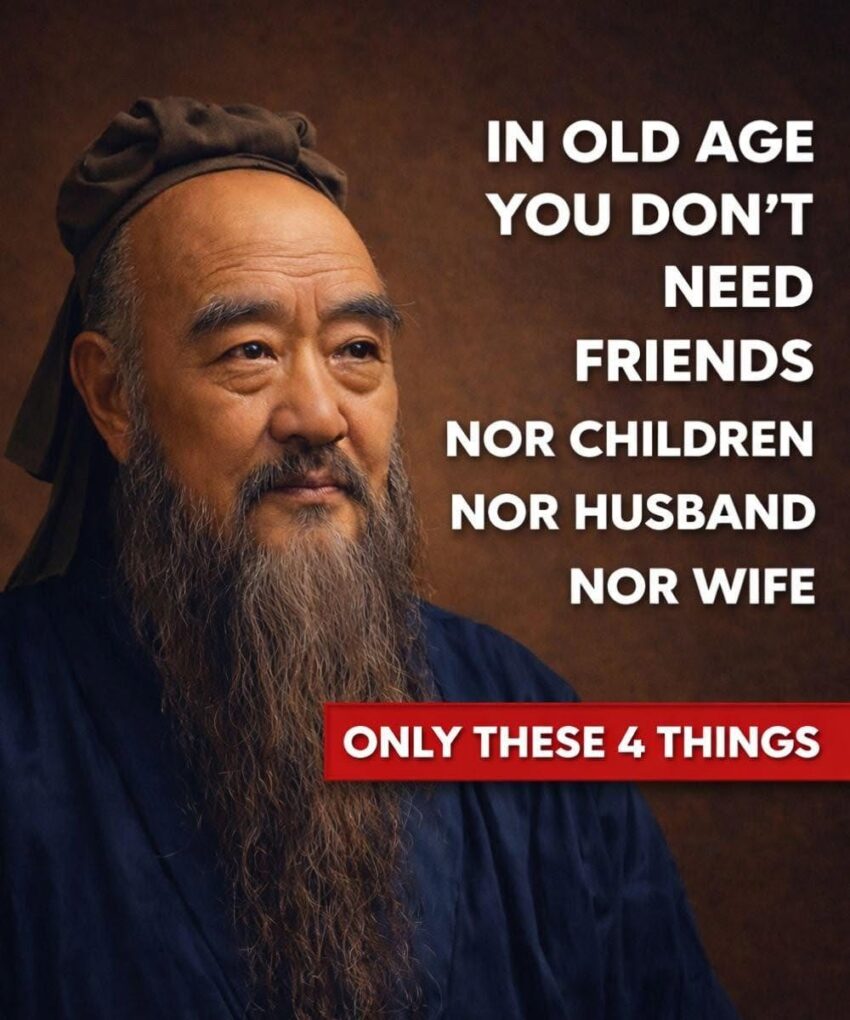
Growing older is not simply a matter of adding years to our lives. It can also be an opportunity to become wiser, calmer, and more balanced. Several teachings attributed to Confucius emphasize virtues that remain valuable throughout life—especially in old age.
Here are four principles that can help create a more meaningful and peaceful later life.
1. Keep Learning and Keep Your Mind Active
Age should never become an excuse to stop learning. Confucian thought places great importance on self-cultivation—the idea that a person can continue improving throughout life.
Learning does not have to mean going back to school. Reading a book, learning a skill, studying history, exploring a new hobby, or simply listening carefully to other people’s experiences can keep the mind engaged.
A curious mind is less likely to become trapped in the belief that everything was better in the past.
The lesson: Never consider yourself finished. There is always something new to understand.
2. Treat Others With Respect and Kindness
Confucian philosophy places great importance on respectful relationships. As people grow older, relationships with children, grandchildren, friends, neighbors, and the wider community can become increasingly important.
Respect does not mean agreeing with everyone. It means speaking with consideration, listening before judging, and recognizing the dignity of other people.
Small acts of kindness can also create a strong sense of connection. A phone call, a thoughtful conversation, helping someone, or sharing wisdom without forcing it upon others can make later life more fulfilling.
The lesson: A good life is built not only through personal achievements, but also through the way we treat people.
3. Practice Self-Control and Emotional Balance
One of the most valuable forms of wisdom is knowing when to speak, when to remain silent, when to insist, and when to let something go.
Growing older brings its own frustrations—changes in health, family disagreements, financial concerns, and the realization that some things cannot be controlled.
Instead of reacting immediately to every disappointment, cultivating patience can bring greater peace.
This does not mean suppressing emotions. It means learning to respond thoughtfully rather than allowing anger, resentment, or pride to control every decision.
The lesson: You cannot control everything that happens, but you can work on controlling your response.
4. Live According to Your Values
A balanced old age is easier to achieve when a person knows what truly matters to them.
Confucian teachings emphasize moral character, responsibility, honesty, and doing what is right even when nobody is watching.
Later life can therefore be a time to simplify. Rather than constantly chasing status, possessions, or approval, a person can focus on family, meaningful relationships, personal integrity, gratitude, and leaving something positive behind.
Your legacy does not have to be a fortune. It may be the kindness you showed, the wisdom you shared, or the example you gave to younger generations.
The lesson: A meaningful life is measured not only by what you acquire, but by the character you develop.
Growing Older With Wisdom
These four principles offer a simple way to think about aging:
Keep learning.
Treat people with respect.
Develop emotional balance.
Live according to your values.
Although these ideas are often associated with Confucian philosophy, specific modern lists of “four principles of old age” should not automatically be presented as direct quotations from Confucius. They are better understood as principles inspired by themes found in Confucian thought.
Growing older is inevitable, but the way we grow older is partly within our control. With curiosity, kindness, self-discipline, and integrity, later years can become a period of greater wisdom rather than simply a period of decline.