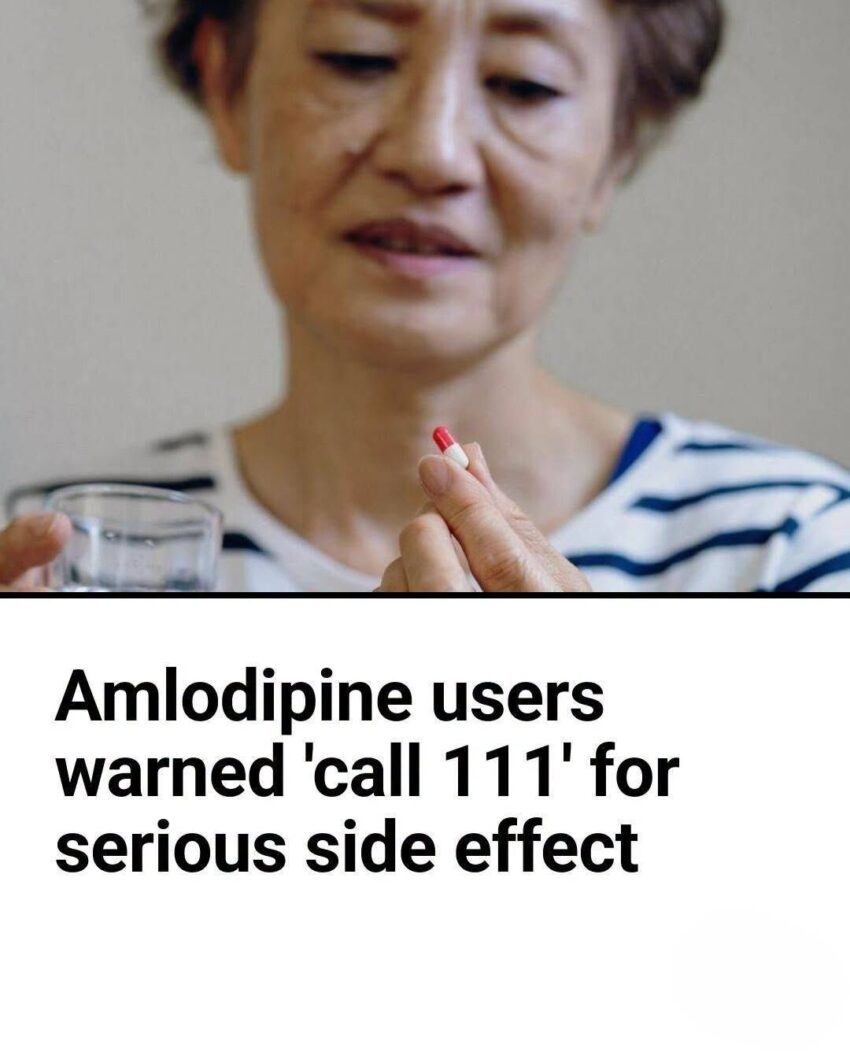
Millions of people take amlodipine to help control high blood pressure or prevent angina. The medicine is generally well tolerated, but like all medicines, it can occasionally cause serious side effects.
The NHS advises people taking amlodipine to seek urgent medical advice if they believe they are experiencing a serious reaction.
Knowing which symptoms require urgent attention can help people avoid ignoring a potentially dangerous reaction.
What Is Amlodipine?
Amlodipine is a type of medicine called a calcium-channel blocker.
It works by relaxing and widening blood vessels, making it easier for the heart to pump blood around the body. It is commonly prescribed for high blood pressure and angina.
Most people take it once a day, and treatment is often long-term.
Importantly, people should not stop taking amlodipine suddenly unless their doctor tells them to do so.
Common Side Effects Are Usually Less Serious
Some side effects can occur while taking amlodipine and do not necessarily indicate an emergency.
Commonly reported effects include:
- Swollen ankles, feet or legs
- Headache
- Dizziness
- Feeling sleepy
- Flushing
- A noticeable or faster heartbeat
- Nausea
- Stomach discomfort
- Constipation or diarrhoea
- Feeling tired or weak
These effects can sometimes improve as the body adjusts to the medicine. However, if a side effect is persistent or troublesome, speaking with a doctor or pharmacist is recommended.
The Serious Reaction You Should Not Ignore
One of the rare but potentially serious reactions associated with amlodipine is a severe allergic reaction.
Warning signs can include swelling of the throat or tongue, an itchy or raised rash, and difficulty breathing. The NHS lists this as a serious side effect requiring urgent medical attention.
Sudden swelling involving the lips, mouth, tongue or throat can interfere with breathing and may represent a medical emergency.
If someone is struggling to breathe, choking, has a tight throat, or cannot swallow properly, emergency medical assistance should be sought immediately rather than waiting for symptoms to disappear.
Severe Stomach Pain Can Also Be a Warning
Another rare serious reaction listed by the NHS is acute pancreatitis, or inflammation of the pancreas.
A key symptom can be sudden, severe abdominal pain that does not go away.
Severe or persistent abdominal pain while taking amlodipine should therefore not simply be dismissed as ordinary indigestion. Medical assessment is appropriate, particularly if the pain is sudden or intense.
Serious Skin Reactions Are Rare but Important
Amlodipine has also been associated, very rarely, with Stevens-Johnson syndrome, a serious skin reaction.
Possible warning signs include blistering, painful skin sores, skin peeling and flu-like symptoms. These symptoms require urgent medical assessment.
A rapidly worsening rash accompanied by blistering or peeling should never be treated as an ordinary minor skin irritation.
What About Swollen Ankles?
Swollen ankles and feet are actually among the more common side effects of amlodipine.
This happens because amlodipine relaxes blood vessels, which can contribute to fluid collecting in tissues around the ankles and feet.
Although mild swelling is a recognized side effect, sudden, severe or rapidly worsening swelling should be assessed by a healthcare professional, especially when swelling occurs elsewhere in the body or is accompanied by breathing problems.
When Is It an Emergency?
Not every side effect requires an ambulance.
However, symptoms such as severe difficulty breathing, sudden swelling of the lips, mouth, tongue or throat, fainting, or severe chest symptoms can require immediate emergency treatment.
For UK readers, NHS guidance distinguishes between urgent medical advice through 111 and emergencies requiring 999/A&E.
The important message is not to wait for a serious allergic reaction or breathing problem to become worse.
Don’t Stop Your Medicine Without Medical Advice
A frightening side-effect story can make people want to stop taking their blood-pressure medicine immediately.
That is not generally the right approach.
The NHS specifically advises that amlodipine should not be stopped unless a doctor tells you to do so.
If you experience an unusual symptom that concerns you, contact your doctor or pharmacist and explain what happened, when it started, and when you took your medication.
If you believe you are experiencing a serious reaction, seek urgent medical help.
What If You Accidentally Take Too Much?
Taking more than the prescribed amount of amlodipine can be dangerous.
The NHS advises calling 111 if you have taken more than your prescribed dose. If emergency treatment is recommended, you should follow those instructions and take the medicine packaging with you.
Never take an extra dose simply because you forgot whether you had already taken your tablet.
The Bottom Line
Amlodipine is widely used and most people do not experience serious problems from it.
However, rare reactions can occur.
Swelling of the throat or tongue, difficulty breathing, severe allergic symptoms, sudden severe abdominal pain, or serious blistering/peeling of the skin should not be ignored.
For UK patients, NHS guidance recommends urgent medical advice for suspected serious amlodipine side effects, while symptoms such as severe breathing difficulty or throat swelling may require emergency treatment.
If you take amlodipine regularly, keep your medication information available and know what symptoms require urgent attention. And remember: never stop prescribed blood-pressure medication without discussing it with a healthcare professional.