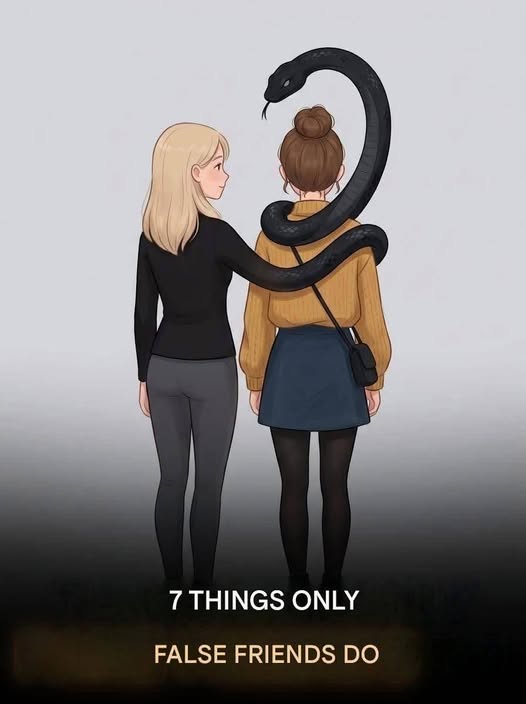
Discover seven common signs of false friends, from secret jealousy and one-sided relationships to broken trust and hidden competition. Learn how to recognize unhealthy friendships and protect your peace.
Not everyone who smiles at you genuinely wishes you well. Sometimes, the people we consider close friends are the ones who leave us feeling drained, unsupported, or confused about where we stand.
A true friendship should offer mutual respect, honesty, and support. While no friend is perfect, a repeated pattern of selfishness, dishonesty, or disrespect may indicate that a relationship is unhealthy.
Here are seven behaviors that can help you recognize a friendship that may not be as genuine as you thought.
1. They Only Contact You When They Need Something
One of the most noticeable signs of a one-sided friendship is when someone reaches out only when they need help.
They might call when they need money, a favor, emotional support, or someone to solve a problem. However, when you need assistance, they suddenly become unavailable.
Healthy friendships involve give-and-take. Both people should have opportunities to ask for help, share their concerns, and feel supported.
What to notice: Look at the overall pattern rather than judging a friend because they were unavailable once or twice.
2. They Struggle to Celebrate Your Success
A genuine friend doesn’t have to feel excited about every little thing you do, but they should generally be able to celebrate your achievements without making you feel guilty.
A false or overly competitive friend might respond to your good news by changing the subject, minimizing your achievement, or immediately comparing it with their own.
For example, when you share that you’ve received a promotion, they might say, “That’s not such a big deal. Anyone could get that job.”
Occasional awkward reactions can happen, especially when someone is struggling with their own circumstances. But repeated attempts to diminish your happiness may indicate jealousy or unhealthy competition.
3. They Share Your Private Information
Trust is one of the foundations of friendship.
When you share something personal with a friend, you generally expect them to respect your privacy. Someone who repeatedly spreads your secrets, reveals sensitive details, or uses personal information against you is demonstrating a serious lack of respect.
This behavior can damage not only your friendship but also your relationships with other people.
A helpful boundary: Be thoughtful about what you share with someone who has repeatedly shown that they cannot keep your confidence.
4. They Talk Badly About You Behind Your Back
Hearing that a friend has criticized you behind your back can be deeply hurtful.
There is a difference between a friend respectfully discussing a concern with someone they trust and deliberately spreading rumors, humiliating you, or trying to turn others against you.
Pay attention to reliable information and repeated behavior rather than believing every rumor you hear.
If you discover that a friend has been spreading false stories about you, consider speaking to them directly when it is safe and appropriate.
A sincere friend should be willing to discuss the situation honestly.
5. They Disappear When Life Gets Difficult
Friendship is easy when everything is going well. It can become more revealing during periods of grief, illness, financial stress, or personal disappointment.
An unreliable friend may expect you to listen to every problem they face but disappear whenever you need support.
However, genuine friends also have responsibilities and limitations. Someone may care deeply about you and still be unable to provide help at a particular moment.
The important question is whether they consistently show concern and make an effort within their abilities.
6. They Make You Feel Guilty for Setting Boundaries
Healthy friendships allow both people to say no.
A friend who respects you may feel disappointed when you cannot help, but they should generally accept your decision without trying to control you.
An unhealthy friend may use guilt, emotional pressure, or silent treatment to get what they want.
For example, they might say, “If you were really my friend, you would do this for me.”
That statement can make you feel responsible for meeting every demand, even when doing so harms your own well-being.
Remember that you can care about someone without agreeing to everything they ask.
7. They Compete With You Instead of Supporting You
Friendship should not feel like a constant contest.
An overly competitive friend may compare salaries, relationships, possessions, appearance, or achievements whenever you share something positive.
They might attempt to outdo you, turn ordinary conversations into competitions, or make you feel that your accomplishments are never enough.
Healthy competition can sometimes motivate people, but persistent comparison that undermines your confidence can make a friendship exhausting.
A genuine friend can pursue their own goals while respecting your progress.
How to Protect Yourself From False Friendships
Recognizing unhealthy patterns doesn’t mean you must immediately end every difficult relationship. Sometimes, misunderstandings can be resolved through an honest conversation.
Consider these steps:
- Observe consistent behavior: Look for repeated patterns instead of reacting to a single mistake.
- Communicate clearly: Explain how a particular action affected you.
- Set reasonable boundaries: Protect your time, privacy, finances, and emotional energy.
- Pay attention to accountability: Notice whether the person acknowledges mistakes and makes a genuine effort to change.
- Invest in reciprocal relationships: Spend time with people who respect you and make room for your needs, too.
If someone repeatedly disrespects your boundaries or makes you feel unsafe, creating distance may be appropriate.
Final Thoughts
False friendships can be difficult to recognize because they often develop gradually. A person may be kind in some situations while behaving selfishly or dishonestly in others.
The goal isn’t to become suspicious of everyone. It is to learn the difference between an imperfect friend who cares about you and someone who repeatedly takes advantage of your trust.
A healthy friendship should allow you to feel respected, valued, and free to be yourself. You deserve relationships built on honesty, mutual effort, and genuine care—not constant guilt, competition, or fear of betrayal.