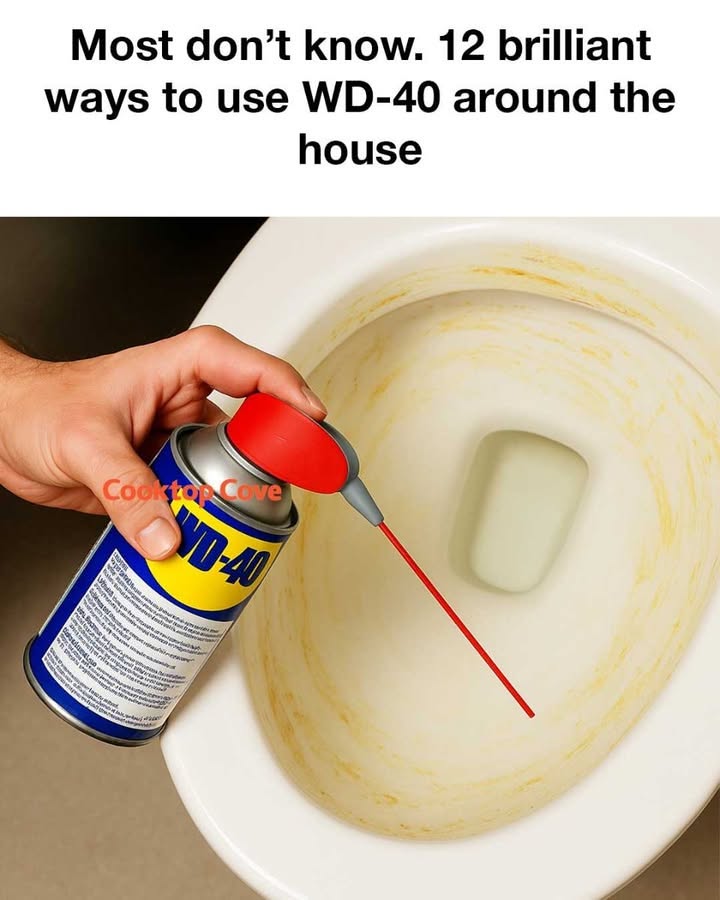
Discover 12 clever ways to use WD-40 around the house, from loosening stuck zippers to removing adhesive residue and protecting tools. Learn where it works and where to avoid using it.
WD-40 is one of those household products that many people keep in a cupboard or garage but rarely use to its full potential. Most homeowners reach for it when a door hinge squeaks, yet this multipurpose product can help with several other everyday household annoyances.
From loosening stubborn mechanisms to helping remove sticky residue, WD-40 can be useful for small maintenance jobs around the home. However, it is not a universal cleaner or lubricant, and using it on the wrong surface can cause damage.
Here are 12 practical ways to use WD-40 more effectively, along with important precautions to keep in mind.
1. Quiet Squeaky Door Hinges
A squeaky door can become irritating, especially when it makes noise every time someone enters or leaves a room.
WD-40 can help loosen a stiff hinge and reduce squeaking caused by friction.
How to use it:
- Open the door slightly to expose the hinge.
- Apply a small amount of product to the hinge’s moving joint.
- Move the door back and forth to distribute it.
- Wipe away excess product to prevent drips and dust buildup.
For hinges that need long-term lubrication, a suitable silicone or dedicated hinge lubricant may be a better choice.
2. Remove Sticky Adhesive Residue
Price labels, stickers, and tape can leave behind a stubborn layer of adhesive on glass and some other hard surfaces.
WD-40 may help loosen certain adhesive residues, making them easier to wipe away.
How to use it:
- Test the product on a hidden area first.
- Apply a small amount to the residue.
- Allow it to sit briefly, following the product label.
- Gently wipe with a soft cloth.
- Clean the surface afterward with an appropriate cleaner.
Avoid using it on unfinished wood, delicate finishes, or surfaces that may be damaged by petroleum-based products. For food containers, thoroughly wash the item before using it again.
3. Help Loosen a Stuck Zipper
A zipper can become difficult to move when dirt accumulates or the mechanism becomes stiff.
WD-40 may help with some metal zippers, but it can stain fabric and damage certain materials.
A safer approach: First remove dirt with a soft brush and try moving the zipper gently. If you decide to use a lubricant, choose one specifically suitable for zippers and apply it sparingly to the teeth, keeping it away from fabric.
Never force a stuck zipper, as this can bend the teeth or break the slider.
4. Protect Metal Garden Tools
Garden tools often become dirty and may develop surface rust when stored in damp conditions.
WD-40 can help displace moisture and provide temporary protection against corrosion on suitable metal surfaces.
Try this method:
- Remove soil and debris from the tool.
- Dry it thoroughly.
- Apply a light coating of WD-40 to appropriate metal surfaces.
- Wipe away excess product before storage.
Keep lubricants away from tool handles that need a secure grip. Before using pruning tools on plants, wipe the cutting surfaces clean and follow the product label. Do not apply WD-40 to edible plants or soil.
5. Loosen Rusty Nuts and Bolts
Rust can make nuts, bolts, and other metal fasteners difficult to turn.
WD-40 Specialist Penetrant or another suitable penetrating oil may help loosen a seized fastener by working into the gap between the metal parts.
How to use it:
- Remove loose dirt and visible debris.
- Apply the appropriate penetrating product to the joint.
- Allow time for it to work according to the label.
- Use the correct tool to turn the fastener carefully.
Do not use excessive force, and never spray near flames, hot surfaces, or electrical equipment. Severely corroded fasteners may require a different removal method.
6. Help Remove Scuff Marks From Suitable Hard Surfaces
Dark scuff marks sometimes appear on certain hard, nonporous surfaces after shoes or rubber objects rub against them.
WD-40 may help loosen some marks, but it is not appropriate for every floor or finish.
Before using it, check the flooring manufacturer’s care instructions and test a hidden spot. Avoid using it on unfinished wood, porous stone, and floors where an oily residue could create a slipping hazard.
In many cases, a damp microfiber cloth and a cleaner approved for the surface are the safer first choice.
7. Help Remove Crayon Marks From Some Hard Surfaces
Children sometimes leave crayon marks on tables, cabinets, and other household surfaces.
WD-40 may help loosen waxy marks on certain compatible, nonporous materials. However, it can leave an oily film and may affect paint or finishes.
Start with warm water and a little dish soap on a soft cloth. If the mark remains, use a cleaner specifically recommended for the surface. Do not use WD-40 on painted walls, wallpaper, toys, or surfaces that children may put in their mouths.
8. Maintain Suitable Metal Locks and Mechanisms
A stiff metal mechanism may sometimes respond to a product designed to loosen grime or displace moisture.
However, not every lock benefits from WD-40. Some modern locks require a specific dry lubricant, and an oily product may attract dust or interfere with the mechanism.
Check the lock manufacturer’s instructions before applying anything. If the lock is difficult to turn, use a lubricant specifically approved for that lock type rather than spraying indiscriminately into the keyway.
9. Help Remove Certain Greasy Marks
Some stubborn oily marks on compatible hard surfaces may respond to WD-40, but it should not be treated as an all-purpose household cleaner.
For kitchen grease, begin with warm water and dishwashing liquid. These are usually more appropriate for countertops, cabinets, and cooking areas.
If you use WD-40 for a suitable non-food-contact surface, follow the label and clean away any residue afterward. Never use it on food, dishes, utensils, or food-preparation surfaces unless the product label explicitly permits that use.
10. Help Free a Stiff Metal Mechanism
Small metal mechanisms around the home can occasionally become stiff because of grime, moisture, or friction.
Depending on the mechanism, WD-40 may help loosen deposits or displace moisture. It is not necessarily the best long-term lubricant for every moving part.
Before applying it, check the manufacturer’s recommendations. Keep the product away from rubber, plastic, painted components, and other materials unless compatibility is confirmed.
For appliances, electrical devices, and precision mechanisms, use only products specifically approved for that application.
11. Remove Some Sticky Tree Sap From Suitable Surfaces
Tree sap can stick to outdoor equipment and certain hard surfaces, becoming difficult to remove once it dries.
WD-40 may help loosen some sap deposits on compatible materials.
Steps to follow:
- Test a hidden area first.
- Apply a small amount to a cloth rather than spraying broadly.
- Gently work on the sap.
- Wipe away the residue and clean the surface with an appropriate cleaner.
Do not use this method on your skin, pets, food, or delicate car paint without checking the relevant manufacturer’s guidance. A purpose-made sap remover may be a safer option for vehicle finishes.
12. Help Maintain Certain Outdoor Metal Items
Outdoor metal fittings, hinges, and tools may be exposed to rain and humidity.
On compatible metal surfaces, WD-40 can help displace moisture and provide temporary corrosion protection. It cannot replace proper maintenance or protect every item indefinitely.
Clean and dry the item first, apply only as directed, and store it in a dry place where possible. For outdoor equipment that needs durable, weather-resistant lubrication, consider a product specifically designed for that purpose.
Important WD-40 Safety Tips
WD-40 is useful for selected maintenance tasks, but it should not be used everywhere.
Keep these precautions in mind:
- Keep it away from flames and heat. Aerosol products are flammable; never spray near a stove, candle, pilot light, or hot surface.
- Ventilate the room. Avoid breathing in the spray or using it in an enclosed space.
- Test surfaces first. The product may damage paint, certain plastics, rubber, flooring, or delicate finishes.
- Keep it off food and food-contact surfaces. It is not a cooking oil or general kitchen cleaner.
- Do not spray electrical equipment while powered. Follow the equipment manufacturer’s instructions and use only products approved for that application.
- Keep it away from children and pets. Store it securely and follow the label’s first-aid instructions if exposure occurs.
- Use the correct lubricant. WD-40 Multi-Use Product is not the ideal long-term lubricant for every hinge, lock, bearing, or machine.
Is WD-40 a Cleaner or a Lubricant?
WD-40 Multi-Use Product can help displace moisture, loosen certain deposits, free stuck parts, and provide temporary lubrication and corrosion protection. However, its performance depends on the material and the task.
It is not a substitute for a dedicated degreaser, a food-safe lubricant, a lock manufacturer’s recommended product, or a lubricant designed for high-friction machinery.
Choosing the right product helps prevent damage and can save money in the long run.
Final Thoughts
WD-40 can be a handy addition to a household maintenance kit when used for the right jobs. It may help with squeaky hinges, stubborn fasteners, selected adhesive residues, and temporary protection for compatible metal tools.
The secret is knowing when to use it—and when not to. Always read the product label, test unfamiliar surfaces, and choose a purpose-made cleaner or lubricant when the job requires one.
A little product used carefully can make routine maintenance easier, but using the correct product for each surface is what keeps household items working well for longer.