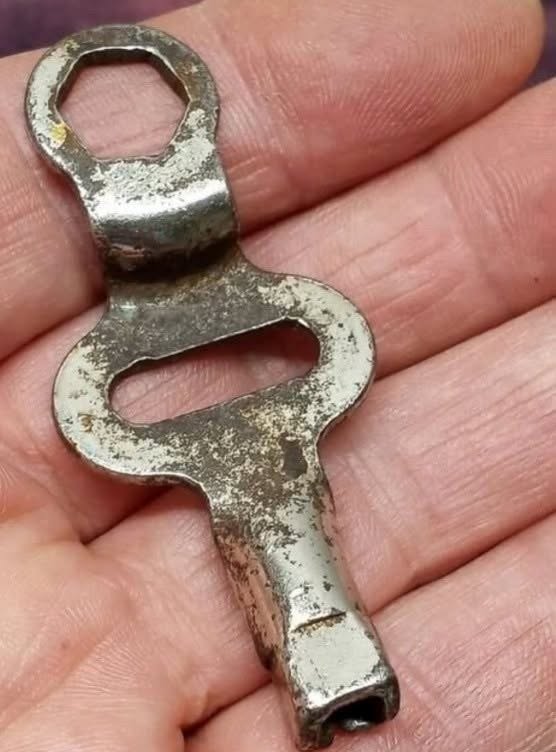
Sometimes, the most ordinary-looking objects can have surprisingly interesting histories. While looking through his grandparents’ old house, my husband came across a set of unusual keys. They looked like ordinary keys at first, but there was one problem: none of them seemed to open any door in the house.
The keys appeared old, and their unfamiliar shapes made us wonder what they had originally been used for. Were they forgotten keys to an old cupboard? Did they belong to a vintage trunk, a mechanical clock, or something that no longer existed?
There are several possibilities worth considering before deciding that the keys are useless.
1. They May Belong to an Old Wooden Trunk
Before modern suitcases became common, families often stored clothing, documents, photographs, jewelry, and other belongings in wooden or metal trunks.
These trunks frequently had small locks that required their own keys. The trunk might have been sold, moved to another room, or discarded years ago, leaving its keys behind.
What to look for: A relatively small key with a simple round or oval handle and a short metal shaft may have belonged to an old trunk or storage chest. However, the shape alone cannot confirm its original purpose.
2. They Could Be Keys for Antique Furniture
Older homes often contain furniture with locks that are no longer used today. Desks, writing cabinets, wardrobes, and display cabinets sometimes have small locks built into their drawers or doors.
If the keys are smaller than ordinary house keys, they may have belonged to one of these pieces of furniture.
Look around the grandparents’ house for old desks, cabinets, bedside tables, and wooden boxes. Even if the original furniture is gone, the keys might have survived in a drawer for decades.
3. They Might Be Clock-Winding Keys
One particularly interesting possibility is that the object is not a lock key at all.
Many older mechanical clocks required a winding key to keep their internal mechanism running. These keys often have a short shaft and a square-shaped opening designed to fit a winding arbor.
Unlike an ordinary key, a clock-winding key may have a small loop or a double-ended shape.
If the object has a square opening rather than the familiar teeth of a door key, check whether the family once owned a mechanical wall clock, mantel clock, or grandfather clock.
4. They May Have Belonged to an Old Cabinet or Safe
Some older cabinets, document boxes, and small safes used specialized locks. Their keys may look unusual compared with modern household keys.
A key that does not fit any door might therefore have belonged to a lock on a storage cabinet or a small security box.
If the family still has an old locked container, avoid forcing the key into it. An incorrect key can damage both the lock and the key itself.
5. They Could Be Keys for an Old Padlock
Padlocks were commonly used on trunks, gates, storage sheds, toolboxes, and outdoor storage areas.
The original padlock may have disappeared while the key remained in a drawer or toolbox.
If the key has a long shaft, a distinctive set of teeth, or an unusually shaped end, compare it with any old padlocks the family still owns. Do not assume that a key fits simply because it looks similar.
6. They Might Have Come From a Sewing Machine or Other Equipment
Older household equipment sometimes included small keys or tools for adjusting, securing, or maintaining particular parts.
A strange-looking metal object may also be a tool that resembles a key rather than an actual key.
Its intended use can sometimes be identified by examining the shape of its working end, the size of any opening, and whether it has a square, flat, or toothed profile.
7. Their Age Could Make Them Interesting to Collectors
Old keys can attract collectors, especially when they have unusual designs, identifiable makers’ marks, or a documented connection to a particular object or historical period.
However, an old appearance does not automatically mean a key is valuable. Common antique keys may have little monetary value, while unusual examples with a verified history may be more desirable.
Before cleaning or polishing them, take clear photographs. Aggressive cleaning can remove original finishes and reduce their historical interest.
How to Identify the Keys More Accurately
Start with these simple checks:
- Examine the handle: Is it round, oval, heart-shaped, decorative, or shaped like a loop?
- Look at the shaft: Is it short or long? Is it solid or hollow?
- Inspect the tip: Does it have teeth, a square opening, a flat blade, or a hollow barrel?
- Check the material: Is it dark iron, brass-colored metal, or another material?
- Look for markings: Letters, numbers, maker’s names, or symbols can provide valuable clues.
- Consider where they were found: A key discovered beside old clocks, furniture, tools, or storage boxes may have a connection to those objects, although the location alone is not proof.
Never force a key into a lock or use harsh chemicals to remove corrosion before identifying the material.
The Most Important Clue
The most useful next step is to examine the keys themselves. Without a photograph, it would be impossible to determine confidently whether they are antique door keys, furniture keys, clock-winding keys, or something else.
If you have found a similar object in an old family home, take a photograph of both sides and include a ruler or coin for scale. The shape, proportions, and markings may help narrow down its original purpose.
An old key can tell a fascinating story, but its real identity depends on the details—not simply how old it looks.