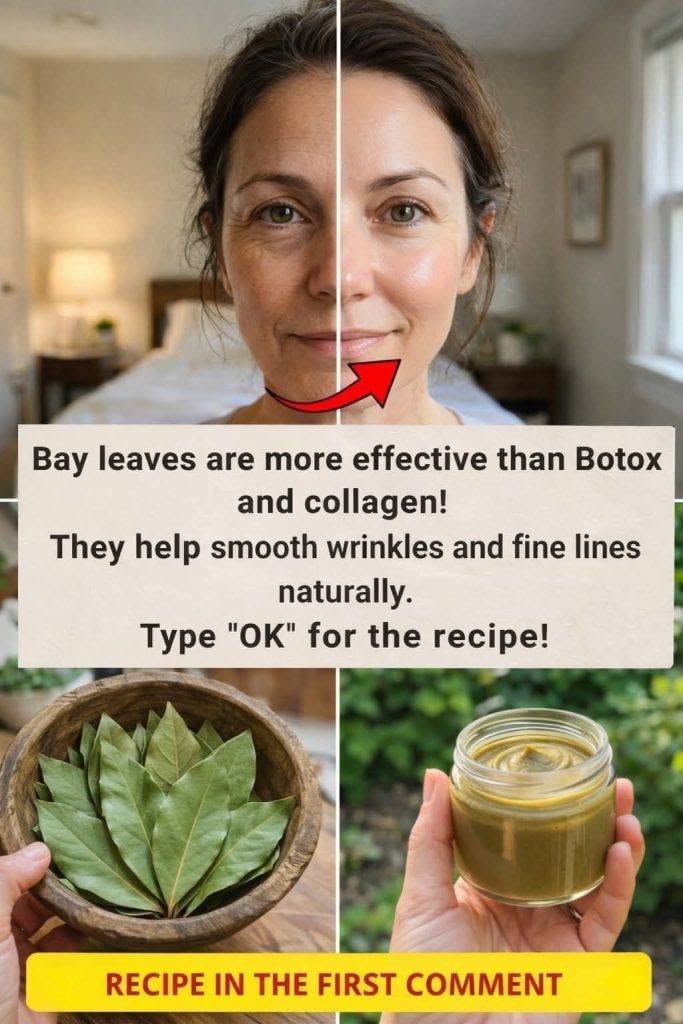
Discover the potential skin benefits of bay leaves, their antioxidant properties, simple ways to include them in a skincare routine, and important precautions for healthy-looking skin.
Bay leaves are best known as an aromatic ingredient in soups, stews, and traditional recipes. However, these fragrant leaves have also attracted attention in traditional skincare practices. Some people use bay leaves in homemade rinses, herbal infusions, and other natural beauty preparations in the hope of achieving softer, fresher-looking skin.
But can bay leaves really help maintain a youthful appearance? And what does scientific evidence tell us about their effects on wrinkles, dryness, and skin aging?
The answer requires a closer look at their natural compounds, the limits of the available research, and the safest ways to approach herbal skincare.
1. Bay Leaves Contain Antioxidant Compounds
Bay leaves contain several plant compounds, including phenolic substances and flavonoids, that have demonstrated antioxidant activity in laboratory research.
Antioxidants can help neutralize free radicals under certain conditions. Free radicals are unstable molecules that can contribute to oxidative stress, a process associated with skin aging and damage from environmental factors such as ultraviolet radiation.
However, an important distinction must be made: antioxidant activity in a laboratory does not automatically mean that applying bay leaves to human skin will reduce wrinkles or reverse visible aging.
More clinical research is needed to determine whether bay-leaf preparations provide meaningful benefits for human skin.
2. They May Be of Interest for Supporting Healthy-Looking Skin
Healthy-looking skin depends on several factors, including hydration, the skin barrier, genetics, sun exposure, and overall health.
Bay leaves are sometimes included in traditional beauty preparations, but there is currently insufficient reliable clinical evidence to conclude that bay-leaf water or homemade bay-leaf masks improve skin texture or make the face look younger.
A gentle skincare routine that protects the skin barrier is a more dependable starting point.
For most people, this means using a mild cleanser, a suitable moisturizer, and daily sunscreen.
3. Can Bay Leaves Reduce Wrinkles?
Wrinkles develop naturally as skin ages. Sun exposure, smoking, genetics, and changes in collagen and elastin can also influence how early and prominently they appear.
Although bay leaves contain compounds of scientific interest, there is no strong clinical evidence that applying bay-leaf water directly to the face reduces established wrinkles.
A homemade herbal rinse should therefore not be considered a replacement for proven skincare approaches.
For people concerned about premature wrinkles, broad-spectrum sunscreen with SPF 30 or higher is one of the most useful daily measures. Moisturizers can also temporarily make fine lines caused by dryness appear less noticeable.
4. Their Natural Aroma Can Make a Skincare Routine Feel Relaxing
Bay leaves have a distinctive herbal fragrance that many people associate with traditional home remedies and natural ingredients.
Preparing an herbal infusion may make a personal-care routine feel pleasant, but fragrance alone does not establish a skin benefit.
People with sensitive skin, eczema, or fragrance allergies should be especially careful. Aromatic plant compounds and essential oils can cause irritation or allergic contact dermatitis in susceptible individuals.
Avoid applying concentrated bay-leaf essential oil directly to the skin.
5. What About Dark Spots and Uneven Skin Tone?
Dark spots may develop because of sun exposure, hormonal changes, inflammation, acne, or other skin conditions.
Although bay leaves are sometimes promoted online as a natural remedy for pigmentation, there is not enough clinical evidence to show that homemade bay-leaf preparations reliably fade dark spots or even out skin tone.
If pigmentation is a concern, consider daily sunscreen and skincare ingredients with better supporting evidence, such as niacinamide or azelaic acid, depending on individual skin needs.
Persistent, changing, or unusual spots should be assessed by a healthcare professional rather than treated with homemade mixtures.
6. A Simple Bay-Leaf Infusion: What to Know Before Trying It
Some people prepare bay-leaf water for external use. However, its safety and effectiveness for skincare have not been established through good-quality clinical trials.
If you still wish to explore a traditional preparation, take the following precautions:
- Use clean, correctly identified culinary bay leaves.
- Wash the leaves and prepare an infusion using clean water.
- Allow it to cool completely.
- Do not add perfume, essential oils, lemon juice, or other potentially irritating ingredients.
- Test a small amount on an inconspicuous area first and observe the skin for irritation.
- Stop using it if redness, itching, burning, or swelling develops.
A patch test cannot guarantee that an allergic reaction will not occur later. Do not apply the infusion to broken skin or near the eyes, and discard homemade preparations rather than storing them for extended periods.
There is also no established concentration or application schedule proven to make bay-leaf water effective against aging.
7. Why Moisture Matters More Than Most Homemade Remedies
Skin often appears dull or finely lined when it is dehydrated or when its protective barrier is compromised.
A moisturizer containing ingredients such as glycerin, ceramides, or hyaluronic acid can help improve hydration and make the skin feel smoother.
Unlike many viral herbal beauty claims, moisturizers have established uses in supporting skin hydration.
For mature skin, choose a gentle product that does not cause stinging or irritation. Applying it after washing, while the skin is still slightly damp, can help retain moisture.
8. Sun Protection Is Essential for a Youthful Appearance
Ultraviolet radiation from sunlight contributes significantly to premature skin aging. It can worsen wrinkles, uneven pigmentation, and loss of skin elasticity.
No bay-leaf preparation has been shown to provide reliable sun protection.
For everyday care:
- Use broad-spectrum SPF 30 or higher sunscreen.
- Reapply according to the product directions, especially after sweating or swimming.
- Wear a hat and seek shade during strong sunlight.
- Avoid tanning beds and intentional tanning.
These habits have substantially better evidence for preventing additional sun-related skin damage than homemade herbal treatments.
9. Can Bay Leaves Be Combined With Other Natural Ingredients?
Online beauty recipes sometimes combine bay leaves with lemon juice, baking soda, vinegar, or essential oils.
Such combinations are not necessarily safer or more effective. Lemon juice and other acidic ingredients may irritate skin, while baking soda can disrupt the skin’s natural pH and protective barrier.
Avoid harsh mixtures, abrasive scrubs, and concentrated essential oils on the face.
If you enjoy natural skincare, simpler is usually better: use gentle, well-tolerated products and introduce only one new ingredient at a time.
10. Who Should Be Particularly Careful?
People with sensitive skin, eczema, rosacea, a history of plant allergies, or a damaged skin barrier should be cautious about experimenting with homemade herbal preparations.
If you develop persistent redness, swelling, a rash, or a burning sensation, stop using the product. Seek medical advice if the symptoms are severe or do not settle.
If you are pregnant or breastfeeding, avoid ingesting bay-leaf preparations for medicinal purposes or using concentrated herbal oils without advice from a qualified healthcare professional. Ordinary culinary use is different from medicinal use.
Final Thoughts
Bay leaves are a familiar kitchen ingredient containing plant compounds that researchers have studied for their antioxidant properties. Nevertheless, evidence that bay leaves directly improve human skin, erase wrinkles, remove dark spots, or reverse aging remains limited.
A homemade bay-leaf infusion may appeal to people interested in traditional skincare, but it should be treated as an unproven option rather than a guaranteed beauty treatment.
For a more youthful-looking complexion, focus on daily sunscreen, gentle cleansing, regular moisturizing, adequate sleep, and a skincare routine suited to your skin type.
Natural ingredients can be interesting, but the best skincare choices are those supported by evidence and gentle enough to use safely.