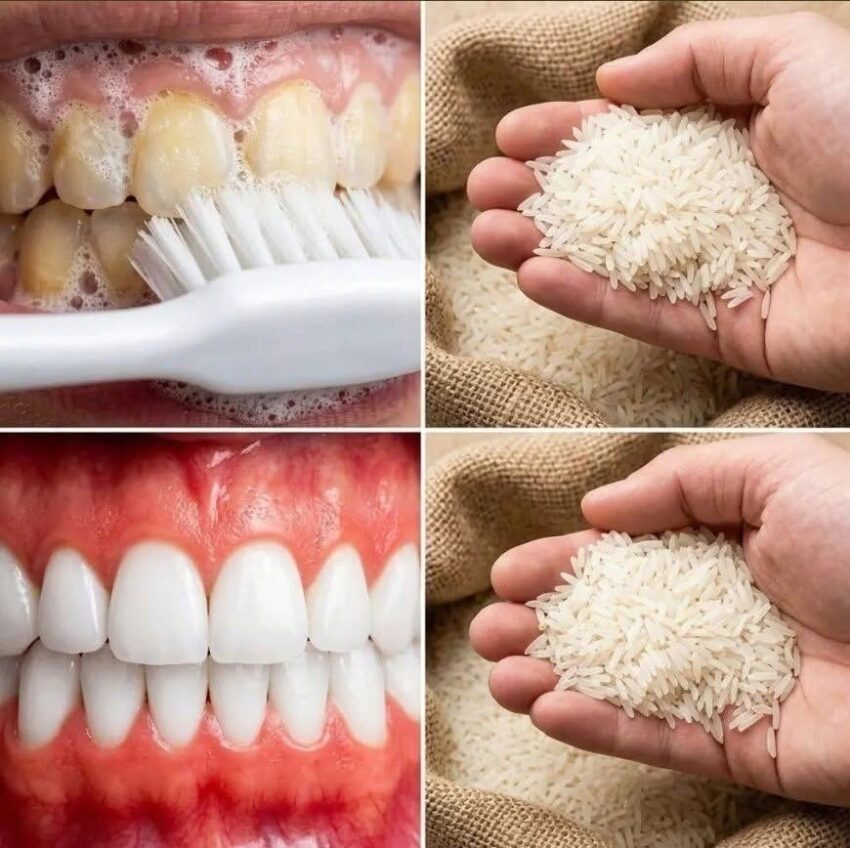
Discover a simple rice-based oral-care method that may help freshen your mouth and gently polish surface stains. Learn how to use it safely and what results you can realistically expect.
A bright, healthy-looking smile doesn’t always require expensive whitening treatments. One traditional home-care idea that has attracted attention is a rice-based method using finely ground rice and water.
The idea is simple: rice can be transformed into a very fine powder that provides mild physical polishing. When used carefully, this may help remove some surface residue and leave teeth feeling cleaner.
However, it’s important to separate a traditional beauty trick from proven dental whitening. Rice cannot bleach the internal color of teeth, and it shouldn’t replace brushing with fluoride toothpaste or professional dental care.
What Is the Rice-Based Teeth Method?
The method generally involves turning ordinary uncooked rice into a very fine powder and mixing it with a small amount of water to create a thin paste.
The mixture is then gently applied to the teeth for a short period before being rinsed away.
The appeal comes from the simplicity of the ingredients. Rice is inexpensive, widely available, and contains starch that can produce a smooth paste when finely ground.
How to Try It
If you want to experiment with this traditional approach, keep the process gentle.
You’ll need:
- 1 teaspoon of uncooked white rice
- A small amount of clean water
- A clean mortar and pestle or grinder
- Your regular fluoride toothpaste
Step 1: Grind the rice
Grind the rice until it becomes an extremely fine powder. Avoid using coarse grains because rough particles can be abrasive.
Step 2: Add water
Mix a tiny amount of water into the powder until you have a thin paste.
Step 3: Apply gently
Using a clean fingertip or soft toothbrush, gently spread a small amount over the tooth surfaces.
Do not scrub aggressively.
Step 4: Rinse
After a short application, rinse your mouth thoroughly with water.
Step 5: Continue normal dental care
Brush twice daily with fluoride toothpaste and clean between your teeth regularly.
Can Rice Actually Whiten Teeth?
This is where expectations matter.
A rice paste may potentially help with surface debris or superficial staining, but there is no good evidence that rubbing rice on teeth can produce dramatic whitening in 60 seconds.
The natural color of teeth is influenced by the enamel, dentin underneath it, age, genetics, and various lifestyle factors.
True whitening products generally work through chemical bleaching agents rather than simply polishing the surface.
So if your teeth appear yellow because of deeper discoloration, a rice-based paste is unlikely to transform their color instantly.
Why Does the “60-Second” Claim Sound So Appealing?
The promise of an instant smile makeover is attractive because many people want quick results without complicated routines.
But a healthier way to think about the one-minute method is as a brief oral-care ritual, not an instant whitening treatment.
You may notice that your mouth feels cleaner afterward, but visible whitening should not be guaranteed.
Is It Safe for Everyone?
Not necessarily.
The biggest concern is abrasion. Tooth enamel is strong, but repeatedly scrubbing teeth with abrasive substances can contribute to enamel wear.
Avoid aggressive brushing, especially if the rice powder isn’t extremely fine.
You should also be cautious if you have:
- Sensitive teeth
- Receding gums
- Worn enamel
- Gum disease
- Cracked or damaged teeth
- Dental restorations such as crowns or veneers
If your teeth are already sensitive, it’s better to ask a dentist before experimenting with abrasive home remedies.
What About Rice Water?
Rice water is another popular home-care ingredient, but drinking or rinsing with rice water should not be confused with professional teeth whitening.
A rice-water rinse may leave your mouth feeling fresh, but there is no established evidence that it can significantly bleach tooth enamel.
If you use rice water, avoid adding sugar or sweeteners, since frequent exposure to sugar can increase the risk of tooth decay.
The Most Effective Way to Keep Teeth Looking Bright
For everyday dental care, the basics remain much more important than viral home remedies.
Brush twice a day
Use a soft-bristled toothbrush and fluoride toothpaste. Brush gently for about two minutes.
Clean between your teeth
Floss or use another appropriate interdental cleaner to remove plaque from areas your toothbrush cannot reach.
Limit staining foods and drinks
Coffee, tea, tobacco, and certain strongly colored foods can contribute to surface staining.
Drink water
Water helps rinse away food particles and keeps the mouth from becoming excessively dry.
Visit your dentist
Professional cleaning can remove hardened deposits and certain surface stains that home brushing cannot eliminate.
A Better Way to Think About the Rice Method
The rice-based method is best viewed as a traditional DIY oral-care idea, rather than a miracle whitening treatment.
If you enjoy trying natural beauty and wellness practices, you can approach it cautiously—but don’t replace proven dental hygiene with it.
And if your goal is noticeably whiter teeth, dentist-recommended whitening products or professional treatment are generally more predictable than kitchen ingredients.
Final Thoughts
The idea of achieving a radiant smile in sixty seconds with rice is certainly intriguing, but the reality is more modest.
Finely ground rice may provide some gentle surface polishing, but there is no reliable evidence that it can dramatically whiten teeth in one minute. The safest approach is to prioritize fluoride toothpaste, gentle brushing, interdental cleaning, and regular dental checkups.
A beautiful smile isn’t just about color. Healthy gums, clean teeth, fresh breath, and good long-term oral hygiene matter much more than achieving an instant shade change.