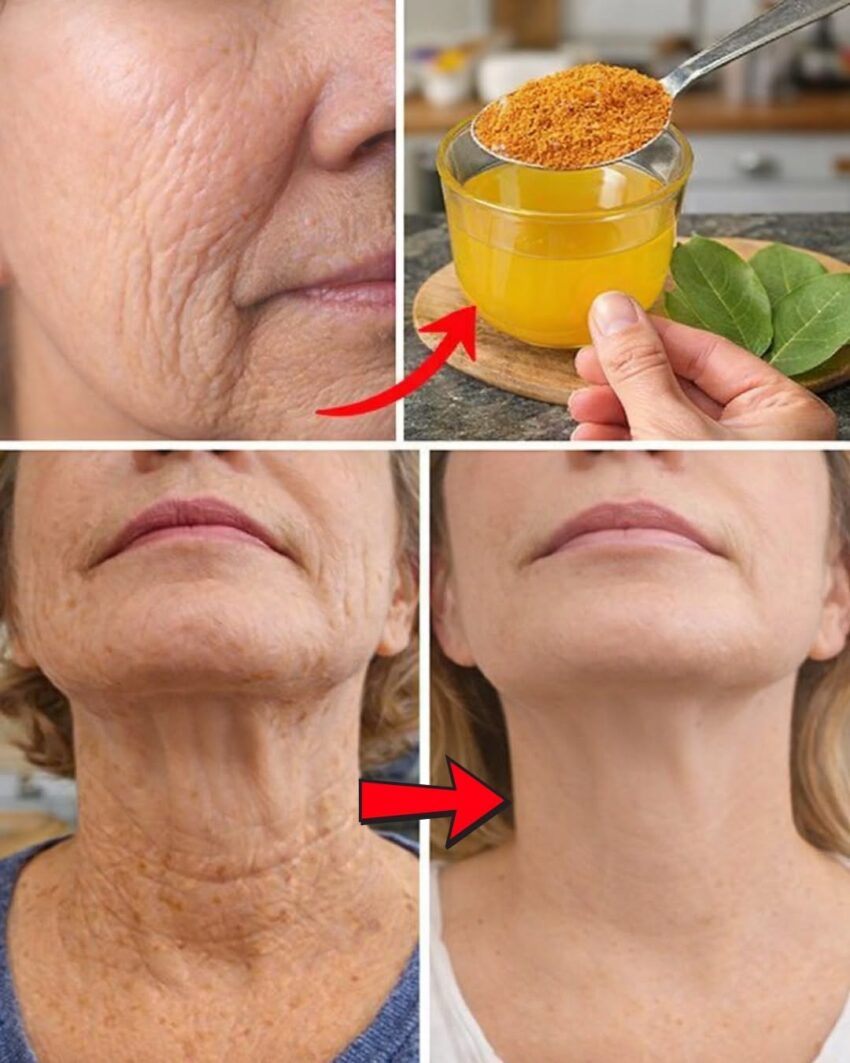
Can bay leaves really reduce wrinkles and make mature skin look younger? Learn what bay leaf contains, how it may support skin health, a simple DIY bay leaf skin treatment, and what actually works for wrinkles after 60.
Bay Leaf and Wrinkles: Can This Simple Kitchen Spice Really Help Your Skin Look Younger?
Bay leaves are usually associated with soups, rice dishes, sauces, and slow-cooked meals. But recently, they have also become popular in homemade beauty routines, especially among people looking for inexpensive ways to care for mature skin.
Some viral beauty claims describe bay leaf as being “stronger than Botox” or capable of completely erasing wrinkles—even at age 70.
That sounds exciting, but there is an important distinction between a traditional home remedy and a scientifically proven anti-aging treatment.
Bay leaf cannot replace Botox, and there is no good evidence that it can erase wrinkles completely. However, bay leaves contain plant compounds with antioxidant properties, and a carefully prepared topical treatment may temporarily leave the skin feeling softer and refreshed.
What Makes Bay Leaf Interesting for Skin?
Bay leaves come from aromatic plants in the Laurus family and contain naturally occurring compounds such as essential oils and antioxidants.
Antioxidants are interesting in skincare because oxidative stress can contribute to cellular damage over time. Environmental exposure, particularly ultraviolet radiation, is one of the major contributors to visible skin aging.
Bay leaf therefore has some properties worth studying—but that does not mean rubbing bay leaves on the face will reverse aging.
The difference is important.
A plant can contain beneficial compounds without functioning like an injectable cosmetic treatment.
Can Bay Leaf Actually Remove Wrinkles?
Not permanently.
Wrinkles develop because of several processes, including:
- Gradual loss of collagen and elastin
- Reduced skin thickness
- Repeated facial expressions
- Sun exposure
- Changes in facial fat and underlying tissues
- Natural aging
- Dryness and reduced skin hydration
A homemade bay leaf preparation cannot reverse all of these changes.
What it may do is temporarily improve the way the skin feels and looks by providing moisture when used as part of a properly formulated routine.
Well-hydrated skin can appear smoother because fine lines may become less noticeable temporarily.
That is very different from actually removing wrinkles.
A Simple Bay Leaf Skin Treatment
If you want to experiment with bay leaf as a gentle home skincare ingredient, a simple infusion is preferable to applying concentrated essential oil directly to your face.
You’ll Need
- 2–3 dried bay leaves
- 1 cup of water
- A clean glass container
How to Prepare It
- Place the bay leaves in a small saucepan.
- Add approximately one cup of water.
- Bring the water to a gentle boil.
- Reduce the heat and simmer for several minutes.
- Turn off the heat and allow the liquid to cool completely.
- Strain out the leaves.
- Store the cooled infusion in a clean, covered container in the refrigerator.
Use a small amount on clean skin with a cotton pad.
Because homemade water-based preparations can become contaminated with microorganisms, make small batches and discard them if the smell, appearance, or texture changes.
Do a Patch Test First
Natural does not automatically mean harmless.
Before applying a bay leaf preparation to your face, test a small amount on an inconspicuous area of skin.
Wait to see whether you develop:
- Redness
- Burning
- Itching
- Swelling
- Rash
- Irritation
If any of these occur, wash the area and stop using it.
Avoid applying homemade preparations close to the eyes or on broken, irritated, or freshly exfoliated skin.
What About Bay Leaf Essential Oil?
This is where extra caution is needed.
Essential oils are highly concentrated. They are not equivalent to simply placing a bay leaf in water.
Applying undiluted essential oil directly to facial skin can cause irritation or allergic reactions.
If you are considering a commercial bay leaf skincare product, follow the manufacturer’s directions rather than creating your own concentrated mixture.
What Actually Helps Wrinkles After 60 or 70?
If the goal is genuinely healthier-looking mature skin, there are better-supported approaches than relying on one kitchen ingredient.
1. Protect Your Skin From the Sun
Daily sun protection is one of the most important things you can do for preventing additional photoaging.
A broad-spectrum sunscreen with an appropriate SPF can help reduce cumulative UV damage.
Wearing a hat and seeking shade also helps.
2. Keep the Skin Moisturized
Dry skin can make fine lines look more obvious.
A simple moisturizer containing ingredients such as glycerin, ceramides, or hyaluronic acid can help support the skin barrier and improve hydration.
3. Consider Retinoids
Retinoids have considerably more evidence behind them for improving the appearance of fine lines than most DIY kitchen remedies.
However, they are not suitable for everyone and can cause irritation. A healthcare professional or dermatologist can help determine whether a retinoid is appropriate.
4. Don’t Forget Gentle Cleansing
Aggressive scrubbing does not make mature skin younger.
A gentle cleanser and lukewarm water are generally preferable to harsh soaps and frequent exfoliation.
5. Give Your Skin Time
No natural ingredient can transform mature skin overnight.
A consistent skincare routine is generally more useful than constantly switching between viral remedies.
The Bottom Line
Bay leaves are an interesting culinary herb with naturally occurring plant compounds, but the claim that bay leaf is “1,000,000 times stronger than Botox” is not supported by scientific evidence.
It also cannot erase all wrinkles, whether someone is 40, 60, or 70.
If you enjoy natural skincare, a properly prepared bay leaf infusion may be an inexpensive addition to a gentle routine, provided your skin tolerates it. But for meaningful wrinkle prevention and improvement, sun protection, moisturization, healthy lifestyle habits, and evidence-based skincare treatments have a much stronger foundation.
The goal of skincare after 60 or 70 doesn’t have to be looking decades younger. Healthy, comfortable, well-cared-for skin can look beautiful at any age.