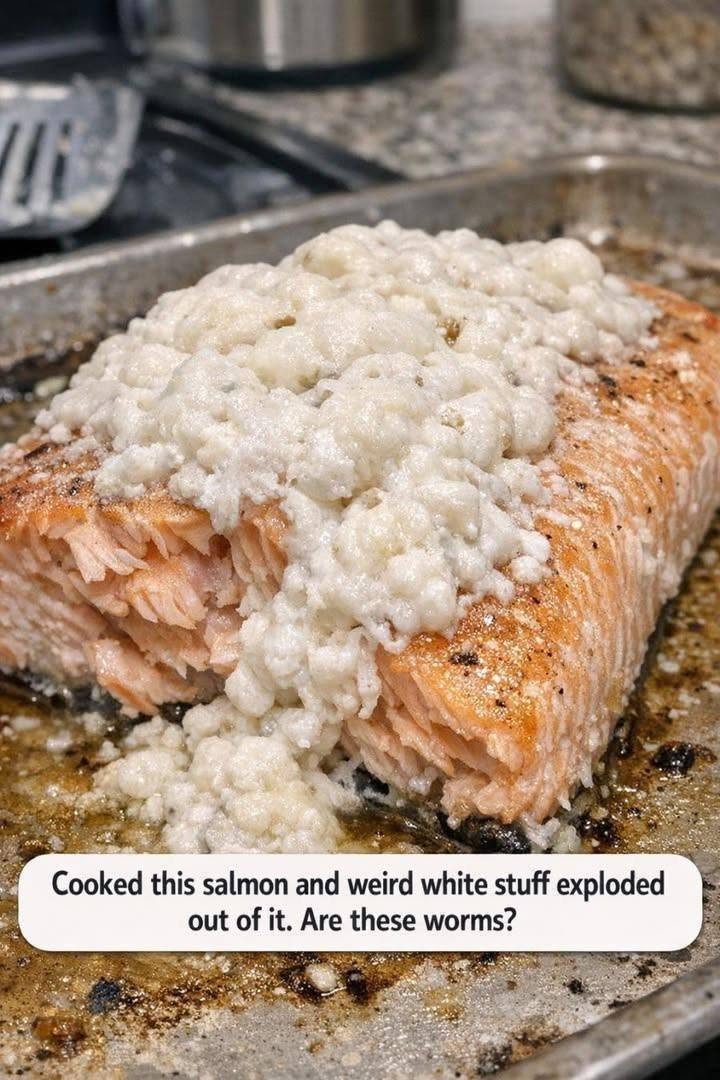
Noticed strange white stuff coming out of your salmon while cooking? Learn what the white substance usually is, how to distinguish it from possible parasites, and how to cook fish safely.
Cooking salmon at home can sometimes produce a surprising sight: white, creamy-looking material appearing on the surface of the fish. If you’ve ever noticed this, you may have wondered whether your salmon contains worms or parasites.
The good news is that white stuff coming out of cooked salmon is usually albumin, a natural protein—not worms. However, appearance alone cannot always rule out parasites or other food-safety concerns.
What Is the White Stuff on Cooked Salmon?
<AsyncImage query=”cooked salmon fillet with white albumin protein beads on surface close up” aspectRatio=”16:9″ width=”100%”/>
The white substance is commonly called albumin. It is a water-soluble protein naturally present in salmon.
When salmon heats up, its muscle fibers contract and push some of this protein toward the surface. The protein coagulates and turns white, becoming especially noticeable when the fish is cooked at high temperatures or for too long.
This is a normal cooking reaction and does not mean the salmon is contaminated.
How Can You Tell the Difference Between Albumin and Worms?
<row align=start gap={3}> <box flex=”1″ gap={1}> <AsyncImage query=”cooked salmon fillet white opaque albumin protein on surface food photography” aspectRatio=”5:4″ width=”100%”/> **Albumin (usually harmless)**
<text size="sm">White, opaque, flaky, or creamy-looking material spread across the surface or between the muscle flakes.</text></box> <box flex=”1″ gap={1}> <AsyncImage query=”Anisakis parasite thin white worm on raw fish fillet close up educational food safety photograph” aspectRatio=”5:4″ width=”100%”/> **Possible parasite**
<text size="sm">A distinct, thin, thread-like or coiled structure. Appearance alone cannot confirm its identity.</text></box> </row>
Parasites such as Anisakis can occur in some fish, including salmon. They may look like small, pale worms, sometimes curled within the flesh.
If you see a distinct worm-like object, do not assume it is albumin. Stop eating the fish until the concern has been assessed. A photograph may help a food-safety professional identify what you found.
Is Salmon Safe to Eat if White Stuff Comes Out?
Usually, yes, if the white material is ordinary albumin and the salmon has been handled and cooked safely.
For food safety, the U.S. FDA recommends cooking most seafood to an internal temperature of 145°F (63°C). Proper cooking kills parasites that may be present, although it does not make spoiled fish safe to eat.
If the salmon smells sour or ammonia-like, feels unusually slimy before cooking, or shows other signs of spoilage, discard it rather than relying on cooking to make it safe.
How to Reduce the White Stuff When Cooking Salmon
If the substance is albumin, these tips may help reduce its appearance:
- Cook the salmon gently rather than exposing it to excessive heat.
- Avoid overcooking the fillet.
- Use a food thermometer to check the internal temperature.
- Allow the fish to rest briefly after cooking.
You do not need to remove albumin for safety reasons; it is simply a natural fish protein.
Final Thoughts
White material emerging from cooked salmon is most often albumin, a normal protein that becomes visible during heating. It is not usually evidence of worms.
However, if what you saw was a separate, thread-like object rather than a soft white substance, its identity cannot be determined reliably from a description alone.
Did the white stuff look like creamy flakes, or did it look like a thin, separate worm? That difference can help narrow down what you saw.