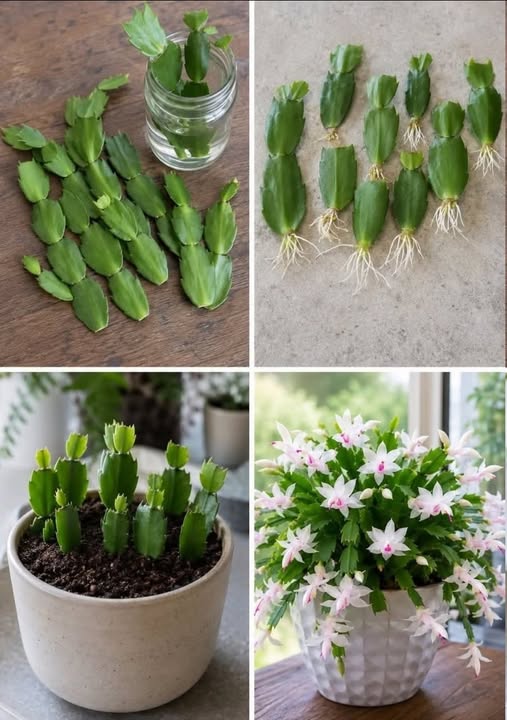
Learn how to make your Christmas cactus bloom more beautifully with simple watering, lighting, temperature, pruning, and fertilizing tips. Keep your plant healthy and encourage abundant flowers year after year.
Introduction
A Christmas cactus is one of the most beautiful houseplants to grow indoors. With its arching green stems and colorful flowers, it can brighten up a home during the colder months when many other plants are resting. Its blooms may appear in shades of pink, red, white, purple, orange, and peach, creating a lovely display just in time for the holiday season.
However, many plant owners experience the same frustration: their Christmas cactus grows plenty of green segments but produces only a few flowers—or none at all. Others enjoy a beautiful display one year, only to find that the plant refuses to bloom the following season.
The good news is that a Christmas cactus does not need complicated care to thrive. The secret lies in providing the right balance of light, moisture, temperature, nutrients, and seasonal rest. With a few simple adjustments, you can encourage healthier growth, more flower buds, and a fuller display year after year.
Although no method can guarantee twice as many blooms, understanding what this plant needs can significantly improve your chances of enjoying a spectacular flowering season.
1. Understand What Your Christmas Cactus Needs
Before changing your plant care routine, it helps to understand how Christmas cacti grow naturally.
Christmas cacti belong to the genus Schlumbergera. Unlike desert cacti, which are adapted to hot, dry environments, these plants originate from the humid forests of southeastern Brazil. They typically grow on trees or rocks in shaded, humid locations rather than in desert sand.
This difference explains why they prefer bright, indirect light, moderate moisture, and a well-draining growing medium.
Christmas cacti also respond to seasonal changes. Shorter days and cooler nighttime temperatures help trigger flower formation. A plant kept in warm conditions with bright artificial lighting late into the evening may continue growing green segments without producing many flower buds.
The key to abundant blooms is to support healthy growth throughout the year and provide the correct conditions when the plant is ready to flower.
2. Give Your Plant Bright, Indirect Light
Lighting is one of the most important factors in keeping a Christmas cactus healthy.
Although these plants need light to grow and produce energy, harsh direct sunlight can scorch their flattened stems. On the other hand, a dark corner may prevent the plant from growing vigorously or developing many flower buds.
Where should you place it?
Choose a location that receives bright, filtered daylight. An east-facing window is often an excellent choice because it provides gentle morning sunlight. A bright north-facing window may also work, depending on your location and the season.
If your plant sits near a south- or west-facing window, use a sheer curtain to soften intense sunlight.
Look for these signs:
- Healthy green segments generally indicate that the plant is receiving suitable light.
- Pale, reddish, or purplish segments may indicate excessive light or another form of stress, although some varieties naturally develop reddish coloring.
- Long, weak growth with few flowers may suggest insufficient light.
- Scorched or bleached patches can indicate exposure to strong direct sunlight.
A simple lighting routine
During spring and summer, provide bright, indirect light to support new growth. As autumn approaches, maintain good daytime light while allowing the plant to experience naturally shorter days.
Avoid moving the plant repeatedly between very different lighting conditions. Gradual adjustments help reduce stress and allow it to adapt.
3. Master the Art of Watering
Incorrect watering is one of the most common reasons Christmas cacti struggle.
Despite their name, these plants are not adapted to prolonged drought in the same way as desert cacti. Their roots need moisture, but they also need oxygen. Soil that remains soggy can suffocate the roots and encourage root rot.
How often should you water?
There is no universal watering schedule because soil type, pot size, indoor temperature, humidity, and season all affect how quickly the growing medium dries.
Instead of watering on a fixed day, check the soil first.
- Insert your finger about an inch into the top layer of soil.
- If it feels dry, check whether the pot feels lighter and whether deeper soil is beginning to dry.
- Water thoroughly when appropriate, allowing excess water to drain through the bottom.
- Empty the saucer or decorative outer pot so the roots do not sit in standing water.
During active growth, the plant may need more frequent watering. In cooler conditions after flowering, water less often as the soil dries more slowly.
Do not allow the plant to remain completely dry for long periods, but never keep its roots constantly wet.
What about watering during flowering?
While buds and flowers are developing, aim for consistent moisture without waterlogging. Sudden swings between very dry and very wet soil can stress the plant and may contribute to bud drop.
Using room-temperature water is a simple way to avoid exposing the roots to sudden temperature changes.
4. Choose the Right Soil and Pot
Even a well-watered plant can struggle if it grows in dense soil that holds too much moisture.
Christmas cacti need a loose, airy growing medium that drains efficiently while retaining enough moisture for their roots.
A suitable mix may contain:
- Two parts quality indoor potting mix.
- One part perlite or pumice for improved drainage.
- One part fine orchid bark or another airy component, if available.
You can adjust the proportions according to the materials you have, provided the final mixture is light and drains freely.
Why pot drainage matters
Always choose a pot with drainage holes. Decorative containers without drainage can trap water around the roots, even when the surface appears dry.
A pot that is slightly snug around the roots is generally preferable to a very large container filled with wet soil. Christmas cacti can flower well when somewhat pot-bound, so there is no need to move them into a much larger pot every year.
Repot when the growing medium breaks down, drainage becomes poor, or the roots have outgrown the container. After repotting, give the plant time to settle before making major changes to its care routine.
5. Use Fertilizer to Support Healthy Growth
A Christmas cactus needs nutrients to develop new segments and maintain the energy required for flowering. However, more fertilizer does not automatically mean more flowers.
Excessive feeding, particularly with a fertilizer high in nitrogen, can encourage leafy growth at the expense of a balanced flowering response.
When should you fertilize?
During active growth after flowering, use a balanced, water-soluble houseplant fertilizer diluted according to the label. Many growers feed lightly every few weeks during the growing season, adjusting the frequency to the product and the plant’s response.
Reduce or stop routine feeding as the plant enters its bud-setting period, following the fertilizer’s instructions and your plant’s seasonal growth pattern.
Avoid fertilizing a severely dry, waterlogged, or unhealthy plant. Address the underlying problem first.
Should you use special blooming fertilizer?
A fertilizer marketed for flowering plants may be suitable, but it is not a magic solution. A healthy root system, appropriate lighting, and the correct autumn conditions matter far more than choosing a product with an unusually high phosphorus number.
Remember that fertilizer supports growth; it cannot compensate for inadequate light or incorrect watering.
6. Use Cooler Nights to Encourage Flower Buds
One of the most effective ways to encourage Christmas cactus blooms is to provide suitable conditions during autumn.
Flower formation is influenced by both day length and temperature. Many Christmas cacti respond well to cooler nights and naturally shorter days, although the precise response varies by cultivar.
The importance of autumn conditions
For several weeks before the desired flowering period, aim to provide nighttime temperatures around 55–65°F (13–18°C), if practical, while avoiding sudden temperature changes.
Cooler conditions can help initiate flowering, especially when combined with shorter days.
Keep the plant away from cold drafts, heating vents, and locations where temperatures fluctuate dramatically.
Do not place it outdoors if temperatures may approach freezing. Christmas cacti are tropical plants and can be damaged by cold exposure.
Why a warm room may prevent flowering
A plant kept in consistently warm conditions may continue producing new green growth instead of forming flower buds, particularly if it also receives artificial light late at night.
If your cactus looks healthy but refuses to bloom, review its nighttime temperature and lighting before changing the fertilizer.
7. Give It the Right Amount of Darkness
Christmas cacti are commonly encouraged to flower by providing long, uninterrupted nights.
For approximately six to eight weeks before the desired bloom period, many growers aim for around 12–14 hours of uninterrupted darkness each night, alongside suitable daytime light and cool nighttime temperatures.
This is particularly useful in homes where lamps, television screens, or bright room lighting extend the apparent day.
How to create a suitable routine
- Provide bright, indirect light during the day.
- Place the plant in a naturally dark room at night or cover it with a breathable, opaque cover that does not press against the stems.
- Keep the nighttime routine consistent.
- Continue for several weeks while watching for developing flower buds.
Avoid placing the covered plant in a hot, poorly ventilated space. Excess heat can damage it.
If your home naturally has shorter autumn days and cool nights, you may not need to create an artificial darkness routine.
Important: Do not confuse the plant’s need for a seasonal flowering cue with a need to keep it in darkness all day. Healthy daytime light remains essential.
8. Avoid Moving the Plant Once Buds Appear
One of the most disappointing experiences for Christmas cactus owners is watching flower buds develop and then fall off before opening.
Bud drop can occur for several reasons, including abrupt changes in temperature, inconsistent watering, low humidity, excessive heat, and changes in light exposure.
Moving a plant from a cool, stable location to a hot room may also contribute to the problem.
How to protect developing buds
Once buds appear, keep the plant in a stable environment.
- Avoid rotating or relocating it unnecessarily.
- Maintain consistent watering without soaking the roots.
- Keep it away from heaters and cold drafts.
- Avoid repotting while it is preparing to flower.
- Maintain moderate indoor humidity if the air is very dry.
Some growers turn their plants periodically during active growth to encourage even development. However, once buds are visible, stability is usually the safer approach.
A few dropped buds do not necessarily mean the plant is unhealthy. The important thing is to identify and correct any ongoing environmental stress.
9. Prune for a Fuller Plant and More Potential Blooms
If you want a Christmas cactus with a fuller shape and more flowering points, thoughtful pruning can help.
Flowers generally develop at the ends of mature stem segments. Encouraging branching can therefore create more potential places for flowers to appear in a future season.
When should you prune?
The best time to shape the plant is usually after flowering has finished, once the plant has had a little time to recover.
Avoid heavy pruning while the plant is developing buds or is in full bloom.
How to prune correctly
- Inspect the plant and identify long, uneven, or weak branches.
- Gently twist off one or two segments at a natural joint, or use clean scissors.
- Remove only a modest amount at first.
- Allow the plant to recover before making further cuts.
Removing a few terminal segments can encourage branching near the cut points. More branches may mean more potential flowering tips during a future blooming cycle.
However, pruning too heavily can remove healthy growth and reduce the plant’s ability to flower in the short term. Aim for gradual shaping rather than cutting back the entire plant.
Can you grow new plants from the cuttings?
Yes. Healthy stem cuttings can be used to propagate additional Christmas cacti.
Allow the cut ends to dry for a short period, then place the base of a cutting into a lightly moist, well-draining propagation medium. Keep it in bright, indirect light and avoid keeping the medium waterlogged.
Once roots develop and new growth begins, the cutting can be cared for as a young plant.
10. Maintain Healthy Humidity
Christmas cacti generally appreciate moderate humidity, especially in homes where heating systems make the air dry during winter.
Very dry indoor air may contribute to shriveling, stress, or bud problems, although watering, roots, and temperature should also be considered when diagnosing symptoms.
Easy ways to improve humidity
- Group several houseplants together.
- Place the pot on a pebble tray containing water, ensuring the pot base remains above the waterline.
- Use a room humidifier when indoor air is consistently dry.
- Keep the plant away from direct blasts of hot air.
Occasional misting is not a substitute for proper watering or stable humidity. If misting leaves the stems wet for extended periods, particularly in a cool room with poor airflow, it may encourage problems.
Good air circulation and moderate humidity are a better combination than constantly wet foliage.
11. Follow a Seasonal Care Routine
Christmas cactus care becomes much easier when you adapt your routine to the plant’s natural growth and flowering cycle.
Spring: Recovery and new growth
After flowering, allow the plant to recover. Resume normal care, provide bright indirect light, and feed moderately during active growth. Prune lightly if you want a fuller shape.
Summer: Healthy development
Continue watering when needed, provide suitable light, and protect the plant from intense direct afternoon sun. A sheltered outdoor location may be suitable in warm weather, provided the plant is gradually acclimated and protected from harsh sunlight, pests, and extreme temperatures.
Bring it indoors before cold weather arrives.
Early autumn: Prepare for flowering
Begin providing longer, uninterrupted nights and cooler nighttime temperatures if necessary. Continue supplying adequate daytime light and avoid excessive fertilizer.
This period is particularly important if your goal is to encourage a strong display of flowers.
Late autumn and winter: Buds and blooms
Maintain stable conditions once buds form. Water consistently without waterlogging, avoid major changes in location, and protect the plant from cold drafts and heating vents.
After flowering, allow the plant to rest briefly before returning to its active-growth routine.
Exact timing varies by cultivar, local climate, indoor conditions, and whether you grow a Thanksgiving cactus or a true Christmas cactus.
12. Why Is Your Christmas Cactus Not Blooming?
If your plant produces healthy green segments but no flowers, look for the most likely cause before changing several things at once.
Too much light at night: Bright indoor lighting can interfere with the long-night conditions used to trigger flowering. Try providing uninterrupted darkness for several weeks.
Nighttime temperatures are too warm: Consistently warm conditions may prevent a strong flowering response. Provide cooler nights within a safe range.
Insufficient daytime light: Move the plant to a brighter location with indirect sunlight.
Excessive nitrogen fertilizer: Reduce feeding and use a balanced fertilizer at the recommended dilution during active growth.
Recently repotted plant: The plant may need time to establish itself, especially if it was moved into an unnecessarily large container.
Poor root health: Soggy soil, a sour smell, or soft, discolored roots may indicate root rot. Improve drainage and address damaged roots rather than adding more fertilizer.
Immature growth: Young cuttings may need time to develop enough healthy segments before flowering reliably.
Change one or two conditions at a time and observe the results. This makes it easier to identify what your plant actually needs.
13. Common Christmas Cactus Care Mistakes to Avoid
Even experienced gardeners can accidentally reduce flowering by overlooking a few basic details.
Overwatering
Constantly wet soil can damage roots and cause stem segments to become soft or discolored. Always check soil moisture and ensure the pot drains freely.
Keeping the plant in deep shade
A plant can survive in low light for some time, but survival is not the same as vigorous growth. Provide bright, indirect light for healthier stems and better flowering potential.
Fertilizing too frequently
More fertilizer is not necessarily better. Excess nutrients can damage roots or promote unbalanced growth. Follow the product label and reduce feeding when growth slows.
Ignoring seasonal changes
Christmas cacti often need different conditions during active growth and flower initiation. Providing the same warm, brightly lit environment throughout the year may reduce the chance of flowering.
Repotting at the wrong time
Repotting during bud development can add unnecessary stress. Unless there is an urgent problem with the roots or soil, wait until after flowering.
Confusing Christmas cactus with Thanksgiving cactus
These related plants look similar but may flower at different times. Thanksgiving cacti often have pointed projections along their stem segments, while true Christmas cacti generally have smoother, more rounded segment edges.
Their flowering schedules can differ, so identifying your plant correctly can help you understand when to expect blooms.
14. Can You Make a Christmas Cactus Bloom Twice a Year?
Some Christmas cacti bloom more than once in a year, especially when environmental conditions are favorable. However, a second flowering is not guaranteed, and the timing varies by plant and growing conditions.
After the main flowering period, allow the plant to recover and resume healthy growth. A well-established plant may produce another flush of flowers under suitable conditions, but repeatedly forcing flowering can place unnecessary stress on it.
Rather than trying to make the plant bloom continuously, focus on building strong stems and healthy roots. A well-cared-for plant is more likely to reward you with dependable seasonal flowers over many years.
15. A Simple Routine for Encouraging More Blooms
If you prefer an easy plan rather than a complicated care schedule, concentrate on these essential habits:
- Provide bright, indirect light: Keep the plant away from harsh afternoon sun.
- Water according to soil moisture: Avoid both prolonged dryness and waterlogged soil.
- Use an airy growing medium: Choose a pot with drainage holes.
- Feed during active growth: Apply a balanced fertilizer at the recommended strength.
- Encourage cool, long nights in autumn: Maintain suitable nighttime temperatures and uninterrupted darkness for several weeks.
- Prune lightly after flowering: Encourage branching without removing too much healthy growth.
- Keep the plant stable when buds appear: Avoid sudden changes in temperature, light, and watering.
- Inspect regularly: Look for pests, root problems, and signs of environmental stress.
Consistency is more valuable than constantly changing the plant’s environment.
Frequently Asked Questions
How often should I water a Christmas cactus?
Water when the upper layer of soil has begun to dry and the growing medium needs moisture. The interval depends on the season, temperature, pot, and soil. Always allow excess water to drain away.
What is the best fertilizer for a Christmas cactus?
A balanced, water-soluble houseplant fertilizer is generally suitable during active growth. Follow the label and avoid overfeeding. Special blooming formulas are not essential if the plant already receives appropriate care.
Why does my Christmas cactus have buds that never open?
Possible causes include environmental stress, abrupt temperature changes, inconsistent watering, excessive heat, or other root and care problems. Keep the plant in a stable location and maintain appropriate moisture.
Should I remove spent flowers?
Yes. You can gently remove wilted flowers to keep the plant tidy. Avoid damaging the surrounding stem segments or removing healthy growth unnecessarily.
Does a Christmas cactus like direct sunlight?
It generally prefers bright, indirect light. Gentle morning sun may be tolerated, but strong direct sunlight can scorch its stems.
Can a Christmas cactus live for many years?
Yes. With appropriate care, Christmas cacti can live for decades and may be passed from one generation to another. Older, established plants can become large and produce impressive displays.
Is coffee grounds fertilizer good for Christmas cactus?
Fresh coffee grounds are not a reliable stand-alone fertilizer for this plant. They can affect soil structure and moisture when used excessively. A measured, balanced houseplant fertilizer is a more predictable option.
Conclusion
A Christmas cactus does not need expensive products or complicated tricks to thrive. The most important factors are bright, indirect light, appropriate watering, a well-draining growing medium, moderate feeding, and the cooler temperatures and long nights that help trigger flowering.
Pruning lightly after the blooming season can encourage a fuller shape and create more potential flowering points in the future. Once buds appear, stable conditions help protect them until they open.
Remember that every plant responds a little differently. Some bloom generously with minimal intervention, while others need adjustments to their lighting, temperature, or watering routine.
With patience and consistent seasonal care, your Christmas cactus can remain a healthy, attractive houseplant and reward you with colorful flowers year after year.