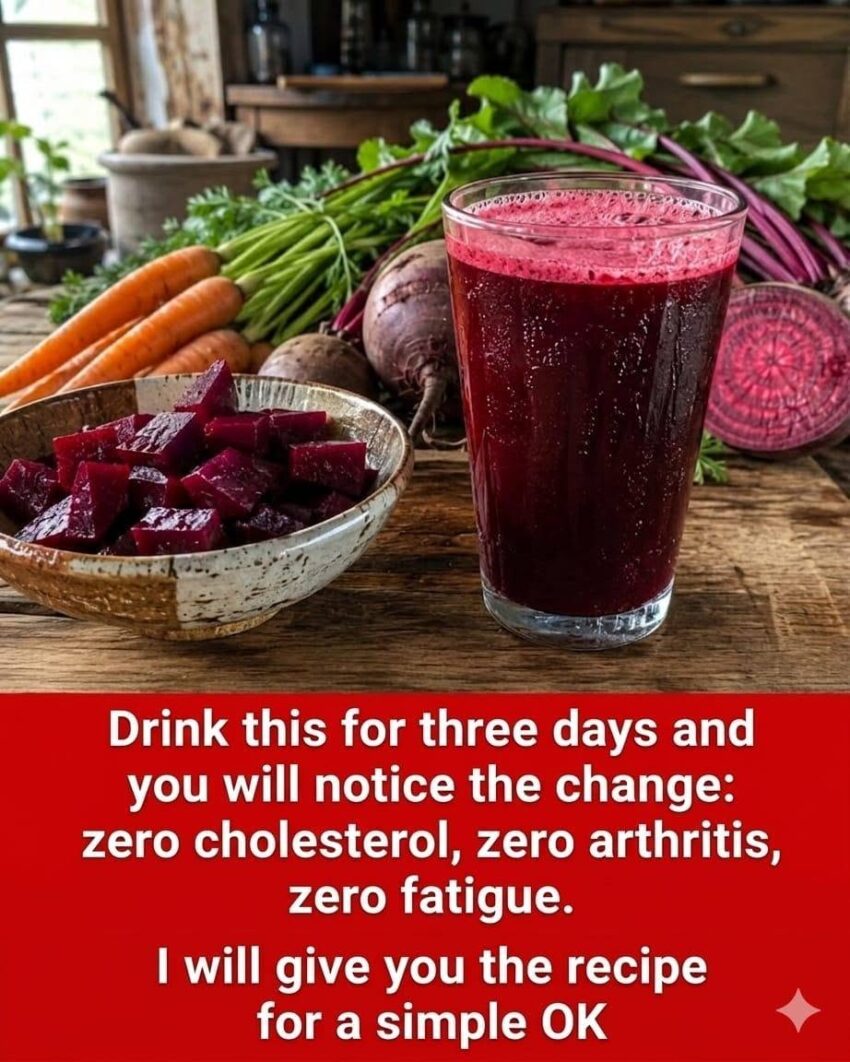
Discover the potential benefits of carrot and beetroot juice, including its nutrients, antioxidant properties, possible support for healthy blood pressure, how to prepare it, the best time to drink it, and important precautions.
Carrot and Beetroot Juice: Benefits, Remedy, How to Make It, and How to Use It
Carrot and beetroot juice is a colorful, nutrient-rich drink made by combining two naturally sweet root vegetables. Carrots provide beta-carotene and other carotenoids, while beetroot contains nitrates and antioxidant compounds called betalains. Together, they can make a refreshing addition to a balanced diet.
Although this juice is sometimes promoted online as a “detox,” “blood purifier,” or cure for various diseases, it is more accurate to think of it as a nutritious food rather than a medicine. Research on beetroot juice is particularly interesting because dietary nitrate may help support blood-vessel function and healthy blood pressure. Several systematic reviews and meta-analyses have found modest reductions in systolic blood pressure with beetroot juice consumption.
What Makes Carrot and Beetroot Juice Healthy?
The nutritional value of this drink comes from several naturally occurring compounds.
Carrots
Carrots are especially rich in carotenoids, including beta-carotene. The body can convert beta-carotene into vitamin A, which contributes to normal vision, immune function, and maintenance of skin and other tissues.
Beetroot
Beetroot contains naturally occurring dietary nitrate. The body can convert nitrate through the nitrate-nitrite-nitric oxide pathway, and nitric oxide plays an important role in blood-vessel relaxation. Research suggests that beetroot juice may therefore have a modest blood-pressure-lowering effect.
Beetroot also contains betalains and other plant compounds with antioxidant activity.
Potential Benefits of Carrot and Beetroot Juice
1. May Support Healthy Blood Pressure
One of the better-studied benefits of beetroot juice is its possible effect on blood pressure.
A systematic review and meta-analysis found that beetroot juice supplementation was associated with reductions in both systolic and diastolic blood pressure, although the size of the effect varied between studies.
More recent research has also found a reduction in systolic blood pressure among adults with hypertension, although researchers rated the certainty of evidence as low and noted variation between studies.
This does not mean carrot-beet juice can replace blood-pressure medication. Instead, it may be one nutritious food that can fit into an overall heart-healthy eating pattern.
2. Provides Antioxidant Plant Compounds
Carrots and beets contain different types of plant pigments and antioxidants.
The deep red-purple color of beetroot comes largely from betalain pigments, while carrots contain carotenoids such as beta-carotene.
Eating a variety of colorful vegetables is an easy way to increase the range of beneficial plant compounds in your diet.
3. Supports Vitamin A Intake
Carrots are a particularly useful source of provitamin A carotenoids. Beta-carotene can be converted by the body into vitamin A, an essential nutrient involved in normal vision and immune function.
For this reason, carrot juice can contribute to overall nutrient intake, although whole carrots also provide dietary fiber that is reduced when vegetables are juiced.
4. May Support Exercise and Circulation
Beetroot juice has also been studied in relation to exercise because dietary nitrate can influence nitric oxide availability and blood-vessel function.
However, the amount of juice and nitrate varies considerably among products and recipes, so a homemade carrot-beet juice should not automatically be expected to produce the same effects as a standardized beetroot preparation used in research.
5. Can Be an Easy Way to Eat More Vegetables
Some people find it easier to consume vegetables as a juice than as a side dish.
Carrot and beetroot juice can be particularly useful for people who enjoy fresh vegetable drinks. However, it should complement—not replace—a varied diet containing whole vegetables, fruits, legumes, grains, protein sources, and healthy fats.
How to Make Carrot and Beetroot Juice at Home
Ingredients
- 2 medium carrots
- 1 small beetroot
- ½ small lemon, optional
- ½ inch fresh ginger, optional
- ½–1 cup clean drinking water, if using a blender
Method 1: Using a Juicer
- Wash the carrots and beetroot thoroughly.
- Peel them if desired.
- Cut them into pieces small enough for your juicer.
- Juice the carrots and beetroot together.
- Add lemon or a small piece of ginger if you like the flavor.
- Drink immediately or refrigerate promptly in a clean, covered container.
Method 2: Using a Blender
- Wash and chop the carrots and beetroot.
- Add them to a blender with about ½–1 cup of water.
- Blend until smooth.
- You can drink it as a thicker smoothie, or strain it through a clean fine-mesh strainer if you prefer juice.
- Add lemon or ginger for flavor.
Keeping some of the pulp makes the drink more filling and preserves more of the vegetable’s fiber.
A Simple Carrot and Beetroot Juice Recipe
For a balanced everyday version, try:
2 carrots + 1 small beetroot + ½ lemon + a small piece of ginger + water as needed.
The beetroot has a strong earthy flavor, so using more carrot can make the drink naturally sweeter.
Avoid adding sugar, syrups, or sweetened juices. The vegetables already provide natural sweetness.
How Much Should You Drink?
There is no universally established daily amount for homemade carrot-and-beetroot juice.
If you are new to beetroot juice, starting with a small glass—around 100–150 mL—is a reasonable food-based approach. You can see how your body responds before having more.
Research trials involving beetroot juice have used different quantities and formulations, so study doses should not automatically be treated as a recommendation for homemade juice. For example, a 2022 systematic review of trials in people with hypertension included daily amounts ranging from 70 to 250 mL.
Best Time to Drink Carrot and Beetroot Juice
There is no proven “magic” time of day when this juice must be consumed.
You can have it:
- With breakfast
- As a mid-morning drink
- With a meal
- Before physical activity, if it agrees with you
If juice causes stomach discomfort when consumed on an empty stomach, have it with or after food.
Can You Drink It Every Day?
For most healthy adults, a moderate serving can be included as part of a varied diet.
However, drinking large amounts every day is not necessarily better. Juice contains less fiber than whole vegetables and can be easier to consume quickly.
A practical approach is to keep portions moderate and continue eating whole carrots, beets, leafy greens, fruits, and other vegetables.
Important Precautions
Beetroot Can Turn Urine or Stool Red
Beetroot can cause pink, red, or reddish urine or stool. This is known as beeturia and can be harmless after eating beets.
However, if you notice blood in your urine or stool without a clear connection to beet consumption—or if the symptom persists—speak with a healthcare professional rather than assuming it is from beetroot.
Be Careful If You Have Low Blood Pressure
Because beetroot juice may lower blood pressure, people who already have low blood pressure should avoid consuming large quantities without medical advice.
People taking blood-pressure medicines should also discuss regular beetroot juice consumption with their healthcare professional, particularly if they experience dizziness or unusually low blood pressure.
Kidney Stone Concerns
Beetroot is relatively high in oxalates. People who have been advised by a healthcare professional to follow a low-oxalate diet, especially those with a history of certain calcium-oxalate kidney stones, should ask their doctor or dietitian whether beetroot juice is appropriate for them.
Don’t Treat It as a Disease Cure
Carrot and beetroot juice should not be promoted as a cure for cancer, diabetes, high blood pressure, anemia, fatty liver disease, or other medical conditions.
It can provide useful nutrients, but no single juice can replace appropriate medical treatment.
Carrot and Beetroot Juice for Detox
The word “detox” is commonly used in juice recipes, but the body already has organs—including the liver and kidneys—that continuously process and eliminate waste products.
Instead of calling this drink a detox treatment, it is more accurate to describe it as a nutrient-rich vegetable beverage that can be part of a healthy diet.
Carrot and Beetroot Juice for Skin
Because carrots provide provitamin A carotenoids and both vegetables contain antioxidant compounds, including them in a balanced diet can contribute to overall nutritional health.
However, drinking this juice will not automatically remove wrinkles, dark spots, acne, or other skin problems. Skin health depends on many factors, including genetics, sun exposure, nutrition, sleep, and skincare.
Carrot and Beetroot Juice for Energy
The natural carbohydrates in carrots and beets provide energy, while beetroot has been studied for its nitrate content and potential effects on exercise physiology.
If you want a more filling drink, blend rather than strain the vegetables and consider pairing the drink with a protein-rich food such as yogurt, eggs, or nuts.
Final Thoughts
Carrot and beetroot juice can be a delicious way to add more vegetables and plant compounds to your diet. Carrots provide beta-carotene and other carotenoids, while beetroot supplies dietary nitrate and betalains. Research suggests beetroot juice may modestly lower systolic blood pressure in some adults, but it should be viewed as a dietary option—not a replacement for prescribed treatment.
For a simple homemade version, combine 2 carrots with 1 small beetroot, adding lemon or ginger for flavor. Start with a moderate serving and pay attention to how your body responds.
The most important point is consistency with an overall healthy lifestyle: plenty of whole vegetables and fruits, adequate protein and fiber, regular physical activity, sufficient sleep, and appropriate medical care when needed.