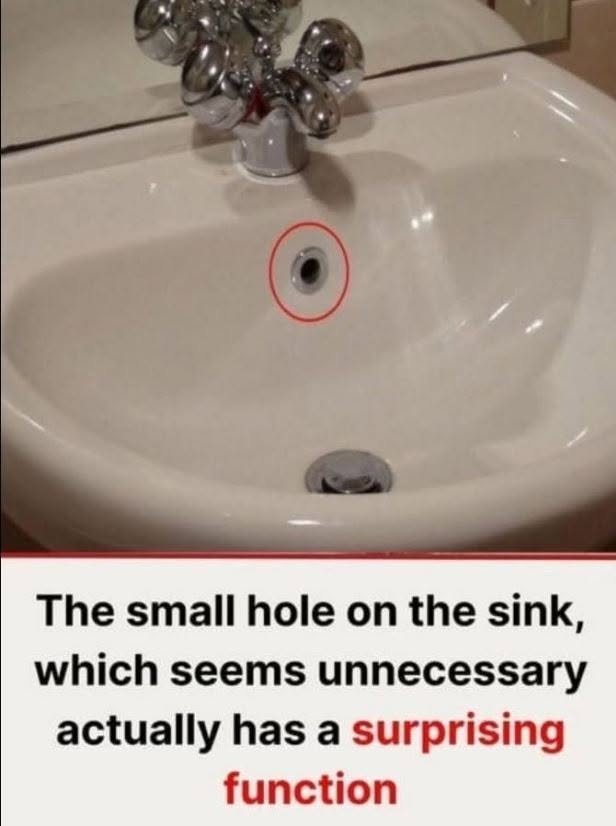
that small hole near the top of your bathroom sink isn’t just a design feature. Discover what it does, why it’s important, and how to keep it clean and odor-free.
Have you ever looked closely at your bathroom sink and noticed a small hole near the upper inside wall of the basin, usually just below the faucet?
You may have wondered whether it is a manufacturing mistake, an unused opening, or perhaps a hidden drain.
Actually, that little hole has a very practical purpose.
It’s an Overflow Opening
The small opening is called an overflow hole or overflow opening.
Its main job is to help prevent water from spilling over the edge of the sink if the basin begins to fill too high.
Imagine that you accidentally leave the faucet running while the sink stopper is closed. The water level gradually rises. Once it reaches the overflow opening, water can flow through that passage and into the drainage system instead of immediately spilling over the front edge of the basin.
It’s essentially a backup route for excess water.
How Does the Sink Overflow Work?
The hole is usually connected to a channel or passage inside the sink.
When water reaches the opening:
Sink fills → water reaches overflow opening → water enters hidden passage → water is directed toward the drain.
The exact design varies between sinks, but the basic purpose is the same: help reduce the risk of an overflowing basin.
However, the overflow hole is not an unlimited safety system. A badly clogged drain, extremely high water flow, or certain sink designs can still allow water to overflow.
Why Is the Hole So High Up?
You might wonder why manufacturers don’t simply put the hole near the bottom.
The answer is simple: the opening needs to sit above the normal water level.
Under ordinary circumstances, water goes down the main drain. The overflow only becomes useful when the water rises unusually high.
That’s why you’ll usually find it near the upper portion of the basin.
That Little Hole Can Get Surprisingly Dirty
Because water, soap residue, toothpaste, hair, skin oils, and other debris can enter the overflow passage, it can become dirty over time.
Unlike the main drain, the inside of the overflow channel can be difficult to see.
This can sometimes contribute to:
- Musty smells
- Slime or buildup
- Bacteria and grime
- Dark residue around the opening
So although the hole is small, it shouldn’t be completely ignored when cleaning your bathroom sink.
How to Clean the Sink Overflow Hole
You don’t need complicated equipment for routine cleaning.
Method 1: Warm Water
For light buildup:
- Remove visible dirt around the opening.
- Pour a small amount of warm water into the overflow opening.
- Allow it to flow through the internal passage.
- Wipe around the opening with a clean cloth.
Avoid using boiling water if you’re unsure what materials your sink or plumbing can tolerate.
Method 2: Dish Soap
For greasy or soapy residue:
- Mix a small amount of dish soap with warm water.
- Apply the mixture around the opening.
- Use a small soft brush to clean the accessible area.
- Rinse thoroughly with warm water.
A small bottle brush can also help reach areas around the opening.
Method 3: Regular Bathroom Cleaning
The easiest approach is prevention.
Whenever you clean your sink basin, wipe around the overflow opening as well. This prevents residue from accumulating and makes deeper cleaning less necessary.
What About the Black Grime Inside?
If you notice dark or slimy material around the overflow opening, don’t automatically assume it’s dangerous mold.
It can be a mixture of soap residue, dirt, bacteria, minerals, and organic debris.
Clean the area regularly and make sure the bathroom has adequate ventilation.
If there’s a persistent foul smell or heavy buildup that you can’t remove, professional plumbing or cleaning advice may be appropriate.
One Common Mistake to Avoid
Don’t permanently block the overflow hole.
Some people may be tempted to seal it because they don’t like the appearance or because they believe it causes odors.
But blocking it removes one of the sink’s important safety features.
If you’re experiencing an unpleasant smell from the opening, clean the passage rather than sealing it shut.
The Bottom Line
That mysterious little hole near the top of your bathroom sink has a simple but important purpose: it’s an overflow opening designed to provide a secondary path for excess water.
So the next time you see it, don’t dismiss it as an unnecessary hole. Keep it clean, keep it unobstructed, and let it do its job.
Sometimes the smallest features in our homes are there for a very good reason.