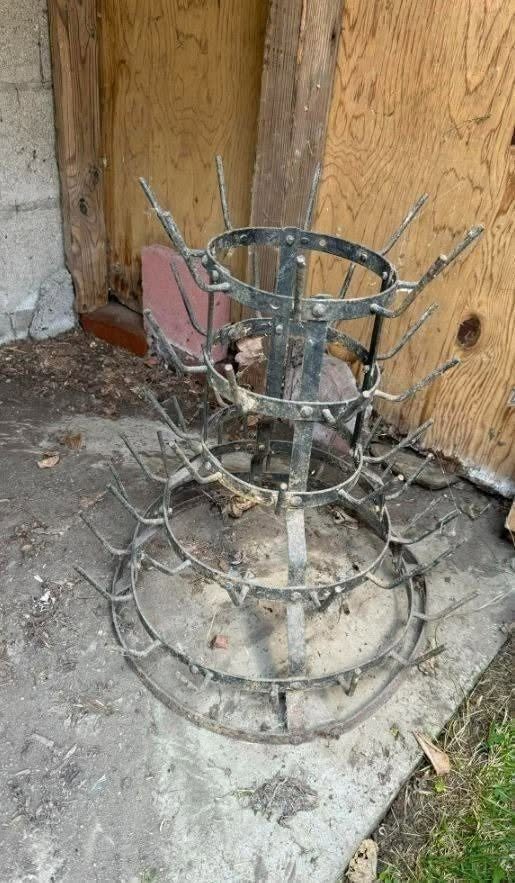
A mysterious object discovered inside a house dating back to 1907 has people guessing about its original purpose. Here are some fascinating possibilities.
Finding an unusual object inside a century-old house can feel like discovering a tiny piece of history.
A house built in 1907 could contain all kinds of items that homeowners today would struggle to identify. Before modern appliances, plumbing systems, electrical fixtures, and mass-produced household products became commonplace, everyday life looked very different.
So when someone discovers a strange object hidden in an old home, the first question is always:
“What on earth was this used for?”
Why Old Houses Contain So Many Mysteries
Homes from the early 1900s often underwent multiple renovations. Walls were opened, floors were replaced, plumbing was upgraded, and electrical systems were installed or modified.
During those renovations, homeowners sometimes uncover:
- Old plumbing components
- Antique hardware
- Early electrical fixtures
- Heating-system parts
- Cabinet or furniture hardware
- Tools
- Kitchen utensils
- Children’s toys
- Old bottles and containers
- Architectural pieces
- Objects that were built into the original house
Some objects that look completely mysterious today were once ordinary household items.
Could It Be Part of the Original House?
That’s one of the first possibilities worth considering.
If the object was attached to a wall, floor, ceiling, door, fireplace, cabinet, or plumbing system, it may have been part of the home’s original construction.
The location where it was discovered can provide an important clue.
For example, something found near a fireplace could have been related to heating, while an object near old plumbing might have served a completely different purpose.
The Shape Can Tell a Story
When trying to identify an antique object, look closely at its construction.
Ask:
Is it made of brass, iron, copper, wood, ceramic, or another material?
Does it have threads, holes, hooks, screws, hinges, or moving parts?
Does it appear to have been attached to something?
Even tiny details can help narrow down its original purpose.
Don’t Throw It Away Yet
If you discover something unusual while renovating an old house, resist the temptation to immediately throw it in the trash.
An apparently worthless piece of hardware could provide information about the home’s original construction or previous occupants.
Take several clear photographs from different angles and record exactly where you found it.
If possible, keep any markings, numbers, manufacturer’s names, or unusual symbols visible.
The Most Important Clue: Where Was It Found?
Sometimes the location is more useful than the object itself.
An item discovered inside a wall could have a very different explanation from one found under a floorboard, in an attic, behind a fireplace, or inside an old cabinet.
That’s why identifying an antique mystery object from a photograph alone can be surprisingly difficult.
So, What Is It?
Without seeing the object, there are simply too many possibilities to make a reliable identification.
Upload a clear photo of the item—preferably several angles—and I can help identify what it most likely is, what it was used for, and whether it could da