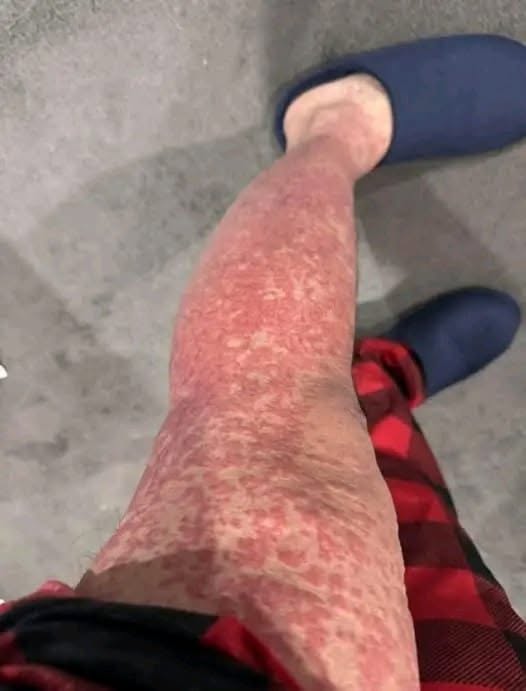
Red, dry, scaly skin on the legs can have several causes, including eczema, psoriasis, dermatitis, fungal infections, or poor circulation. Learn what these changes may mean and when medical care is important.
Red, Scaly Skin on the Legs: Causes You Should Know
A leg that becomes red, dry, rough, and covered with visible scaling can look alarming. The appearance in the picture shows extensive redness and scaling over the lower leg, but a photo alone cannot determine the exact diagnosis. Several different skin conditions can produce a similar appearance.
Understanding the possible causes can help you recognize when simple skin care may be enough and when it is better to see a healthcare professional.
1. Eczema and Dermatitis
Eczema can cause skin to become:
- Red or inflamed
- Extremely dry
- Rough and scaly
- Itchy
- Cracked or irritated
Contact dermatitis can occur when the skin reacts to soaps, detergents, creams, fabrics, or other substances.
2. Psoriasis
Psoriasis is another possibility when there are well-defined red patches covered with dry, flaky scales. It commonly affects the knees and elbows, although other areas can also be involved.
Psoriasis is a chronic inflammatory skin condition and usually requires proper evaluation rather than relying on home remedies alone.
3. Extremely Dry Skin
Very dry skin can sometimes become dramatically rough and flaky, particularly during cold or dry weather. Frequent hot showers, harsh soaps, and inadequate moisturizing can make the problem worse.
A gentle, fragrance-free moisturizer applied regularly can help protect the skin barrier.
4. Fungal Infection
Some fungal infections cause redness, scaling, itching, and irritation. They may have a more defined border or appear in particular patterns.
Because fungal infections require different treatment from eczema or psoriasis, it is important not to assume that every scaly rash should be treated with the same cream.
5. Circulation-Related Skin Changes
Redness, scaling, swelling, heaviness, or skin-color changes around the lower legs can sometimes be associated with venous circulation problems, particularly in people who spend long periods standing or sitting.
If skin changes are accompanied by persistent swelling, pain, warmth, or sores, medical evaluation becomes especially important.
When Should You See a Doctor?
A persistent or spreading rash deserves professional assessment, especially if it is:
- Becoming increasingly red or painful
- Warm or swollen
- Producing fluid, pus, or an unpleasant smell
- Developing cracks or open sores
- Associated with fever
- Spreading rapidly
- Not improving with basic skin care
Sudden severe redness, swelling, warmth, significant pain, or fever can sometimes indicate an infection and should be assessed promptly.
What Can You Do Until It Is Evaluated?
If the skin is simply dry and irritated, avoid scratching and use a gentle, fragrance-free moisturizer. Keep showers lukewarm rather than very hot, and avoid harsh soaps, scrubs, and strongly fragranced products.
However, if the rash is extensive like the one shown in the image, getting an in-person examination is the safest way to identify the cause and choose the correct treatment.
Final Thought
Red, scaly skin on the leg is a symptom rather than a diagnosis. Eczema, psoriasis, dermatitis, fungal infections, severe dryness, and circulation-related conditions can sometimes look similar. The pattern, duration, itching, swelling, pain, and other symptoms help a clinician determine the actual cause.
Important: This article is for general information and should not replace an examination by a qualified healthcare professional.