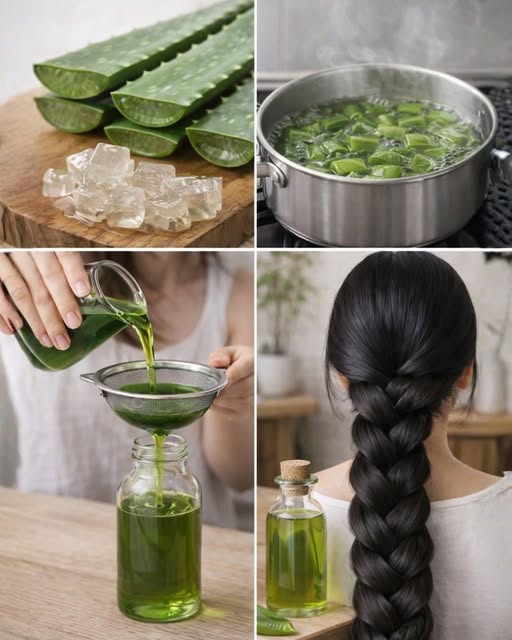
Aloe vera has been used for generations as a simple natural ingredient for soothing and moisturizing the skin and scalp. Its cooling gel can also make the hair feel softer and more conditioned. While aloe vera oil is often promoted online as a way to make hair grow faster and stop hair loss, there is not enough reliable clinical evidence to say that aloe vera alone can regrow thinning hair or stop true hair loss.
That doesn’t mean an aloe-infused hair oil has no place in a hair-care routine. Used properly, it may help moisturize the scalp and reduce dryness, while the carrier oil can help condition the hair and minimize breakage.
The important distinction is this: less breakage can make your hair appear fuller and longer over time, but it is not the same as treating hair loss from the follicle.
What Is Aloe Vera Oil?
Aloe vera oil is usually not oil extracted directly from the aloe plant. Instead, fresh aloe vera gel is combined with a carrier oil such as coconut, olive, jojoba, or almond oil.
The aloe provides its soothing and moisturizing properties, while the carrier oil helps spread the mixture through the hair and scalp.
A homemade version can be inexpensive and easy to prepare, but because fresh aloe contains water, homemade mixtures can spoil quickly. Proper preparation and storage are therefore important.
Ingredients You’ll Need
For a small batch, you can use:
- ½ cup fresh aloe vera gel
- ½ cup coconut oil, olive oil, or jojoba oil
- A clean saucepan
- A blender or spoon
- A clean, dry glass container
- A fine strainer or cheesecloth
Optional: A few drops of rosemary essential oil can be added for fragrance, but essential oils should always be properly diluted and may irritate sensitive skin.
How to Make Aloe Vera Oil at Home
Step 1: Prepare the Aloe Vera
Cut a fresh aloe vera leaf and wash it thoroughly.
Allow the yellowish latex to drain away before collecting the clear inner gel. The outer leaf and latex are different from the clear inner gel and can cause unwanted effects.
NCCIH notes that aloe products can contain gel, latex, or whole-leaf material, and topical aloe gel is generally well tolerated but can occasionally cause burning, itching, rash, or eczema.
Step 2: Blend the Gel
Scoop out approximately ½ cup of clear aloe gel.
Blend it until smooth. If you don’t have a blender, mash it thoroughly with a clean spoon.
Step 3: Combine With the Carrier Oil
Place the aloe gel and your chosen carrier oil into a clean saucepan.
Coconut oil is popular because it is rich and conditioning, while jojoba oil has a lighter texture that many people prefer for scalp applications.
Step 4: Warm Gently
Heat the mixture over very low heat, stirring frequently.
The goal is not to fry or boil the aloe. Gentle heating helps remove some of the water from the gel and allows the mixture to combine with the oil.
Continue stirring until the mixture becomes more uniform and most visible moisture has evaporated.
Step 5: Cool and Strain
Allow the mixture to cool completely.
Strain it through a fine strainer or clean cheesecloth to remove remaining pieces of aloe.
Transfer the finished oil into a completely clean and dry container.
How to Use Aloe Vera Oil on Your Hair
Start with a small amount.
Part your hair into sections and gently massage a little of the oil onto the scalp with your fingertips.
Avoid aggressively scratching or rubbing the scalp. If your scalp is sensitive, begin by applying the oil to a small area first.
Leave it on for approximately 20–30 minutes before shampooing.
You can also apply a tiny amount to the lengths and ends of dry hair if your main concern is dryness or breakage.
How Often Should You Use It?
For most people, once or twice a week is enough.
Using more oil does not necessarily produce better results. Too much product can leave the scalp greasy and may require vigorous washing, which can contribute to unnecessary hair manipulation.
Can Aloe Vera Oil Make Hair Grow Faster?
This is where it’s important to separate traditional hair-care advice from established evidence.
Aloe vera is commonly marketed as a natural hair-growth ingredient, but reliable clinical evidence showing that homemade aloe vera oil significantly accelerates hair growth is lacking.
Hair growth occurs from follicles beneath the scalp, and hair loss can have many different causes. The American Academy of Dermatology recommends identifying the cause of hair loss because treatment depends on what is actually causing it.
Aloe oil may be useful as a conditioning and scalp-care treatment, but it should not be presented as a proven cure for baldness or significant hair loss.
Why Your Hair May Still Look Healthier
Even when a natural oil doesn’t directly stimulate new follicle growth, better hair care can make a noticeable difference in appearance.
A moisturizing routine may help reduce:
- Dryness
- Rough texture
- Tangling
- Frizz
- Breakage
- Split ends
The American Academy of Dermatology recommends gentle hair care for people experiencing thinning or hair loss, including using a gentle shampoo, conditioning after washing, reducing excessive heat, and avoiding hairstyles that constantly pull on the hair.
Aloe Vera Oil vs. Commercial Hair-Growth Treatments
It’s also important not to confuse a homemade conditioning treatment with an evidence-based hair-loss treatment.
For certain types of hair loss, dermatologists may recommend treatments such as topical minoxidil. The AAD notes that minoxidil can help some people with hereditary hair loss, but results take time and continued use is generally necessary to maintain benefits.
Aloe vera oil can be part of a gentle hair-care routine, but it shouldn’t replace medical treatment when significant hair loss is occurring.
Who Should Be Careful With Aloe Vera?
Although topical aloe gel is generally well tolerated, some people can develop skin reactions such as itching, burning, rash, or eczema.
Before applying homemade aloe oil generously to your scalp, perform a small patch test.
Stop using it if you experience:
- Burning
- Persistent itching
- Redness
- Swelling
- Rash
- Worsening scalp irritation
Also avoid applying homemade preparations to an injured or infected scalp.
How to Store Homemade Aloe Oil
Fresh aloe contains water, which makes homemade preparations more vulnerable to contamination and spoilage.
For that reason:
- Use a clean, completely dry container.
- Make a small batch rather than a large one.
- Keep it refrigerated.
- Discard it if the smell, appearance, or texture changes.
- Avoid putting wet fingers into the container.
If you want a product with a longer shelf life, a commercially formulated aloe-based hair product may be more practical because properly formulated products use preservation systems designed to control microbial growth.
When Hair Loss Needs More Than a Home Remedy
Occasional shedding is normal. The AAD notes that people commonly lose around 50–100 hairs a day as part of the normal hair cycle. However, noticeable thinning, bald patches, or a receding hairline can indicate actual hair loss.
Consider seeing a dermatologist if you notice:
- Sudden or dramatic shedding
- A rapidly widening part
- Bald patches
- Receding hairline
- Persistent scalp itching or pain
- Scaling or inflammation
- Hair loss that continues for months
- Eyebrow or eyelash loss
Hair loss can result from hereditary factors, illness, nutritional problems, hormonal changes, infections, medications, or damaging hair practices. Finding the cause is often more important than choosing another oil or hair mask.
The Bottom Line
Aloe vera oil is a simple homemade hair treatment that can help make dry hair feel softer and more conditioned. It may also fit nicely into a gentle scalp-care routine.
However, there is currently not enough strong evidence to claim that aloe vera oil will make hair grow dramatically faster or stop genuine hair loss.
For healthier-looking hair, combine gentle scalp care with regular conditioning, adequate nutrition, reduced heat and chemical damage, and hairstyles that don’t pull tightly on the roots.
And if you’re experiencing significant or persistent hair loss, don’t rely on a home remedy alone. Getting the cause diagnosed early gives you a much better chance of choosing an effective treatment.
Meta Description
Learn how to make aloe vera oil at home for softer, healthier-looking hair. Discover how to prepare and use it safely, what it may help with, and what to know about hair loss and hair growth.