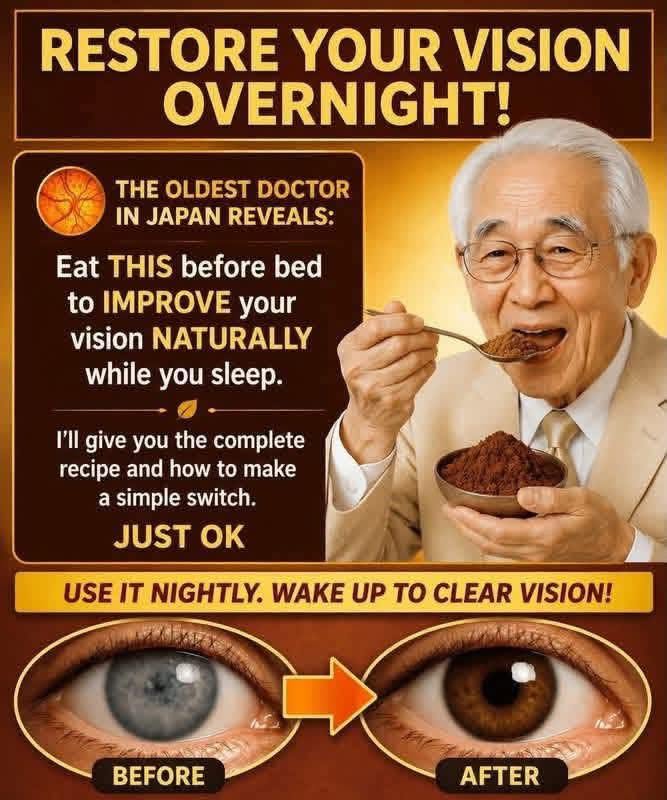
Can eating certain foods before bed improve eyesight? Learn which nutrients support eye health, what bedtime eating can realistically do, and when vision changes need medical attention.
Japan’s “Oldest Doctor” Bedtime Eye-Health Secret? What You Should Really Know
You may have seen headlines claiming that an elderly Japanese doctor discovered a simple food that can “improve eyesight while you sleep.”
The idea is certainly intriguing. But there is an important distinction between supporting eye health through nutrition and actually reversing poor eyesight overnight.
There is no single food that has been proven to restore vision while you sleep. However, some foods contain nutrients that are important for maintaining healthy eyes and normal vision—and including them in a balanced diet can be a smart long-term habit.
So, what should you actually eat?
The Nutrients Your Eyes Need
Your eyes depend on a variety of vitamins, minerals, antioxidants and healthy fats.
Some of the most important nutrients include:
- Vitamin A – important for normal vision, particularly in low-light conditions.
- Lutein and zeaxanthin – antioxidants concentrated in the retina that help protect eye tissues from oxidative stress.
- Vitamin C – an antioxidant involved in maintaining healthy tissues.
- Vitamin E – helps protect cells from oxidative damage.
- Omega-3 fatty acids – important components of cell membranes and involved in normal eye function.
- Zinc – contributes to normal visual function and helps with vitamin A metabolism.
No single ingredient supplies everything your eyes need, which is why dietary variety matters more than a supposed “miracle” food.
Could Eggs Be a Good Choice?
Egg yolks contain lutein and zeaxanthin, two carotenoids found in the retina.
These compounds are particularly interesting because they accumulate in the macula, the central area of the retina responsible for detailed vision.
Adding eggs to a balanced diet can therefore contribute useful nutrients for eye health.
But eating an egg immediately before going to bed does not mean your eyesight will become sharper overnight.
The potential benefit comes from regular nutritional intake over time—not from a special nighttime effect.
Leafy Greens Are Another Excellent Option
Spinach, kale, mustard greens and other dark leafy vegetables are naturally rich in carotenoids such as lutein and zeaxanthin.
These vegetables are easy to include in everyday meals.
You could add spinach to an omelet, prepare cooked greens with dinner, or include a leafy salad with another source of healthy fat.
Interestingly, consuming carotenoid-rich vegetables with some dietary fat can help the body absorb these fat-soluble compounds.
Carrots Are Helpful—But They Aren’t Magic
Carrots are famous for their connection with eyesight because they contain beta-carotene, which the body can use to produce vitamin A.
Vitamin A is essential for normal vision.
However, the popular idea that eating lots of carrots can dramatically improve already-blurry eyesight is misleading.
If blurry vision is caused by nearsightedness, farsightedness, astigmatism or another eye condition, eating carrots will not replace glasses, contact lenses or appropriate medical treatment.
What About Eating Something Right Before Bed?
There is nothing special about the eyes absorbing nutrients simply because you consume them at bedtime.
Your body continues processing nutrients according to normal digestion and metabolism.
For some people, a heavy meal immediately before sleeping can actually be uncomfortable. Large or spicy meals may cause reflux or indigestion, while excessive calories late at night can make it harder to maintain a healthy eating pattern.
If you enjoy a small evening snack, keep it simple.
For example, you might choose:
- A small serving of plain yogurt with berries
- A boiled egg with a few vegetables
- A small handful of unsalted nuts
- A piece of fruit with a small amount of nut butter
The best choice depends on your overall diet and individual needs.
Can Food Actually Improve Eyesight?
This is where viral health claims often go too far.
Nutrition can support healthy eyes, but it cannot correct every cause of reduced vision.
For example, food cannot physically reshape the eye to correct nearsightedness. Likewise, a food cannot instantly remove cataracts or repair every retinal disorder.
Some age-related eye diseases may be influenced by nutrition and lifestyle, but prevention and treatment are much more complicated than eating one particular ingredient.
That is why claims such as “one food erases glasses,” “restore perfect vision overnight,” or “improve eyesight while sleeping” should be viewed skeptically.
A Better Nighttime Habit for Your Eyes
If you spend much of the day looking at a phone or computer, your evening routine can also affect how your eyes feel.
Long periods of screen use may contribute to eye strain, dryness and discomfort.
Before bed, consider giving your eyes a break from bright screens.
Dim the lights, step away from your phone and allow yourself some screen-free time before sleeping.
Good-quality sleep is also important for overall health and can help you wake up feeling less fatigued.
When Vision Changes Should Not Be Ignored
A sudden change in eyesight should not be treated with a home remedy.
Seek prompt medical attention if you experience symptoms such as:
- Sudden loss of vision
- New flashes of light
- A sudden increase in floaters
- A dark curtain or shadow across your vision
- Significant eye pain
- Sudden double vision
- New severe redness accompanied by pain or vision changes
These symptoms can sometimes indicate an eye emergency.
The Real “Secret” to Protecting Your Eyes
The most useful lesson isn’t that a particular Japanese doctor has discovered a magical bedtime food.
Instead, think about the bigger picture.
A diet containing vegetables, fruits, eggs, nuts, fish and other nutrient-rich foods can provide many of the compounds your eyes need. Regular physical activity, avoiding smoking, protecting your eyes from excessive ultraviolet exposure and getting appropriate eye examinations are also important parts of long-term eye care.
So if you want a simple bedtime snack, choose something nutritious—but don’t expect it to transform your eyesight while you sleep.
Healthy vision is supported by consistent habits, not a single miracle food.