 Skip to content
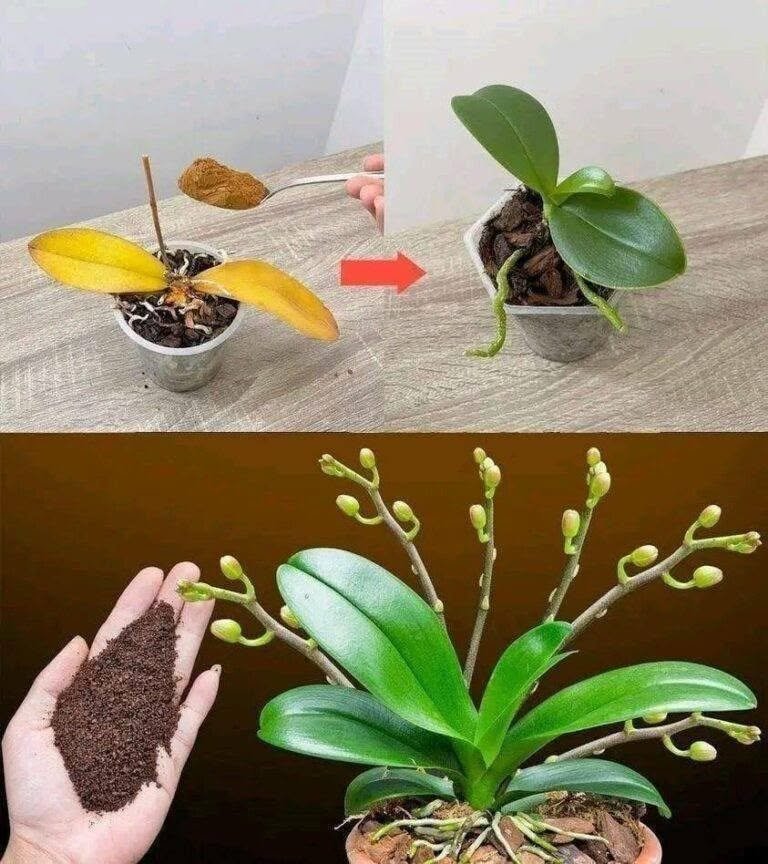
Discover a simple one-teaspoon orchid care trick that may encourage healthier growth and more blooms, plus tips for watering, light, feeding, and avoiding common mistakes.
Have you ever looked at your orchid and wondered why it produces beautiful leaves but refuses to flower? You may not need an expensive collection of products to encourage blooming. Sometimes, the biggest difference comes from getting the basics of orchid care right.
A popular gardening tip claims that just one teaspoon of a household ingredient can make an orchid suddenly produce lots of flowers. While there is no magic ingredient that can guarantee an orchid will bloom overnight, the right treatment can sometimes help a healthy plant perform better.
Before Trying Any “One-Teaspoon” Trick
Orchids need several things to flower successfully:
- Bright, indirect light
- Proper watering
- Good drainage
- Adequate humidity
- Appropriate temperatures
- A suitable orchid fertilizer
- Healthy roots
If an orchid is stressed, overwatered, root-damaged, or receiving too little light, adding a homemade mixture is unlikely to solve the underlying problem.
The Most Important Rule
Avoid pouring unknown homemade mixtures directly onto the leaves, flowers, or roots. Concentrated kitchen ingredients can damage delicate orchid tissues and may change the growing medium in unwanted ways.
Instead, identify exactly what the ingredient is, how much is appropriate, and whether there is reliable evidence that it benefits orchids.
How to Encourage More Orchid Flowers Naturally
1. Give It the Right Light
Orchids generally prefer bright, indirect light. A location near an appropriate window can provide the energy the plant needs for healthy growth and flowering.
Too little light can result in lots of leaves but few flowers.
2. Don’t Overwater
One of the most common orchid-care mistakes is watering too frequently.
Allow the growing medium to approach dryness before watering again, while avoiding prolonged periods of completely dry roots. Make sure excess water can drain away.
3. Feed Appropriately
Orchids need nutrients to support growth and flowering. A fertilizer specifically formulated for orchids is generally a safer choice than experimenting with concentrated household ingredients.
Always follow the product’s dilution instructions.
4. Check the Roots
Healthy orchid roots are essential. If the roots are consistently wet, brown, mushy, or have a foul smell, the plant may be suffering from root problems.
Fixing the root environment may be much more important than adding a “miracle” fertilizer.
5. Be Patient
Even a healthy orchid won’t necessarily produce flowers immediately after receiving a new treatment.
Flowering depends on the orchid species or hybrid, its growth cycle, environmental conditions, and overall health.
So, Does One Teaspoon Really Work?
A teaspoon of a particular substance cannot reliably make every orchid suddenly produce lots of flowers. Viral gardening recipes often exaggerate results or leave out important details such as the orchid variety, concentration, growing conditions, and time required to see an effect.
If you want more blooms, focus first on light, watering, drainage, temperature, nutrition, and root health. These fundamentals are much more important than any supposed miracle recipe.
The secret to a flowering orchid isn’t magic—it’s consistent care and the right growing conditions.