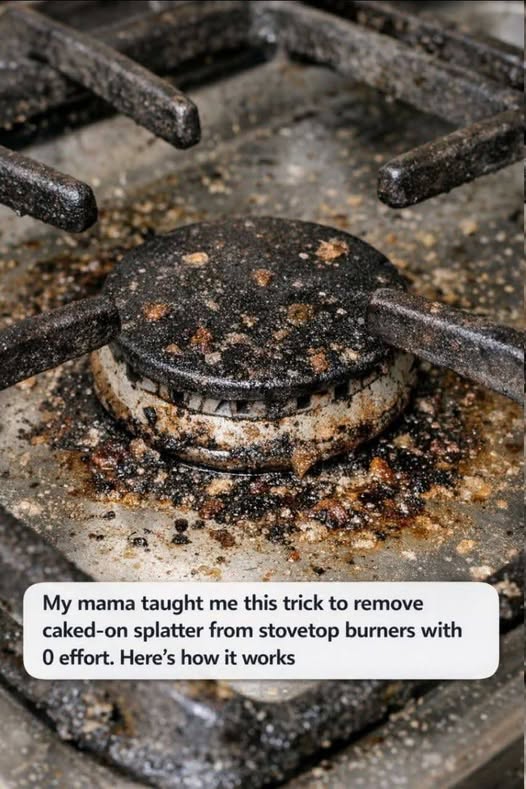
Learn a simple way to loosen baked-on stovetop splatters and grease using common household supplies, plus tips for cleaning burners safely without damaging your cooktop.
My Mama Taught Me This Trick to Remove Caked-On Splatter From Stovetop Burners With Almost No Scrubbing
If your stovetop has layers of dried sauce, grease, and food splatters that seem impossible to remove, don’t start scrubbing aggressively. The easiest approach is usually to soften the buildup first, allowing it to lift away with much less effort.
What You’ll Need
- Warm water
- A few drops of dish soap
- A soft sponge or microfiber cloth
- A non-abrasive scrubber for stubborn spots
- An old toothbrush for small crevices
Here’s How It Works
1. Let the stovetop cool completely.
Never clean a hot burner with water or cleaning products. Turn everything off and wait until the surface is cool.
2. Remove loose debris.
Wipe away crumbs and loose food particles with a dry or slightly damp cloth.
3. Soften the baked-on mess.
Mix warm water with a small amount of dish soap. Soak a cloth in the mixture, wring it out, and lay it over the hardened splatters for several minutes.
The moisture and warmth help soften dried food and grease, making the residue much easier to remove.
4. Wipe instead of aggressively scrubbing.
After the buildup has softened, gently wipe the surface. For remaining spots, use a non-abrasive sponge and repeat the soaking process if necessary.
5. Clean around the burner carefully.
For gas stovetops, removable grates and burner caps can usually be cleaned separately according to the manufacturer’s instructions. Keep water and cleaning products out of the gas burner openings.
6. Dry everything thoroughly.
Use a clean microfiber cloth to remove remaining moisture before using the stovetop again.
A Simple Trick for Really Stubborn Grease
For a particularly stubborn patch on a compatible stovetop surface, place a warm, damp, soapy cloth over it for longer rather than immediately reaching for a harsh abrasive. Several short soaking cycles are often safer than aggressive scrubbing.
⚠️ One Important Warning
Avoid mixing household cleaning chemicals, particularly bleach with ammonia or acidic cleaners, because dangerous gases can form.
Also avoid steel wool, abrasive powders, or sharp scraping tools on glass or ceramic cooktops unless the manufacturer specifically recommends them.
The real secret isn’t “zero effort”—it’s letting moisture and dish soap do the hard work first. Once the caked-on splatter has softened, the mess usually comes away much more easily.