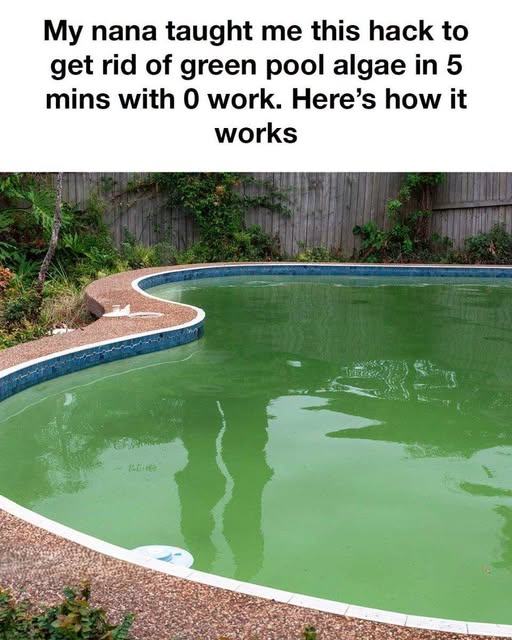
Discover a simple way to tackle green pool algae using proper pool maintenance, circulation, brushing, filtration, and sanitizer. Learn what actually works and how to prevent algae from returning.
A green swimming pool can make even a beautiful backyard look neglected. When algae begin multiplying, the water can turn cloudy or bright green, and the pool walls and floor may develop a slippery coating.
You may have seen claims that a secret household trick can make green algae disappear in five minutes with “zero work.” Unfortunately, there isn’t a reliable household ingredient that can safely eliminate an established algae bloom that quickly.
The good news is that there is a simple approach that can make the job much easier.
Why Does Pool Water Turn Green?
Green pool water is usually associated with algae growth. Algae can multiply rapidly when sanitizer levels are inadequate, water circulation is poor, filtration isn’t working properly, or the pool becomes contaminated with debris.
Warm weather and sunlight can make the problem worse.
The first step isn’t dumping random household products into the pool. It’s figuring out whether the water is chemically balanced and whether the filtration system is functioning properly.
The “Nana Hack” That Actually Makes Sense
Instead of relying on a mystery ingredient, think of the trick as a five-minute preparation routine:
1. Remove Leaves and Debris
Use a pool skimmer to remove leaves, insects, grass, and other debris from the surface.
This gives your sanitizer and filtration system less organic material to deal with.
2. Check the Pool Chemistry
Use a reliable pool test kit or test strips to check the water.
Pay particular attention to:
- Free chlorine
- pH
- Total alkalinity
- Stabilizer/cyanuric acid, when applicable
If the sanitizer level is too low, algae can quickly take over.
3. Make Sure the Pump Is Running
Good circulation is essential.
Check that the pump is operating correctly and that water is moving through the filtration system. If the filter is clogged or circulation is inadequate, even properly treated water can remain cloudy and problematic.
4. Brush the Pool
This is the one step that viral “zero-work” hacks often leave out.
Use a pool brush to loosen algae attached to the walls, steps, and floor. Breaking up this layer allows sanitizer to reach more of the algae.
It may take more than five minutes if the bloom is established, but this simple step can make treatment substantially more effective.
5. Use the Correct Pool Algaecide or Chlorine Treatment
For an established algae bloom, follow your pool manufacturer’s or chemical product’s directions for the appropriate treatment.
Don’t randomly combine chlorine, algaecides, acids, bleach, or household cleaners. Mixing pool chemicals can create dangerous reactions or toxic gases.
What About Baking Soda, Vinegar, or Household Bleach?
This is where many internet hacks become misleading.
Baking soda can affect alkalinity but isn’t a dependable treatment for an established algae bloom.
Vinegar isn’t an appropriate substitute for a properly managed pool sanitation system.
Household bleach contains sodium hypochlorite, but using it in a pool requires understanding its concentration and the pool’s existing chemistry. Randomly pouring bleach into a pool can result in incorrect chlorine levels and can be dangerous if mixed with other chemicals.
It’s much safer to use products specifically intended for swimming pools and follow their labels.
How to Stop Green Algae From Coming Back
Once you’ve cleared the water, prevention becomes much easier.
Keep Sanitizer Levels Appropriate
Regularly test your pool and maintain the sanitizer level recommended for your particular pool system.
Keep the Filter Clean
A dirty or poorly functioning filter can reduce circulation and filtration efficiency.
Run the Pump and Circulation System Properly
Adequate circulation helps distribute sanitizer throughout the pool and prevents stagnant areas where algae can thrive.
Brush Regularly
Even when the water looks crystal clear, brushing pool surfaces can help prevent algae from establishing itself.
Don’t Ignore Cloudy Water
Cloudiness can be an early warning sign that your pool chemistry or filtration needs attention.
A Word of Caution
Never swim in a pool that is heavily green, cloudy, or otherwise visibly contaminated. You may not be able to see the bottom clearly, and the water may not be adequately sanitized.
Also avoid jumping into the pool immediately after adding chemicals. Follow the product label regarding circulation time and when swimming is permitted.
Final Thoughts
The real secret isn’t a magical five-minute ingredient. Clean circulation + correct water chemistry + filtration + brushing + appropriate sanitation is what gets an algae problem under control.
So if Nana’s old trick was “don’t panic—start with the basics,” she was onto something. A few minutes spent checking the pool and getting the circulation system working properly can save hours of frustration later.
And remember: never mix pool chemicals together unless the product instructions specifically say they are compatible.