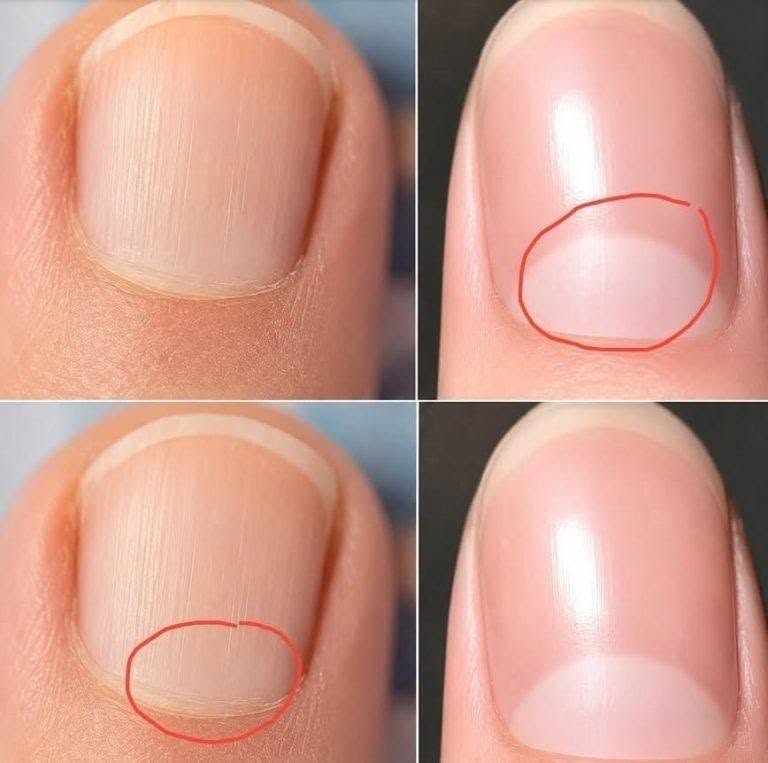
Learn what the white half-moon shapes on your nails, called lunulae, can actually reveal about nail growth, health, lifestyle, and when changes may deserve attention.
Have you ever looked closely at your fingernails and noticed a small white half-moon near the base?
That crescent-shaped area is called the lunula, and it is a normal part of nail anatomy. Because its appearance can vary considerably from person to person, people often wonder whether large, small, missing, or unusually colored lunulae are signs of a health problem.
The truth is more nuanced.
Your lunulae can tell you something about the structure and growth of your nails, but they cannot diagnose a specific disease on their own.
What Exactly Is a Lunula?
The word lunula means “little moon.” It refers to the visible, pale, crescent-shaped portion of the nail near the cuticle.
It is the visible part of the nail matrix, the area where new nail cells are produced.
The lunula is usually easiest to see on the thumbs and may be less noticeable—or completely absent—on some other fingers.
Not everyone has clearly visible lunulae, and that can be perfectly normal.
Why Are Lunulae White?
The lunula often appears whiter than the rest of the nail because the underlying nail structure is somewhat different in this region.
The nail plate becomes progressively more transparent farther from the matrix, allowing the color of the tissue underneath to become more visible.
As a result, the lunula can look like a pale white or slightly opaque half-moon.
Does a Large Lunula Mean You’re Healthier?
Not necessarily.
There is a popular claim that large, clearly visible lunulae indicate excellent health or a fast metabolism. There isn’t enough evidence to use lunula size as a general health score.
Lunula size naturally varies because of factors such as:
- Genetics
- Age
- Nail structure
- Individual nail growth patterns
- Differences between fingers
Someone can have very visible lunulae and be perfectly healthy, while another healthy person may have barely visible lunulae.
What If You Don’t Have Lunulae?
A barely visible lunula is not automatically a warning sign.
For many people, the lunula simply isn’t very prominent. It may also be hidden by the surrounding skin near the cuticle.
In fact, the lunula is naturally much more visible on some fingers than others.
Rather than looking at one nail in isolation, it is more useful to notice whether your nails have undergone a new and persistent change.
Can Lunulae Change With Health Problems?
Changes in the nails can sometimes occur alongside certain medical conditions, nutritional problems, medications, or systemic illnesses.
However, the lunula itself is not a reliable standalone diagnostic tool.
For example, changes in nail color or appearance may have many possible explanations. A pale nail could reflect something as simple as lighting or natural variation, while persistent changes elsewhere in the nail may occasionally warrant medical evaluation.
This is why social-media claims such as “this lunula color means you have diabetes” or “missing lunulae prove poor circulation” should be treated cautiously.
What About Red, Blue, or Unusual Lunulae?
An unusual color can sometimes be associated with health conditions, but color alone cannot tell you what is happening inside your body.
If the nail or lunula suddenly becomes noticeably blue, gray, red, brown, or otherwise unusual—and especially if several nails are affected—it is worth discussing the change with a healthcare professional.
The surrounding nail may also change because of injury, infection, medications, pigmentation, or other conditions.
Your Lifestyle Can Affect Your Nails
While your lunulae are largely determined by nail biology and genetics, your overall nail appearance can be influenced by everyday habits.
Nutrition
Your nails require adequate nutrients to grow normally. Severe nutritional deficiencies can sometimes affect nail appearance and growth.
A balanced diet containing adequate protein, iron, zinc, vitamins, and other nutrients supports normal nail health.
Nail Care
Repeatedly picking at the cuticles, aggressive manicures, or trauma to the nail matrix can interfere with normal nail growth.
The matrix is particularly important because damage there can affect the nail as it grows out.
Stress and Illness
Significant physical stress or illness can sometimes temporarily interrupt normal nail growth.
Importantly, these changes may become visible weeks or months after the triggering event rather than immediately.
When Should You Pay Attention?
A change in one lunula is usually less informative than a broader change affecting several nails.
Consider getting medical advice if you notice:
- A sudden and persistent change in multiple nails
- Significant nail discoloration
- Nails becoming very brittle or distorted
- Pain, swelling, or redness around the nails
- Nail separation from the nail bed
- A dark streak or spot that does not grow out
- Major changes accompanied by other unexplained symptoms
These signs do not necessarily mean something serious is wrong, but they deserve proper assessment rather than self-diagnosis.
Don’t Use Your Lunulae as a Home Diagnosis
One of the biggest problems with viral nail-health posts is that they often turn normal variations into medical diagnoses.
A small lunula doesn’t automatically mean you have a nutrient deficiency.
A large lunula doesn’t prove that your metabolism is healthy.
And the absence of visible lunulae doesn’t automatically indicate disease.
Your nails can provide useful clues, but doctors consider the entire clinical picture, including symptoms, medical history, examination, and sometimes blood tests or other investigations.
Simple Habits for Healthier Nails
You don’t need a complicated routine to care for your nails.
Try to:
- Keep nails clean and reasonably short.
- Moisturize the hands and cuticles regularly.
- Avoid biting or picking at your nails.
- Protect your hands from prolonged exposure to harsh chemicals.
- Avoid aggressive cutting or pushing of the cuticles.
- Eat a varied, nutrient-rich diet.
- Seek medical advice for persistent or unusual nail changes.
The Bottom Line
Those little white half-moons on your nails are a normal part of nail anatomy. Their size and visibility vary naturally, and they are not a reliable health score or diagnostic test.
Instead of worrying about whether your lunulae are big, small, or barely visible, pay attention to significant changes in your nails over time—especially when those changes occur together with other symptoms.
Your nails can sometimes provide clues about your health, but they should be viewed as one small piece of the bigger picture, not a diagnosis by themselves.