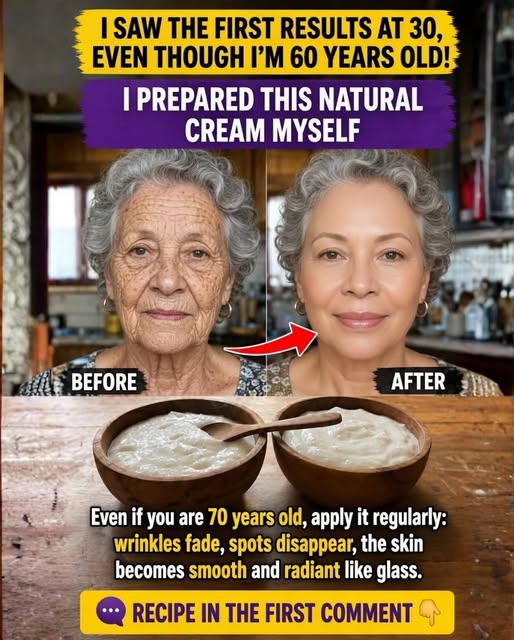
Baking soda is often promoted as a natural remedy for wrinkles and dark spots, but it can irritate facial skin. Learn what baking soda cream can and cannot do and discover safer, evidence-based skincare options.
Prepare a Baking Soda Cream and Apply It Before Sleeping: Goodbye to Wrinkles and Spots?
Baking soda is a common kitchen ingredient that has become popular in homemade skincare recipes. Some claims suggest that applying a baking soda cream before bed can erase wrinkles, fade dark spots, and make the skin look dramatically younger.
However, these claims are not supported by strong scientific evidence.
Baking soda is alkaline, while healthy skin has a naturally acidic surface known as the skin barrier or acid mantle. Applying baking soda directly to the face can disrupt this balance and potentially cause dryness, irritation, redness, or burning.
Can Baking Soda Remove Wrinkles?
There is no good evidence that baking soda can eliminate wrinkles or rebuild collagen.
Wrinkles develop as the skin naturally loses collagen and elasticity with age. Sun exposure and other environmental factors can accelerate this process.
A baking soda mixture may temporarily make the skin feel different because it can remove some surface oils and dead skin cells, but this should not be confused with genuine wrinkle reduction.
What About Dark Spots?
Baking soda isn’t a proven treatment for hyperpigmentation.
Dark spots can have many causes, including sun exposure, acne-related inflammation, hormonal changes, and certain skin conditions. Treating the underlying cause is important.
Aggressive home remedies can actually make pigmentation worse if they irritate the skin.
Why Applying It Overnight May Be a Bad Idea
Leaving baking soda on your face for hours can increase the chance of irritation.
Possible reactions include:
- Dryness
- Redness
- Burning or stinging
- Itching
- Peeling
- Increased sensitivity
If your skin becomes irritated, inflammation can sometimes lead to post-inflammatory hyperpigmentation, particularly in people whose skin tends to develop dark marks after irritation.
Safer Ways to Care for Your Skin
If your goal is smoother, brighter-looking skin, consider approaches with stronger evidence.
Use Sunscreen Every Day
UV exposure contributes significantly to premature skin aging and can make dark spots more noticeable.
A broad-spectrum sunscreen can help protect your skin and prevent existing pigmentation from becoming darker.
Keep Your Skin Moisturized
A gentle moisturizer helps support the skin barrier and can make dry fine lines appear less noticeable.
Consider Proven Ingredients
Depending on the problem you’re trying to address, skincare products containing ingredients such as retinoids, vitamin C, niacinamide, or azelaic acid may be more appropriate than baking soda.
Not every ingredient is suitable for every person, so introduce new products gradually.
Avoid Harsh Scrubbing
Scrubbing the face aggressively does not remove wrinkles. It can damage the skin barrier and worsen irritation.
Gentle cleansing is generally a better approach.
If You Still Want to Try Baking Soda
For facial skincare, the safest recommendation is not to use baking soda as an overnight wrinkle or spot treatment.
If you have already applied it and experience burning, swelling, severe redness, or persistent irritation, wash it off gently and discontinue use. Seek medical advice if the reaction is severe or doesn’t improve.
The Bottom Line
A homemade baking soda cream cannot be relied upon to make wrinkles disappear or remove dark spots.
While baking soda has useful household applications, your face requires a much gentler approach. Consistent sun protection, moisturization, and evidence-based skincare ingredients are better choices for maintaining healthy-looking skin.
A simple nighttime routine may not produce overnight miracles—but protecting and caring for your skin consistently can make a real difference over time.