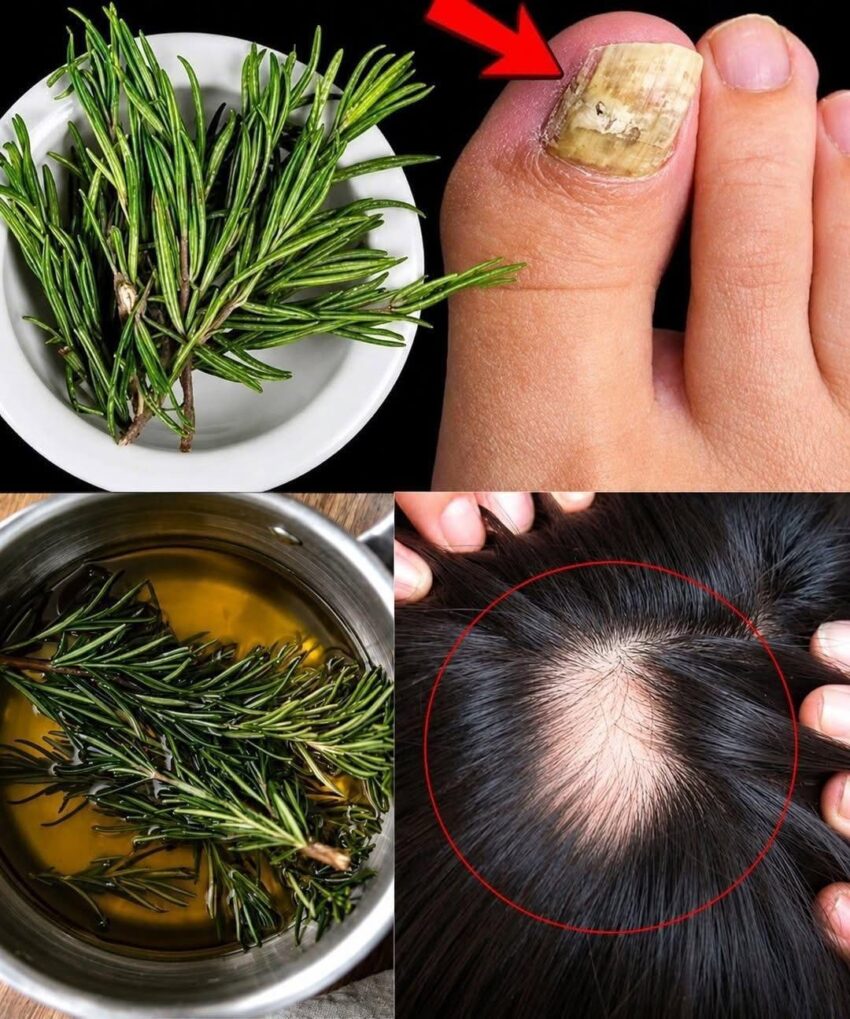
Rosemary has been used traditionally in hair and skin care for generations. Today, rosemary water and rosemary-infused oils are popular in homemade beauty routines, especially for the scalp, nails, and feet.
But there is an important difference between traditional use and proven medical treatment. Rosemary may be a useful addition to a simple personal-care routine, but it should not be treated as a cure for hair loss, fungal infections, damaged nails, or serious skin conditions.
Here is what rosemary may realistically do—and where its limits are.
What Rosemary May Do for the Scalp
Rosemary contains naturally occurring plant compounds with antioxidant and antimicrobial properties. Rosemary preparations are therefore commonly used in scalp-care routines.
Some research has investigated rosemary preparations for hair growth, but the evidence is still limited compared with established medical treatments. It would be misleading to promise that rosemary will regrow everyone’s hair or stop significant hair loss.
If you want to try rosemary for general scalp care, a diluted preparation may be used as part of a gentle routine.
A Simple Rosemary Scalp Rinse
You can make a basic rosemary-water rinse by:
- Adding a small handful of fresh rosemary sprigs to water.
- Simmering gently for several minutes.
- Allowing the liquid to cool completely.
- Straining out the plant material.
- Storing it in a clean container in the refrigerator.
Apply a small amount to the scalp and avoid getting it into your eyes.
Because homemade water-based preparations do not contain preservatives, make small batches and discard them if they develop an unusual smell, appearance, or signs of contamination.
What Rosemary Cannot Do for Hair Loss
Rosemary should not be presented as a guaranteed treatment for baldness or severe hair thinning.
Hair loss can have many causes, including genetics, hormonal changes, nutritional deficiencies, thyroid problems, medications, stress, scalp conditions, and other medical issues.
If hair loss is sudden, severe, patchy, or accompanied by itching, scaling, pain, or inflammation, it is better to have the cause evaluated rather than relying only on a homemade remedy.
Rosemary for Nails
Rosemary can be incorporated into a simple nail-care routine, particularly when the goal is to keep the surrounding skin moisturized and cared for.
However, rosemary cannot reliably repair a severely damaged nail or cure a fungal nail infection.
Thickened, yellow, crumbly, distorted, or painful nails can have several causes. Fungal infections are common, but trauma and other nail disorders can look similar.
Instead of repeatedly applying herbal remedies to a suspicious nail, consider getting it checked if the problem persists.
Rosemary for Feet
A rosemary foot soak may feel refreshing after a long day. Warm water can soften the skin and provide a relaxing experience, while rosemary can add fragrance to the routine.
However, a foot soak should not be considered a treatment for athlete’s foot or other fungal infections.
For dry feet, the more important step is usually regular moisturizing. A thick moisturizer applied after bathing can help reduce dryness and roughness.
If there are cracks, bleeding, significant redness, swelling, pus, or persistent itching, a medical evaluation may be appropriate.
Rosemary Oil Requires Extra Care
Rosemary essential oil is much more concentrated than rosemary leaves or rosemary tea.
It should not be applied directly to the skin or scalp in undiluted form. Essential oils can cause irritation or allergic reactions in some people.
If you choose to use rosemary essential oil topically, follow the dilution instructions for the specific product and perform a small patch test first.
Avoid applying essential oils to broken or irritated skin.
Rosemary Isn’t a Substitute for Treatment
One of the biggest mistakes with herbal remedies is expecting one ingredient to treat several unrelated problems.
Rosemary may be useful for:
- Adding fragrance to a self-care routine
- Providing a refreshing scalp rinse
- Supporting general scalp and skin care
- Making a relaxing foot soak
- Complementing ordinary nail and foot maintenance
But it should not be promoted as a guaranteed cure for:
- Baldness
- Severe hair loss
- Nail fungus
- Athlete’s foot
- Eczema
- Psoriasis
- Bacterial infections
- Serious scalp disease
How to Use Rosemary More Safely
A simple approach is best.
Use a mild preparation, avoid contact with the eyes, don’t apply concentrated essential oil directly to the skin, and stop using it if you develop burning, redness, swelling, itching, or a rash.
People with particularly sensitive skin should be cautious with homemade preparations.
And remember that “natural” does not automatically mean risk-free.
The Bottom Line
Rosemary can be a pleasant addition to a scalp, nail, and foot-care routine, but its benefits should not be exaggerated.
It may support general personal care and, in some circumstances, rosemary preparations have been studied for scalp and hair concerns. However, it is not a universal remedy and cannot replace appropriate treatment for persistent hair loss, fungal infections, or other medical conditions.
The best approach is to enjoy rosemary for what it can realistically offer while knowing when a problem needs something more than a homemade remedy.
Meta Description
Discover what rosemary may realistically do for scalp, nail, and foot care, how to use it safely, and which conditions should not be treated with rosemary alone.