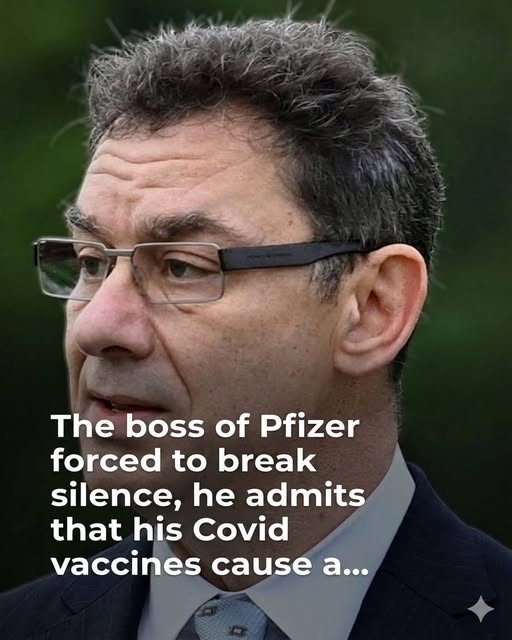
A closer look at the latest statements and developments involving Pfizer, what has actually been reported, and why claims circulating online require careful examination.
A new wave of discussion surrounding Pfizer has once again attracted widespread attention online, with dramatic headlines suggesting that a shocking statement has left people stunned.
But when a pharmaceutical company becomes the subject of a viral claim, it is important to separate what was actually said from headlines, social-media interpretations, and statements taken out of context.
Pfizer remains one of the world’s largest pharmaceutical companies, with work spanning vaccines, cancer treatments, inflammatory diseases, and other areas of medicine. Its official newsroom continues to publish announcements covering research, regulatory decisions, financial developments, and vaccines.
Why Is Pfizer Making Headlines Again?
Pfizer has remained under intense public attention since the COVID-19 pandemic, particularly because of its partnership with BioNTech on the company’s COVID-19 vaccine.
More recently, Pfizer and BioNTech announced that the U.S. Food and Drug Administration approved their XFG-adapted COVID-19 vaccine on August 27, 2026.
That announcement is significant because COVID-19 vaccines continue to be updated as the virus evolves.
However, an important distinction needs to be made: a new Pfizer announcement does not automatically confirm every dramatic claim circulating online about the company.
What Did Pfizer Actually Say?
Pfizer’s official statements are generally published through its newsroom and dedicated updates-and-statements pages.
Its current 2026 newsroom listings include announcements concerning vaccines, medicines, clinical research, financial results, and partnerships.
This means that before sharing a headline such as “Pfizer admits…” or “Pfizer finally reveals…”, readers should look for:
- The original Pfizer statement
- The date of the statement
- The person who made it
- The exact wording
- The context in which it was made
- Independent reporting about the claim
- Whether regulators or scientific organizations have addressed it
These details can completely change the meaning of a viral headline.
Why Context Matters
Health-related stories can spread extremely quickly because they involve people’s safety and personal experiences.
A sentence from a pharmaceutical company’s statement may be discussing a specific clinical trial, age group, medical condition, regulatory requirement, or potential risk rather than making a general statement about everyone who uses a particular medicine or vaccine.
Similarly, a list of medical events associated with a clinical study does not necessarily mean that every event was caused by the product being studied.
This distinction became particularly important in online discussions about Pfizer’s COVID-19 vaccine. For example, Reuters Fact Check examined viral claims concerning hantavirus and a Pfizer regulatory document. The document contained a list of medical events of special interest, but the presence of a condition on such a list did not establish that the vaccine caused it.
Pfizer and Vaccine Safety Discussions
Pfizer has previously published information responding to questions about COVID-19 vaccine safety and efficacy.
In September 2025, the company publicly reaffirmed its position regarding the safety and efficacy of its COVID-19 vaccines and provided links to supporting information.
Pfizer has also published analyses concerning myocarditis and COVID-19 vaccines.
These subjects remain complicated because vaccine safety is evaluated using multiple sources of evidence, including clinical trials, post-marketing surveillance, epidemiological studies, and regulatory reviews.
One isolated document, screenshot, quotation, or social-media post should therefore not be treated as definitive evidence.
The Difference Between a Warning and an Admission
One of the most common problems with viral health headlines is the use of words such as “admitted,” “confessed,” “exposed,” or “shocking.”
These words can make an ordinary regulatory disclosure sound like a dramatic confession.
For example, pharmaceutical companies routinely discuss:
- Potential adverse reactions
- Clinical-trial limitations
- Uncertainties in research
- Regulatory requirements
- Manufacturing issues
- Product recalls or withdrawals
- Changes to recommendations
- New clinical findings
None of these automatically represents an admission of wrongdoing.
The wording of the original document matters.
A Major Development in 2026
One of Pfizer’s most recent major vaccine announcements came on August 27, 2026, when Pfizer and BioNTech announced U.S. FDA approval for their XFG-adapted COVID-19 vaccine.
Pfizer’s newsroom also lists several other major 2026 developments, including a Lyme disease vaccine candidate with Valneva, second-quarter financial results, and positive clinical-trial results involving LITFULO.
These announcements demonstrate that Pfizer’s current activities extend well beyond COVID-19.
What Should Readers Believe?
The safest approach is to avoid accepting either extreme.
A sensational post claiming that Pfizer has “revealed the truth” should not automatically be believed.
At the same time, legitimate questions about pharmaceutical companies, clinical trials, vaccine safety, drug pricing, or regulatory decisions should not simply be dismissed.
The best approach is to examine the evidence.
Ask:
What exactly was said?
Who said it?
When was it said?
Was it an official statement?
Does the original document support the headline?
Have independent medical or regulatory authorities confirmed the interpretation?
These questions can help distinguish genuine news from misleading social-media content.
Why Viral Pfizer Headlines Spread So Quickly
Pfizer is a particularly recognizable name because of its role in COVID-19 vaccine development.
As a result, almost any controversial claim mentioning Pfizer has the potential to generate significant engagement.
Social-media algorithms can further amplify emotionally charged content. A headline promising a “shocking statement” is more likely to attract clicks than a straightforward headline describing a regulatory update.
The result can be a cycle:
Headline → emotional reaction → sharing → additional posts → distorted interpretation.
By the time the original source is located, the claim may look very different from what was actually published.
The Bottom Line
There is no reason to assume that every “shocking statement about Pfizer” circulating online represents a confirmed revelation.
Pfizer continues to issue official statements about vaccines, medicines, research, financial results, and regulatory developments. Its August 2026 announcement concerning an XFG-adapted COVID-19 vaccine is one of the company’s most recent major vaccine developments.
For any particular viral claim, however, the exact quotation and original source are essential.
A dramatic headline is not evidence by itself.
Before sharing a claim about Pfizer—or any other pharmaceutical company—check the original statement, examine its context, and compare it with independent evidence.
That extra step can prevent a misleading headline from becoming misinformation.