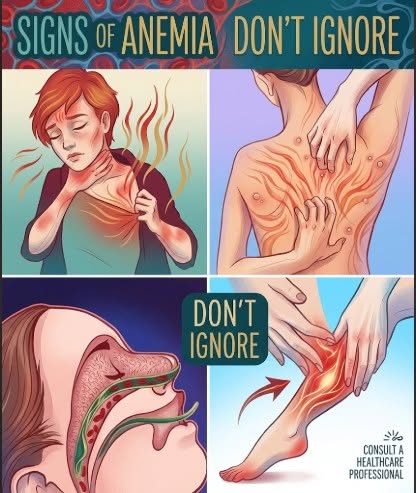
Anemia can develop gradually, making its early symptoms easy to overlook. Learn about subtle signs such as persistent fatigue, weakness, dizziness, headaches, cold hands and feet, pale skin, shortness of breath, and unusual cravings—and when to get checked.
Silent Symptoms of Anemia You Should Never Ignore
Anemia can develop slowly, and mild anemia may cause few or no noticeable symptoms at first. As the condition becomes more pronounced, the body may struggle to deliver enough oxygen to tissues, leading to symptoms that are sometimes mistaken for normal tiredness, stress, or getting older.
Anemia isn’t one single disease. It can result from iron deficiency, vitamin deficiencies, blood loss, chronic disease, problems making red blood cells, or other causes. Finding the underlying cause is important.
1. Constant Tiredness
Feeling exhausted despite getting adequate rest is one of the most common symptoms.
You may notice that ordinary activities—such as walking, cleaning, climbing stairs, or shopping—leave you more tired than they used to.
Persistent fatigue shouldn’t automatically be blamed on a busy lifestyle. Anemia is one possible cause.
2. Unusual Weakness
You may feel physically weaker than usual or find that everyday tasks require more effort.
Weakness can occur because reduced hemoglobin means less oxygen is delivered to your body’s tissues.
3. Frequent Headaches
Recurring headaches can have many causes, but headaches are also a recognized symptom of anemia.
If headaches are persistent or occur together with fatigue, dizziness, or shortness of breath, it’s worth discussing them with a healthcare professional.
4. Dizziness or Lightheadedness
Feeling dizzy when standing up, walking, or moving around can sometimes occur with anemia.
Some people may also experience fainting, particularly when anemia is more significant.
5. Getting Short of Breath Easily
Do you become unusually breathless after climbing a few stairs or walking a short distance?
Shortness of breath can occur when the body attempts to compensate for reduced oxygen-carrying capacity. It is an important symptom that shouldn’t simply be ignored.
6. Looking Pale
Paler-than-usual skin can sometimes accompany anemia.
Changes may also be noticeable in areas such as the lips, gums, or inside the lower eyelids, although skin color can make pallor difficult to judge visually.
7. Cold Hands and Feet
Frequently having cold hands or feet may occur with iron-deficiency anemia.
Of course, cold extremities have many other possible explanations, so this symptom alone doesn’t establish anemia.
8. A Fast or Irregular Heartbeat
When the body has reduced oxygen-carrying capacity, the heart may work harder to circulate blood.
This can sometimes produce a rapid or irregular heartbeat, particularly as anemia becomes more severe.
9. Brittle Nails or a Sore Tongue
Certain symptoms are particularly associated with iron-deficiency anemia.
These can include brittle nails and an inflamed or sore tongue.
10. Craving Ice or Other Non-Food Items
An unusual craving to chew or eat things that aren’t food—particularly ice—is called pica and can occur with iron deficiency.
If you regularly crave ice, dirt, clay, or other non-food substances, mention it to your healthcare professional.
When Should You Get Checked?
Don’t try to diagnose anemia based on symptoms alone. A healthcare professional can usually begin evaluation with a complete blood count (CBC) and may order additional tests to determine the type and cause of anemia.
This is particularly important when anemia could be related to blood loss. Iron-deficiency anemia can sometimes result from bleeding in the digestive tract or other underlying conditions that need treatment.
Don’t Automatically Start Iron Supplements
If you suspect anemia, it’s better to get tested before taking iron supplements on your own.
Not all anemia is caused by iron deficiency, and excessive iron can be harmful.
The Bottom Line
Anemia can hide behind symptoms that seem ordinary—tiredness, weakness, headaches, dizziness, cold hands and feet, or becoming breathless more easily. If these symptoms persist or are getting worse, don’t simply accept them as part of everyday life.
A simple blood test can help determine whether anemia is present and, importantly, help doctors investigate why it is happening.