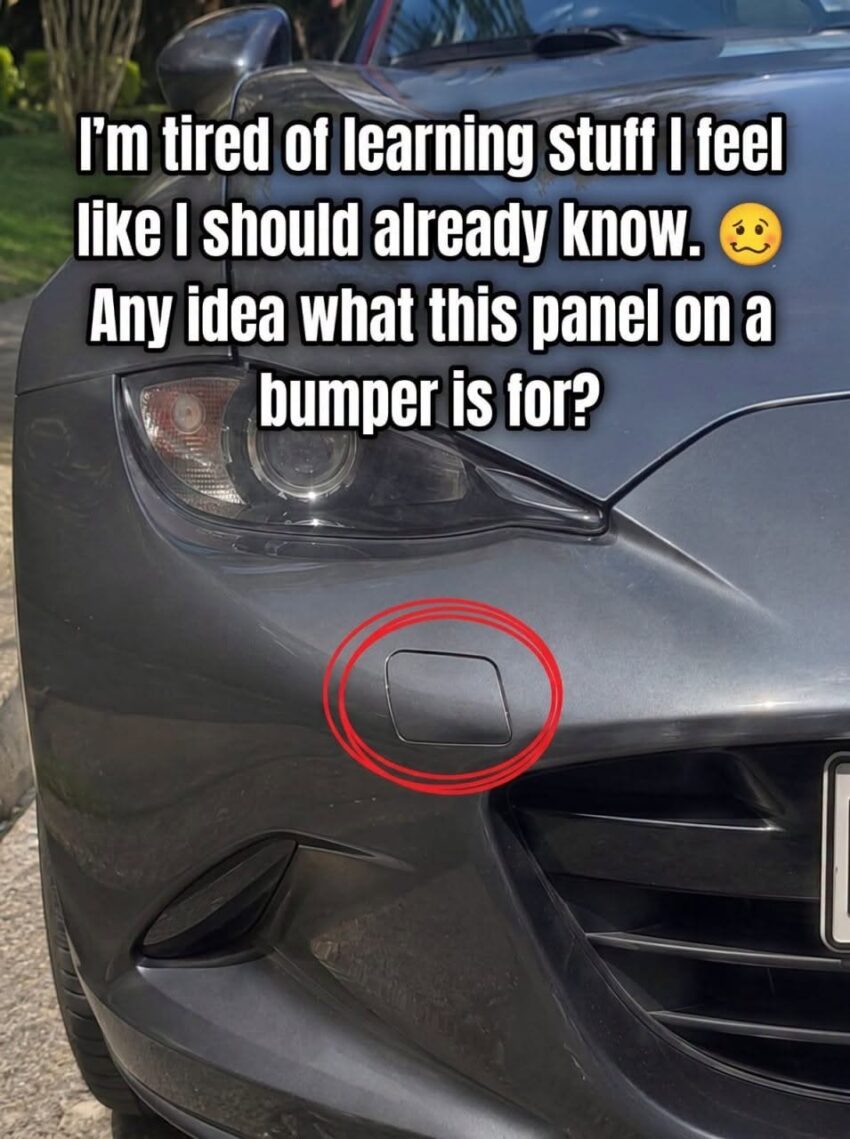
That small removable panel on your car’s bumper is usually there for a practical reason. Learn what it covers, how it works, and when you may need it.
If you have ever walked around your car and noticed a small rectangular or square panel built into the bumper, you may have wondered what it is for. It can look like an unnecessary piece of plastic, especially because it usually blends so well into the bumper that many drivers never notice it.
But that little panel is often there for an important reason.
On many modern vehicles, the small bumper cover hides a towing or recovery point. Depending on the vehicle, it may provide access to a threaded mounting point where a tow eye or recovery hook can be installed when the vehicle needs to be pulled or transported.
What Is the Small Bumper Panel?
The small panel is generally called a tow hook cover, tow eye cover, or recovery-point cover.
It is designed to hide an opening or mounting point underneath the bumper while keeping the vehicle’s exterior looking clean.
When the towing point is not needed, the manufacturer covers it with a removable panel. This prevents dirt and debris from entering the opening and helps maintain the appearance of the bumper.
The panel may be located:
- On the front bumper
- On the rear bumper
- Near one of the corners of the bumper
- In the center of the bumper
- Behind a small painted or textured plastic cover
Its exact shape and location depend on the make and model of the vehicle.
Why Do Cars Need a Tow Point?
Vehicles sometimes need to be moved when they cannot drive under their own power.
For example, a car might need to be:
- Pulled onto a recovery truck
- Moved after a breakdown
- Repositioned after an accident
- Pulled out of a difficult location
- Loaded onto certain types of transport equipment
Instead of attaching a towing device randomly to the bumper, many vehicles have a specifically designed mounting point.
The small panel provides access to that point when necessary.
How Does It Work?
On many cars, removing the cover reveals a threaded hole.
The vehicle may come with a screw-in tow eye stored somewhere in the trunk or cargo area, often near the spare tire, jack, or other emergency equipment.
The basic process is usually:
- Locate the bumper cover.
- Carefully remove the cover using the recommended method.
- Retrieve the tow eye supplied with the vehicle.
- Screw the tow eye into the designated mounting point.
- Attach the appropriate towing or recovery equipment.
However, the exact procedure differs between vehicles.
Some manufacturers provide a small notch or indentation that allows the cover to be removed. Others recommend using a particular tool or procedure.
Don’t Just Pry It Off
One common mistake is trying to remove the little panel with excessive force.
Although the cover is removable, its clips can be delicate. Using a screwdriver or another sharp object incorrectly can scratch the paint or break the plastic tabs.
Before removing it, check the vehicle’s owner’s manual. It may explain exactly where to insert a tool or how the cover is designed to come off.
Is It the Same as a Parking Sensor?
No.
This is an important distinction.
A small bumper panel is usually much larger than a typical parking sensor and is designed to be removable. Parking sensors are generally small circular components integrated into the bumper.
A vehicle can have both:
- Parking sensors
- A tow-eye cover
- Radar or camera equipment
- Other hidden bumper components
So if you see a small rectangular or square panel, don’t automatically assume it is a sensor.
What If Your Car Has a Tow Hitch?
Not every vehicle uses the same towing arrangement.
Some cars and SUVs have a permanent trailer hitch or receiver mounted underneath the rear bumper. Others have a concealed or removable system.
The small bumper panel discussed here is commonly associated with an emergency towing or recovery attachment point rather than a trailer hitch.
These are two different things.
A trailer hitch is generally designed for towing a trailer or other approved load. A recovery/tow eye is intended for moving or recovering the vehicle according to the manufacturer’s instructions.
Front and Rear Panels Can Have Different Purposes
If your vehicle has similar covers at both ends, they may provide access to different recovery points.
A front tow point can be useful when the vehicle needs to be pulled from the front, while a rear mounting point can serve the opposite direction.
However, never assume that a particular point can handle any type of pulling force.
Vehicle manufacturers specify where recovery equipment should be attached and how it should be used.
Can You Use It to Pull Another Car?
Not necessarily.
This is where caution matters.
A factory-installed tow point is designed according to specific engineering requirements, but that does not mean it should automatically be used for every towing situation.
There is a difference between:
Recovering or moving your vehicle
and
Using your vehicle to tow another vehicle.
The manufacturer’s instructions should always be followed. Incorrect attachment points, unsuitable straps, excessive force, or improper recovery techniques can damage the vehicle or create a serious safety hazard.
Why Hide the Tow Point?
There are several practical reasons.
1. Cleaner Appearance
Leaving a large opening in the bumper would make the vehicle look unfinished.
A removable cover allows manufacturers to hide the hardware while maintaining the vehicle’s exterior design.
2. Protection
The cover helps protect the opening from road dirt, water, dust, and debris.
3. Aerodynamics
Modern vehicles are designed with airflow in mind. Keeping the bumper surface relatively smooth can also help maintain the intended exterior design.
4. Easy Access When Needed
The manufacturer can provide emergency towing access without requiring a permanently exposed towing hook.
Where Is the Tow Eye Stored?
If your vehicle uses a removable tow eye, it is often stored with the vehicle’s emergency equipment.
Common locations include:
- Under the trunk floor
- Near the spare tire
- Inside the tool kit
- In a dedicated compartment
- Near the vehicle jack
Some vehicles don’t use a separate screw-in tow eye and instead have a permanently mounted recovery point.
If you cannot find yours, check the owner’s manual before attempting to tow or recover the vehicle.
What If the Panel Is Missing?
If the small bumper cover has fallen off, it usually does not mean that the vehicle’s towing system has been damaged.
The cover itself is often simply a cosmetic and protective component.
However, leaving the opening exposed can allow dirt and moisture to accumulate around the area. A replacement cover may be available from the vehicle manufacturer or an appropriate parts supplier.
The replacement may need to match the vehicle’s paint color, especially if the bumper is painted.
Could It Be Something Other Than a Tow Hook Cover?
Yes.
Not every small bumper panel is a tow-eye cover.
Depending on the vehicle, a similar-looking panel could conceal:
- A headlamp washer mechanism
- Radar equipment
- Wiring or electrical components
- A camera-related component
- Access to another service component
- A sensor or specialized equipment
This is why the vehicle’s make, model, year, and exact panel location matter.
If you’re unsure, consult the owner’s manual rather than removing the panel.
A Small Detail With a Practical Purpose
The next time you see that little square or rectangular piece on a car bumper, don’t assume it’s simply decorative.
In many vehicles, it is deliberately designed to provide quick access to an important recovery or towing point while keeping the bumper looking smooth and finished during normal driving.
It is one of those small automotive features that most drivers rarely think about—until the day the vehicle needs to be moved.
Frequently Asked Questions
Can I remove the bumper panel myself?
Usually, yes, if it is designed as a removable tow-eye cover. Follow the instructions in the owner’s manual to avoid damaging the clips or paint.
Does every car have one?
No. The design and location vary considerably between vehicles.
Does the panel mean my car can tow a trailer?
Not necessarily. A tow-eye/recovery point is different from a trailer hitch.
Where is the tow hook?
If your car uses a removable tow eye, it is commonly stored with the emergency tools, spare tire, or jack.
Can I attach a rope directly to the bumper?
No. Use only the manufacturer’s designated towing or recovery attachment point and follow the vehicle’s instructions.
Final Thoughts
That small bumper panel is a good example of how modern cars hide useful equipment in plain sight. What looks like an ordinary piece of plastic may actually provide access to a specially engineered towing or recovery point.
If you’ve never used it, there’s a good chance you’ll never need to. But knowing what it is—and knowing where your vehicle’s tow eye is stored—can be useful information to have before an unexpected breakdown or recovery situation.