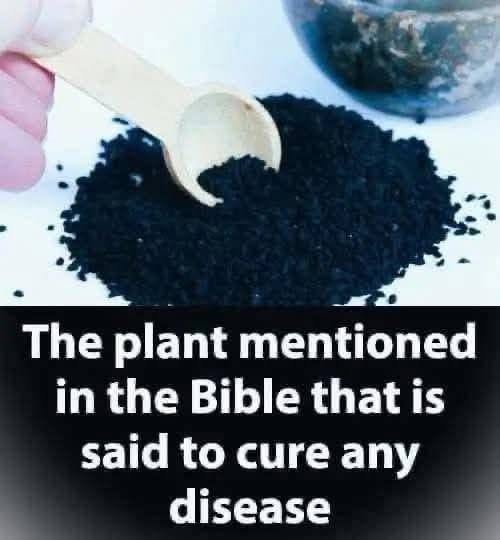
Black seed, also known as Nigella sativa, is mentioned in Islamic tradition and has a long history of traditional use. Learn what religious sources actually say and what modern science can—and cannot—confirm about its health benefits.
The Plant Mentioned in the Holy Books That Is Said to Cure Any Disease
For centuries, certain plants and seeds have held a special place in traditional medicine and religious history.
One of the most well-known examples in Islamic tradition is black seed, commonly called black cumin or Nigella sativa.
It is widely recognized because of a famous hadith describing black seed as having a beneficial role against disease, with an exception for death. This has led to generations of interest in black seed and its traditional uses.
But there is an important distinction between religious tradition, traditional medicine, and modern medical evidence.
Black seed is an interesting plant with biologically active compounds, but modern science does not establish that eating black seed can literally cure every disease.
What Is Black Seed?
Black seed comes from the plant Nigella sativa, a small flowering plant in the Ranunculaceae family.
The tiny black seeds have been used traditionally in parts of the Middle East, North Africa, and South Asia.
You may hear them called:
- Black seed
- Black cumin
- Nigella
- Nigella sativa
- Kalonji
- Habbatus sauda
The seeds have a distinctive slightly bitter, peppery flavor and are commonly used as a spice.
They can also be pressed to produce black seed oil.
Why Is Black Seed Important in Islamic Tradition?
Black seed has a particularly important place in Islamic tradition because of a hadith attributed to the Prophet Muhammad ﷺ.
The narration is commonly understood as describing black seed as a remedy for diseases, with death being the exception.
For Muslims, this religious statement has significance beyond the question of modern clinical trials.
However, it is important not to turn a religious teaching into an unsupported claim that black seed can medically cure every condition known today.
The appropriate interpretation of religious texts and the medical interpretation of a treatment are not necessarily identical questions.
What Does Modern Science Say?
Researchers have studied Nigella sativa and compounds found in it, particularly thymoquinone.
Laboratory and early clinical research has investigated potential effects involving:
- Inflammation
- Oxidative stress
- Blood sugar
- Blood pressure
- Blood lipids
- Certain respiratory symptoms
- Immune-related processes
Some studies have reported potentially beneficial effects, but the evidence varies considerably depending on the condition, preparation, dose, and quality of the research.
Laboratory findings also cannot automatically be translated into proven treatments for humans.
Therefore, it would be inaccurate to say that modern medicine has confirmed black seed as a cure for all diseases.
Why Is Thymoquinone Interesting?
Thymoquinone is one of the best-studied compounds in Nigella sativa.
Researchers have investigated its antioxidant and anti-inflammatory properties, particularly in laboratory and animal studies.
This research helps scientists understand why the plant may have biological activity.
However, a compound showing an effect in a laboratory experiment does not mean that consuming the whole seed or oil will produce the same effect in humans.
More high-quality human research is needed for many of the proposed medical uses.
Can Black Seed Replace Medication?
No.
People should not stop prescribed medication and replace it with black seed or black seed oil without discussing the decision with a qualified healthcare professional.
Conditions such as diabetes, high blood pressure, asthma, infections, cancer, kidney disease, and heart disease can require specific medical treatment.
A traditional remedy may be used as part of someone’s personal practices, but it should not delay appropriate diagnosis or treatment.
How Is Black Seed Traditionally Used?
Black seed is commonly incorporated into food or taken as a small amount of seed or oil.
In South Asian cooking, kalonji is frequently used in breads, pickles, curries, and vegetable dishes.
Because supplements and oils can vary greatly in concentration, there is no single universally established medical dose for treating every condition.
More is not necessarily better.
Is Black Seed Completely Risk-Free?
Natural does not automatically mean risk-free.
Black seed and its oil can cause side effects in some people, particularly when consumed in concentrated amounts.
Possible problems may include digestive discomfort or allergic reactions.
It may also interact with certain medications or affect blood sugar and blood pressure.
Anyone taking medication regularly, preparing for surgery, pregnant or breastfeeding, or managing a chronic illness should ask a healthcare professional before using concentrated black seed products medicinally.
A Better Way to Think About Traditional Remedies
Traditional remedies can be valuable parts of cultural and religious traditions.
At the same time, health claims should be evaluated carefully.
A respectful approach is to recognize what a religious source teaches while also distinguishing that teaching from what modern clinical research has demonstrated.
Black seed may have genuine biological properties, and research into Nigella sativa remains interesting. But saying that it “cures every disease” as a scientifically proven fact goes beyond the available evidence.
The Bottom Line
Black seed, or Nigella sativa, is one of the plants most strongly associated with Islamic traditional medicine and has been used for generations.
Its religious significance is rooted in hadith, while modern researchers continue to investigate its active compounds and possible health effects.
It may have potential benefits, but it should not be presented as a universal cure or a replacement for medical treatment.
For those who value both faith and evidence-based healthcare, the two can be approached thoughtfully: respect the religious tradition while avoiding medical claims that science has not yet established.