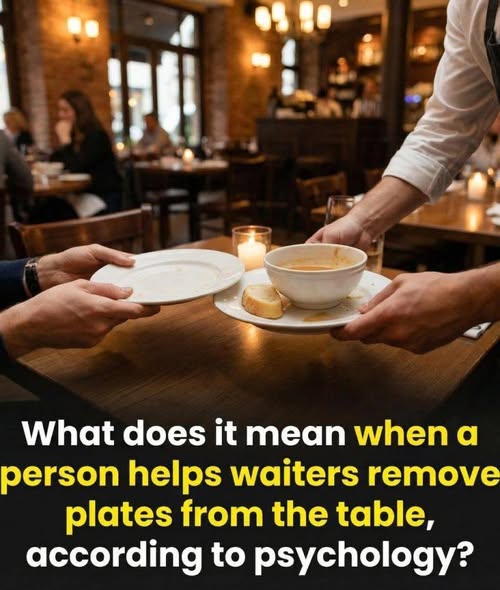
What does helping a waiter or restaurant worker really say about a person? Explore the psychology of everyday helpfulness, empathy, cooperation, and social awareness.
The Psychology Behind Helping Waiters: What This Simple Gesture Reveals
Imagine finishing dinner at a restaurant and noticing that the waiter is carrying several plates while trying to clear another table. You could simply continue your conversation—or you could stand up and help move a few dishes.
It’s a small gesture, but it can reveal interesting things about empathy, social awareness, and how we respond to other people’s needs.
Of course, one action cannot determine someone’s entire personality. But patterns of everyday behavior can sometimes provide clues about how a person relates to others.
1. It May Reflect Empathy
Helping someone who is working can be an expression of empathy.
You notice that another person is dealing with a difficult or inconvenient situation and instinctively want to make things a little easier.
People who frequently pay attention to how others are feeling may be more likely to offer small acts of assistance without being asked.
2. It Can Show Social Awareness
Some people naturally notice details happening around them.
They may see that a waiter is struggling with several plates, recognize that a chair is blocking the aisle, or realize that someone needs space to pass.
This type of awareness isn’t necessarily about wanting praise. It can simply mean the person is attentive to their surroundings.
3. It May Indicate a Cooperative Mindset
Helping doesn’t always mean doing something dramatic.
Holding a door, moving a glass out of someone’s way, gathering dishes, or making room can all be small examples of cooperation.
These behaviors can contribute to smoother social interactions because the person isn’t thinking exclusively about their own convenience.
4. It Can Reflect Respect for Service Workers
Restaurant employees often spend hours standing, carrying heavy items, cleaning tables, and responding to customers.
A customer who treats them with patience and respect may recognize that service work is still work.
Simple courtesy—saying thank you, being patient during a busy period, or offering reasonable assistance—can make an interaction more pleasant.
5. But Helping Doesn’t Automatically Mean Someone Is “Better”
It’s important not to turn one behavior into a personality diagnosis.
Someone might not help because they don’t notice what’s happening, because they believe employees prefer to handle their own tasks, or simply because the situation doesn’t require assistance.
Likewise, a person who helps a waiter isn’t automatically more empathetic or kinder in every area of life.
Context matters.
6. The Most Meaningful Part May Be the Intention
Psychologically, the motivation behind an action can matter as much as the action itself.
Helping because you genuinely want to make someone’s job easier is different from helping because you want other people to notice you doing it.
Neither motivation can be determined from a single gesture, but consistent behavior over time provides a much better picture of someone’s character.
What Small Gestures Can Tell Us
Everyday kindness is often expressed through tiny actions rather than grand displays.
Offering assistance, showing patience, listening carefully, thanking people, and noticing when someone needs help can all contribute to healthier social relationships.
These behaviors don’t prove a specific personality type, but they can reflect consideration, awareness, and a willingness to cooperate.
The Bottom Line
Helping a waiter is a small gesture, not a psychological test. Still, when someone regularly notices other people’s needs and offers help without expecting anything in return, it can be a meaningful sign of consideration and empathy.
Sometimes character isn’t revealed by what we say about ourselves—it’s revealed by the small things we do when nobody expects us to.