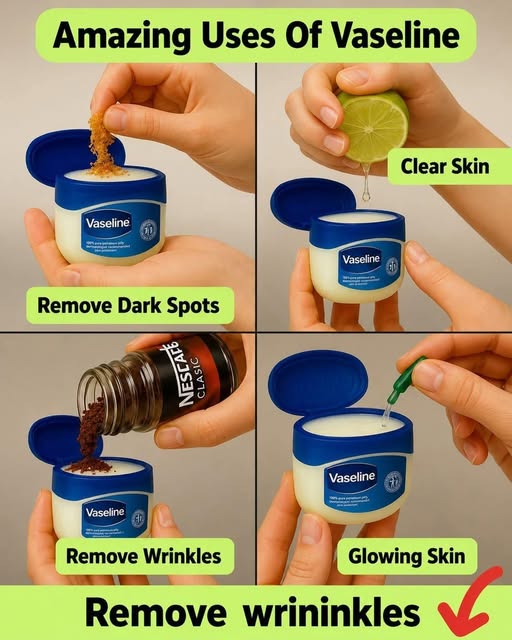
Vaseline, or petroleum jelly, has been a household staple for generations. It is inexpensive, simple, and surprisingly versatile. While social media often presents petroleum jelly as a miracle product capable of fixing everything from wrinkles to acne, some uses are much more practical—and better supported—than others.
Petroleum jelly works primarily as an occlusive. Instead of adding large amounts of water to the skin, it helps reduce moisture loss by forming a protective layer over the skin. Dermatologists commonly recommend it for dry skin, lips, minor cuts and scrapes, chafing, and dry nails and cuticles.
Here are some of the most useful Vaseline beauty hacks worth trying.
1. Turn Dry Lips Into Softer Lips
One of the simplest uses for Vaseline is caring for dry, chapped lips.
Apply a thin layer to clean, slightly damp lips. Petroleum jelly helps protect the lips and reduce moisture loss.
For an overnight treatment, apply a small amount before bed. By morning, your lips may feel noticeably softer.
If your lips are frequently exposed to sunlight, remember that ordinary petroleum jelly does not replace sunscreen. A lip product with broad-spectrum SPF 30 or higher is more appropriate for sun protection.
2. Use It on Dry Cuticles
Dry, rough cuticles can make even a fresh manicure look untidy.
Before bed, massage a tiny amount of petroleum jelly into your cuticles and the surrounding skin. It helps soften the area and reduce dryness.
The American Academy of Dermatology recommends petroleum jelly for nails and cuticles between manicures and pedicures because it can help minimize brittleness and chipping.
3. Rescue Extremely Dry Hands
If your hands become dry from frequent washing, cold weather, or household chores, Vaseline can act as a protective final layer.
For best results:
- Wash your hands with a gentle cleanser.
- Pat them dry but leave the skin slightly damp.
- Apply a fragrance-free moisturizer.
- Seal particularly dry areas with a thin layer of petroleum jelly.
Applying an ointment or cream to damp skin is recommended by dermatologists because it helps retain moisture.
4. Soften Rough Heels
Cracked, rough heels can benefit from an occlusive layer.
After bathing, gently pat your feet dry. Apply moisturizer first, followed by a thin layer of petroleum jelly to especially dry areas.
Putting on clean cotton socks afterward can help keep the product in place overnight.
If heel cracks are deep, painful, bleeding, infected, or repeatedly return, don’t rely solely on a beauty hack. A healthcare professional or dermatologist can determine the underlying cause.
5. Protect Skin From Chafing
Vaseline isn’t only for cosmetic purposes.
Petroleum jelly can reduce friction between skin surfaces or between skin and clothing. Dermatologists recommend it as one way to help prevent chafing that can lead to painful irritation and blisters.
Apply a thin layer to areas that commonly rub, such as the thighs or feet, before activity.
6. Create a Simple Overnight Moisture Treatment
If your skin is very dry, you can use petroleum jelly as the final step of your nighttime routine.
Cleanse your skin, apply your normal moisturizer, and then use a very thin layer of petroleum jelly over particularly dry areas.
This helps slow moisture loss while you sleep.
However, more isn’t necessarily better. A thick layer can feel greasy and may be uncomfortable, especially in hot or humid weather.
7. Make Dry Eyelid Skin More Comfortable
The skin around the eyes is delicate and can become dry or flaky.
The American Academy of Dermatology notes that a small amount of petroleum jelly can be used on dry eyelid skin for moisture and protection.
Use only a tiny amount and keep it out of your eyes. If your eyelids are persistently red, swollen, itchy, painful, or irritated, see a healthcare professional rather than repeatedly treating the symptoms yourself.
8. Help Protect Minor Scrapes
Petroleum jelly can also have a practical skincare role after a minor cut, scrape, or scratch.
Once the area has been properly cleaned, petroleum jelly can help keep the wound moist and prevent it from drying out excessively. The American Academy of Dermatology notes that keeping minor wounds moist can support healing and help prevent a large or deep scab from forming.
This is for minor injuries, not serious wounds.
Seek medical attention for deep wounds, severe burns, animal bites, signs of infection, or injuries that won’t heal.
9. Remove Eye Makeup
Petroleum jelly can help loosen certain types of eye makeup.
Apply a small amount carefully, gently wipe away the makeup with a soft cloth or tissue, and avoid getting the product directly into your eyes.
The American Academy of Dermatology has also described petroleum jelly as an option for removing eye makeup while helping moisturize the delicate eyelid skin.
10. Protect Dry Areas Around the Nose and Mouth
During cold or dry weather, frequent nose blowing can leave the skin around the nostrils irritated and dry.
A small amount of petroleum jelly can help reduce dryness by creating a protective barrier.
The same principle can be useful around other areas that become dry from repeated washing or environmental exposure.
11. Give Brows a Neater Appearance
A tiny amount of petroleum jelly can help temporarily hold unruly eyebrow hairs in place.
Use a clean spoolie or fingertip and apply only a very small amount.
This is primarily a styling trick, not a proven eyebrow-growth treatment.
Despite online claims, Vaseline does not magically make eyebrows grow thicker. It can simply condition the hairs and give them a smoother, more polished appearance.
12. Add a Glossy Finish to Lips
For a simple glossy lip look, apply a thin layer of petroleum jelly over your usual lip product.
It can make lips appear smoother and shinier while reducing dryness.
For daytime use outdoors, choose a lip product that also provides adequate sun protection.
13. Protect Nails During Dry Weather
Cold weather and frequent handwashing can leave nails and surrounding skin dry.
Massage a small amount of petroleum jelly into the nails and cuticles after washing your hands or before bedtime.
Regular application can help keep the surrounding skin from becoming excessively dry, while the AAD notes that petroleum jelly can help minimize nail brittleness and chipping.
What Vaseline Cannot Do
Vaseline is useful, but it isn’t a miracle treatment.
There is no good reason to expect petroleum jelly alone to:
- Permanently remove wrinkles
- Bleach or lighten skin
- Cure acne
- Remove dark spots
- Permanently enlarge lips
- Make eyelashes grow dramatically
- Remove scars
- Replace sunscreen
Its biggest strength is much simpler: it helps protect the skin and reduce moisture loss.
Is Vaseline Good for the Face?
It can be useful for dry areas of the face, but it isn’t ideal for everyone.
If you’re prone to acne or breakouts, be cautious about applying petroleum jelly over acne-prone areas. The American Academy of Dermatology specifically advises people who are acne-prone to avoid using petroleum jelly on the face because it may cause breakouts in some people.
Instead, consider using it only on genuinely dry areas, such as the lips or small patches of irritated skin.
The Best Way to Apply Vaseline
The most effective approach is usually surprisingly simple:
Clean → moisturize → seal.
After washing, leave the skin slightly damp. Apply an appropriate moisturizer, then use a small amount of petroleum jelly over areas that need additional protection.
Dermatologists recommend applying petroleum jelly to damp skin because it helps trap existing moisture.
Final Thoughts
Vaseline may not be the miracle beauty product social media sometimes makes it out to be, but it has several genuinely useful applications.
From softening dry lips and cuticles to protecting rough heels, reducing chafing, and helping maintain moisture in dry skin, petroleum jelly is a simple product that can earn a place in many skincare routines.
The key is knowing what it can—and cannot—do. Use a small amount, apply it to appropriate areas, and don’t confuse a protective moisturizer with a treatment for medical skin conditions.
For persistent dryness, irritation, acne, or unexplained skin changes, professional advice is more useful than continually adding another viral beauty hack to your routine.