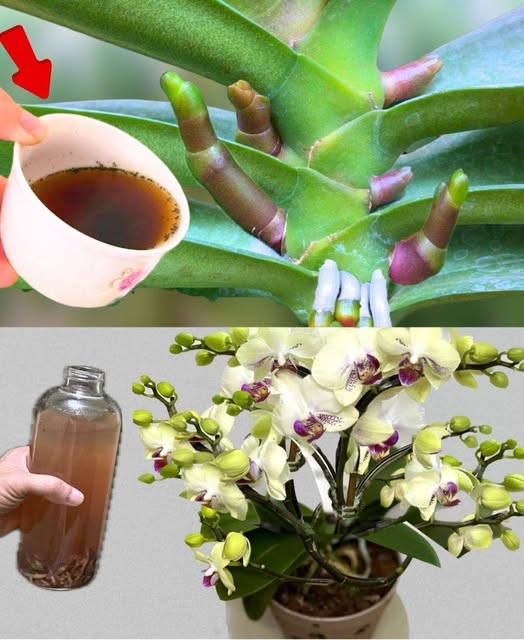
Want healthier orchid leaves and more flowers? Learn how proper watering, light, humidity, fertilizer, and orchid care can encourage strong growth without relying on risky homemade mixtures.
A very leafy orchid can look healthy, but lots of leaves don’t necessarily mean it will produce lots of flowers. Orchids need the right combination of light, watering, nutrition, airflow, and healthy roots to grow vigorously and bloom.
If your orchid has beautiful green leaves but refuses to flower, the solution may be simpler than you think.
🌿 The “Secret” Is Usually Proper Orchid Fertilizer
Rather than watering an orchid with household mixtures such as milk, sugar, rice water, or coffee, use a balanced orchid fertilizer according to the product’s instructions.
Orchids don’t need extremely strong fertilizer. Too much can damage their roots and cause salt buildup in the growing medium.
A diluted fertilizer used appropriately during active growth can provide nutrients the plant needs for leaves, roots, and eventually flowers.
💧 Water the Roots, Not the Leaves
One of the most important orchid-care habits is avoiding constant moisture around the leaves and crown.
Water thoroughly enough to moisten the growing medium, then allow excess water to drain completely.
Never leave the orchid sitting in stagnant water.
If water collects in the center where the leaves meet, gently remove it with a clean paper towel. Persistent moisture in this area can encourage rot.
☀️ Give It Bright, Indirect Light
A leafy orchid may not bloom if it isn’t receiving enough light.
Place it somewhere with bright, indirect light. An east-facing window is often a good option, while harsh direct afternoon sunlight can scorch the leaves.
A healthy orchid generally has green leaves, but very dark green foliage can sometimes indicate insufficient light.
🌱 Don’t Ignore the Roots
Healthy orchid roots are an excellent indicator of the plant’s condition.
Depending on the species and growing medium, healthy roots may appear green when wet and become silvery or grayish as they dry.
Mushy, black, or foul-smelling roots can indicate excessive moisture or root rot.
🌸 Why Does a Leafy Orchid Refuse to Flower?
Several factors can prevent blooming:
- Insufficient light
- Overwatering
- Too much fertilizer
- Poor root health
- Inadequate temperature changes
- Stress from repotting
- Natural seasonal growth cycles
Sometimes the plant simply needs time. Orchids can spend months producing roots and leaves before sending out a flower spike.
⚠️ Be Careful With Viral “Miracle” Recipes
You may see claims that a spoonful of sugar, milk, banana water, rice water, or another kitchen ingredient will make an orchid bloom dramatically.
These mixtures aren’t magic fertilizers, and some can encourage mold, pests, unpleasant odors, or root problems.
Simple, consistent care is usually much safer and more effective.
🌺 The Bottom Line
If your orchid is very leafy, that’s actually encouraging—it means the plant is capable of producing strong vegetative growth. Instead of searching for a miracle liquid, focus on bright indirect light, correct watering, good drainage, healthy roots, and appropriate orchid fertilizer.
With the right conditions, a healthy leafy orchid may eventually reward you with the flowers you’re waiting for.