A restaurant server secretly warned a customer not to order lemon water. Here are the real reasons lemon slices may raise hygiene concerns—and what you should know before ordering them.
Have you ever ordered a simple glass of lemon water at a restaurant and assumed it was one of the safest things on the menu?
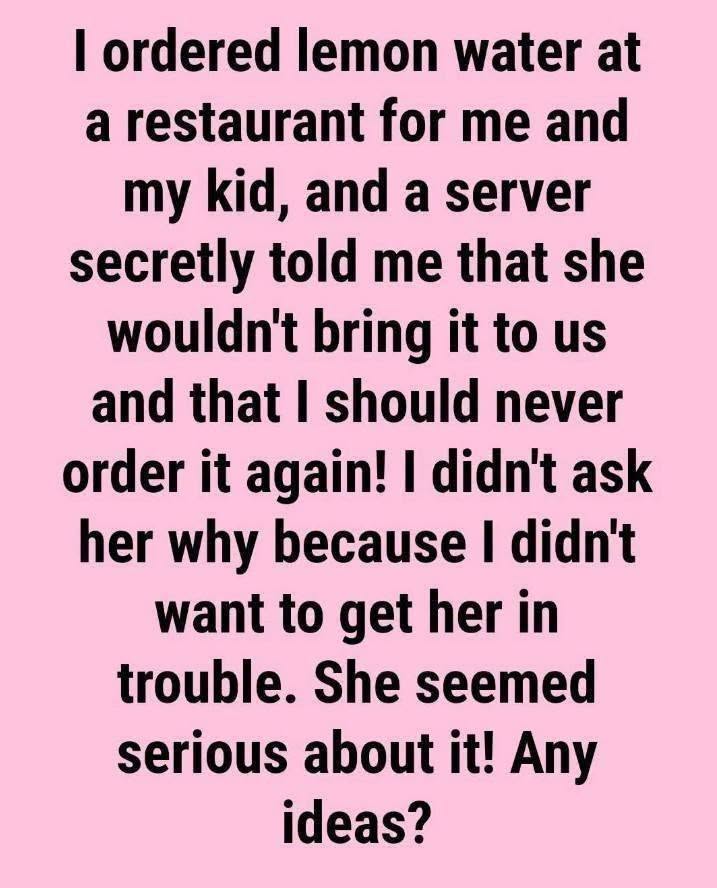
One customer shared a surprising experience: she ordered lemon water for herself and her child, but the server quietly told her that she would not bring it to them and that she should never order it again. The server seemed serious, but she didn’t explain why.
That naturally raises an important question: Why would a restaurant employee refuse to serve lemon water?
The answer may have something to do with how lemon slices are handled behind the scenes.
The Lemon Isn’t Necessarily the Problem
A fresh lemon itself isn’t something you generally need to fear.
The concern is usually about what happens after the lemon is cut and before it reaches your glass.
Once a lemon is sliced, the exposed surface can come into contact with hands, cutting boards, knives, containers, counters, and other surfaces. If proper food-handling practices aren’t followed, microorganisms can potentially be transferred to the fruit.
That’s why food hygiene matters just as much for garnishes as it does for the main meal.
Why Restaurant Lemon Slices Can Be Different
At home, you probably wash a lemon, cut it with a clean knife, and put the slices directly into your drink.
Restaurants may prepare large quantities of lemon slices ahead of time.
Those slices may then be:
- Stored in containers
- Handled by multiple employees
- Used throughout a busy shift
- Placed into drinks as garnishes
- Exposed to the surrounding environment
- Handled with utensils or gloved hands, depending on the restaurant
The important point is that you don’t know exactly how every restaurant handles its garnishes.
A responsible restaurant should have food-safety procedures for preparing and storing cut produce.
Could Lemon Slices Carry Bacteria?
They can potentially become contaminated, just like other fresh produce.
Research has found microorganisms on restaurant lemon garnishes, but that doesn’t mean every lemon slice is contaminated or that eating one will make you sick.
The risk depends on factors such as:
- How the lemon was washed
- Whether clean utensils were used
- Whether employees washed their hands
- How long the slices were stored
- Whether the slices were kept at an appropriate temperature
- Whether the preparation area was clean
So the viral story shouldn’t be interpreted as “restaurant lemons are dangerous.”
It’s more accurate to say that improperly handled cut fruit can present a food-safety risk.
What About Lemon in Your Water?
Adding a lemon slice to water doesn’t magically make the water unsafe.
If the restaurant provides properly treated drinking water and handles the lemon hygienically, lemon water can simply be water with a little citrus flavor.
The potential issue is the lemon garnish, not the concept of drinking water with lemon.
If you’re particularly concerned about hygiene, you can simply ask for water without a lemon slice.
Why Would a Server Refuse to Bring It?
There could be many explanations.
Perhaps the server knew that the restaurant’s lemon slices had been prepared improperly that day.
Maybe the lemons had been sitting out too long.
Maybe the restaurant had received a shipment of produce that wasn’t suitable for serving.
Or perhaps the server had a personal concern based on something she had witnessed.
The important thing is that we can’t know the server’s actual reason from the story alone.
It would be misleading to claim that she definitely knew the lemons were contaminated.
What Should You Do If a Server Warns You?
If a restaurant employee gives you a serious food-safety warning, it’s reasonable to take it seriously.
You don’t necessarily need to panic or assume something dangerous is happening.
You can simply say:
“Thank you for letting me know. I’ll have the water without lemon.”
You could also politely ask whether there is another garnish or drink option available.
If the employee refuses to explain, you don’t have to investigate. Choosing a drink without the garnish is an easy solution.
Is It Better to Ask for Lemon on the Side?
Some people prefer to ask for a lemon wedge separately so they can decide whether to use it.
However, this doesn’t automatically eliminate the hygiene issue. The lemon still needs to have been properly washed, cut, stored, and handled.
If you’re concerned, no lemon is the simplest option.
What About Lemon Juice From a Bottle?
Another option is commercially prepared lemon juice.
Depending on the product and how the restaurant stores it, this may involve a different food-handling process than fresh-cut lemon. However, bottled lemon juice isn’t automatically “safer” in every situation.
The bigger lesson is to pay attention to proper food handling and storage, rather than assuming one type of lemon product is always safe.
Don’t Believe Every Viral Warning
Stories like this spread quickly because they’re mysterious.
Someone says a server whispered, “Don’t ever order this again,” and naturally people want to know the secret.
But there are many possible explanations, and social media posts often leave out important details.
So rather than concluding that restaurants should never serve lemon water, it’s better to remember a simple food-safety principle:
Fresh-cut produce should be handled carefully.
That applies not only to lemons but also to limes, oranges, strawberries, lettuce, tomatoes, herbs, and other foods.
A Simple Restaurant Habit
If you want to reduce unnecessary exposure to potentially mishandled garnishes, you can simply order your drink without them.
For example:
“I’ll have water, no lemon, please.”
It’s a small request and doesn’t mean you need to be afraid of restaurant food.
And if a server personally warns you about something, it’s perfectly reasonable to listen and choose another option.
The Bottom Line
The mysterious warning in this story doesn’t prove that the restaurant’s lemons were contaminated.
However, it does highlight something worth remembering: cut fruit can become contaminated if it isn’t washed, prepared, stored, and handled properly.
Lemon water itself isn’t inherently dangerous, and there’s no reason to believe every restaurant lemon slice is unsafe.
But if a restaurant employee specifically warns you not to consume a particular garnish, the easiest response is to skip it.
Sometimes the simplest choice really is the best one: water without the lemon.