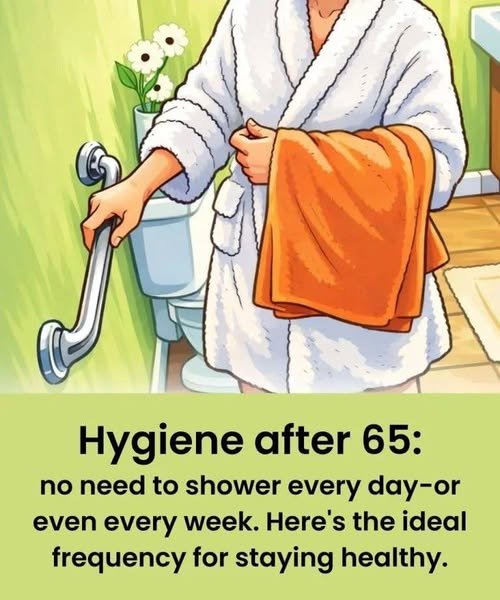
Daily showers after 65 may affect aging skin by increasing dryness, irritation, and itching. Learn how shower temperature, duration, soap, and moisturizing habits can help protect your skin.
Why Daily Showers After 65 May Do More Harm Than Good
As we get older, our skin changes. It generally becomes thinner, drier, and less able to retain moisture. Natural oil production can also decline, which means routines that felt perfectly comfortable when we were younger may become irritating later in life.
This doesn’t mean people over 65 should stop showering. Good hygiene remains important. Instead, the goal is to understand how frequent showering—especially with very hot water and harsh soaps—can affect mature skin and how small changes can make bathing more comfortable.
Why Aging Skin Needs More Care
Skin naturally produces oils that help maintain its protective barrier. With age, this barrier can become more vulnerable to dryness and irritation.
Frequent exposure to hot water and cleansing products can remove some of the skin’s natural oils. For someone with already-dry skin, this may lead to:
- Tight or uncomfortable skin
- Flaking
- Itching
- Redness
- Increased sensitivity
- Cracked skin
The problem isn’t simply the number of showers. Water temperature, shower length, cleanser choice, and individual skin condition all matter.
1. Very Hot Water Can Dry Out Skin
A steaming hot shower may feel relaxing, especially during cold weather, but prolonged exposure to hot water can worsen dryness.
Instead, choose lukewarm water.
A comfortable shower doesn’t need to leave your bathroom filled with steam. If your skin feels tight or itchy afterward, reducing the water temperature may help.
2. Long Showers May Increase Dryness
Standing under running water for a long time can expose your skin to more heat and moisture loss afterward.
Try keeping showers relatively short while still washing thoroughly.
You don’t need to spend a long time scrubbing every part of your body every day.
3. Harsh Soap Can Remove Protective Oils
Strongly fragranced soaps and body washes may irritate sensitive or dry skin.
Look for gentle, fragrance-free cleansers if your skin is easily irritated.
You generally don’t need to aggressively scrub your entire body. Focus cleansing on areas that commonly accumulate sweat, oils, and odor, while avoiding unnecessary friction on very dry skin.
4. Moisturizing Immediately After Showering Matters
One of the simplest ways to protect aging skin is to moisturize after bathing.
Gently pat your skin dry rather than rubbing it vigorously, then apply a fragrance-free moisturizer while the skin is still slightly damp.
Ingredients such as ceramides, glycerin, and petrolatum can help support the skin barrier and reduce moisture loss.
Does This Mean You Shouldn’t Shower Every Day?
Not necessarily.
Some older adults may comfortably shower daily, while others may find that frequent full-body showers make their skin excessively dry.
Your ideal bathing routine depends on:
- Skin type
- Activity level
- Sweating
- Climate
- Medical conditions
- Incontinence
- Personal preference
- Your healthcare professional’s recommendations
For some people, a shorter shower with lukewarm water and gentle cleansing is perfectly reasonable every day.
What About Washing Your Hair?
Hair and scalp needs vary considerably.
Some people need frequent shampooing, while others can wash their hair less often. If your scalp becomes dry, itchy, or irritated, consider using a gentler shampoo and avoiding very hot water.
If persistent scalp irritation develops, speak with a healthcare professional.
When Dry Skin Could Mean Something More
Persistent itching or unusually dry skin isn’t always caused by showering.
It can sometimes be associated with conditions such as:
- Eczema
- Psoriasis
- Allergies
- Medication effects
- Thyroid disorders
- Diabetes
- Liver problems
- Kidney disease
If itching is severe, widespread, persistent, or accompanied by other unexplained symptoms, medical evaluation is appropriate.
A Skin-Friendly Shower Routine After 65
Try this simple approach:
1. Use lukewarm water.
Avoid extremely hot temperatures.
2. Keep the shower reasonably short.
Longer isn’t necessarily better for your skin.
3. Choose a gentle cleanser.
Fragrance-free products may be preferable for sensitive skin.
4. Avoid vigorous scrubbing.
Your skin doesn’t need aggressive friction to become clean.
5. Pat dry gently.
Don’t rub already-dry skin harshly with a towel.
6. Moisturize promptly.
Apply a suitable moisturizer while your skin is still slightly damp.
7. Pay attention to changes.
Persistent redness, cracks, sores, or severe itching deserve attention.
Don’t Forget Bathroom Safety
For older adults, shower safety is just as important as skin care.
Wet bathroom surfaces can become slippery, increasing the risk of falls.
Consider:
- Non-slip flooring or mats
- Grab bars installed correctly
- Adequate lighting
- A sturdy shower seat if needed
- Keeping essential items within easy reach
- Avoiding unnecessary rushing
If balance has become a concern, discussing bathroom safety with a healthcare professional or occupational therapist can be helpful.
The Bottom Line
Daily showers aren’t automatically harmful after 65. The bigger issue is how you shower.
Very hot water, long showers, harsh cleansers, and vigorous scrubbing can contribute to dryness and irritation, particularly when skin has become more delicate with age.
A shorter shower using lukewarm water, a gentle cleanser, and moisturizer afterward can help maintain the skin’s protective barrier while still supporting good hygiene.