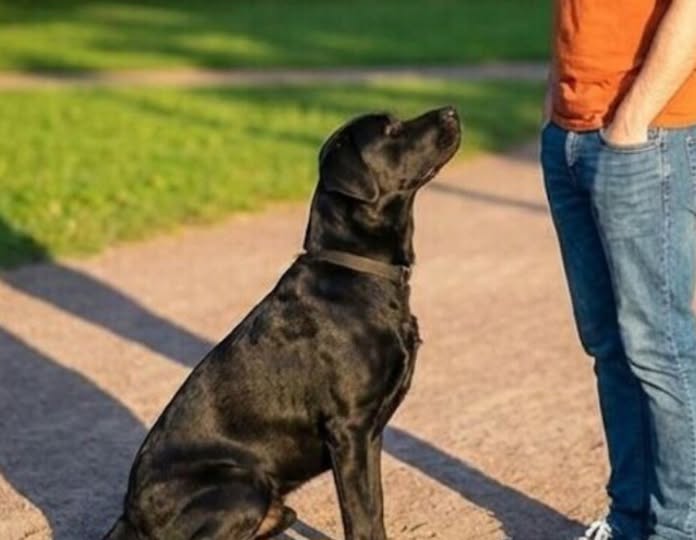
Discover why dogs sniff certain areas, people, and other dogs. Learn how their incredible sense of smell helps them gather information, communicate, and understand the world around them.
If you have ever taken a dog for a walk, you have probably noticed something that seems almost impossible to ignore: dogs sniff everything. Trees, grass, shoes, furniture, other dogs—and sometimes very specific areas of another animal or person.
While this behavior may seem funny, awkward, or even strange to us, sniffing is actually one of the most important ways dogs experience the world.
🐶 A Dog’s Nose Is Its Information Center
Dogs rely heavily on their sense of smell. Humans have a relatively limited ability to detect odors, but dogs possess an extraordinarily sensitive olfactory system.
When a dog sniffs, it isn’t simply “smelling” something in the way we smell food cooking. It can gather detailed information about what has been present in a particular location.
A sniff can potentially tell a dog:
- Who has been there
- Whether another animal passed by recently
- What another animal may have been eating
- Whether an animal is male or female
- Whether another dog may be familiar or unfamiliar
- Changes in the surrounding environment
For a dog, a patch of grass can be almost like a newspaper full of information.
Why Do Dogs Sniff Other Dogs’ Rear Ends?
This is probably the behavior that makes people most curious.
Dogs have scent-producing glands around the anal area. These glands release chemical compounds that contribute to an individual’s unique scent.
When dogs sniff this area, they are gathering information through their highly developed sense of smell. It is essentially a form of canine communication.
Humans generally communicate through speech, facial expressions, gestures, and body language. Dogs use many of those methods too—but scent plays a much bigger role in their social lives.
So when one dog approaches another and immediately starts sniffing, it isn’t necessarily being rude. It’s performing a natural social investigation.
Their Nose Can Detect Things We Can’t
A dog’s sense of smell is so sensitive that ordinary household smells can contain layers of information that humans simply cannot perceive.
This is one reason dogs are trained for specialized tasks such as detecting certain substances, finding missing people, and identifying specific odors.
Their brains are also highly adapted to processing smells, making scent an important part of how they navigate their surroundings.
Why Dogs Sniff People
Dogs may also sniff people, particularly around areas where natural body odors are stronger.
Sweat, skin oils, cosmetics, food odors, and other scents can all provide information to a dog. Certain parts of the body naturally produce more noticeable odors, which can make them particularly interesting to a curious animal.
This doesn’t mean a dog understands everything about a person from one sniff. Rather, the dog is responding to an enormous amount of sensory information that we simply don’t experience in the same way.
Sniffing Is Also a Way to Explore
For dogs, sniffing isn’t only about social interaction.
During a walk, allowing a dog time to smell its surroundings can provide mental stimulation. Instead of simply walking from one point to another, the dog gets an opportunity to investigate its environment.
That is why constantly rushing a dog through every walk may remove an important part of the experience.
A few extra minutes of supervised sniffing can turn an ordinary walk into an engaging sensory activity.
Why Dogs Sometimes Stop at the Same Spot
Have you ever wondered why your dog repeatedly sniffs the exact same tree, pole, bush, or patch of grass?
The reason is simple: the scent information may still be interesting.
Another animal may have recently visited the area, leaving behind odors that are detectable to your dog even when you see absolutely nothing unusual.
Weather conditions can also influence how odors spread and remain in an environment. What appears to be an ordinary patch of grass to you may contain an entire world of scent information for your dog.
Should You Stop Your Dog From Sniffing?
Not necessarily.
As long as the behavior is safe and appropriate for the situation, sniffing is a normal part of being a dog.
However, owners should still be cautious about what their pets investigate. Dogs can encounter spoiled food, chemicals, toxic plants, animal waste, or other potentially dangerous substances while exploring.
The goal isn’t to prevent sniffing altogether—it’s to allow safe exploration while maintaining supervision.
The Next Time Your Dog Sniffs Everything…
Instead of thinking that your dog is simply wasting time, remember that it may be doing something incredibly sophisticated.
Every sniff is an opportunity to gather information.
For dogs, the world isn’t experienced only through sight and sound. It is a world of scents, and their noses help them read it.
So the next time your dog stops during a walk and spends several minutes investigating one particular spot, there may be far more happening than meets the human eye.
Final Thought
Dogs sniff certain areas because scent is one of their most powerful tools for understanding their environment and communicating with other animals. What seems unusual to humans is actually a completely natural and important part of canine behavior.
In short: when a dog sniffs, it’s not just smelling—it’s gathering information.