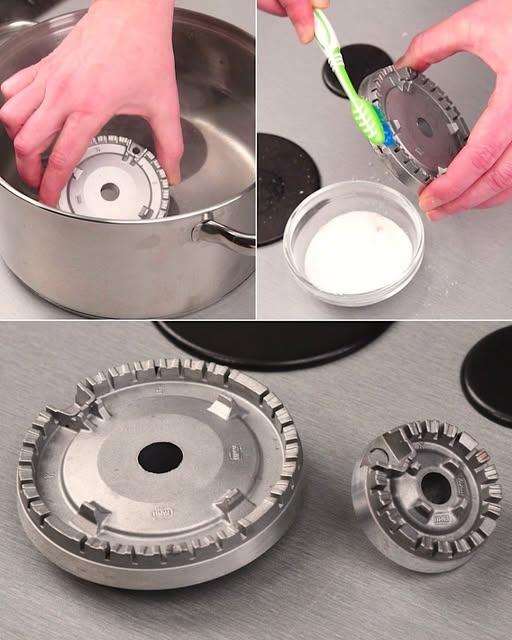
Learn how to clean a greasy gas stovetop with just two simple household ingredients. This easy method helps loosen baked-on grease, food splatters, and stubborn residue without relying on harsh cleaners.
You Only Need 2 Natural Ingredients! How to Clean a Gas Stovetop So It Looks Like New
A greasy gas stovetop can make an otherwise clean kitchen look messy. Between cooking oil, food splashes, burnt-on residue, and everyday spills, buildup can become surprisingly difficult to remove.
The good news is that you don’t always need expensive specialty cleaners. With baking soda and white vinegar, you can tackle many everyday stovetop messes using ingredients that are probably already in your kitchen.
What You’ll Need
- Baking soda
- White vinegar
- A soft sponge or microfiber cloth
- Warm water
- A small bowl
- An old soft toothbrush for difficult areas
Important: Never mix vinegar with bleach or other chemical cleaners. Also, make sure the stove is completely cool and the gas is turned off before cleaning.
Step 1: Remove the Grates and Burner Parts
Start by making sure the stovetop is completely cool.
Remove the cooking grates and any burner caps or removable pieces according to your stove manufacturer’s instructions.
Set them aside so you can clean the main surface separately.
Step 2: Remove Loose Crumbs and Food
Use a dry cloth or paper towel to wipe away loose crumbs, dried food, and other debris.
This makes the next cleaning step much easier because you’re working directly on the greasy residue rather than pushing crumbs around.
Step 3: Sprinkle on Baking Soda
Lightly cover the greasy areas with baking soda.
You don’t need a thick mountain of powder. A thin, even layer is usually enough.
Baking soda is mildly abrasive, so it can help loosen stuck-on grime without requiring aggressive scrubbing.
Step 4: Add a Little Vinegar
Pour white vinegar into a spray bottle or apply a small amount directly over the baking soda.
The familiar fizzing reaction occurs when the acidic vinegar meets the baking soda. While the bubbling itself isn’t a magical cleaning force, the combination can help loosen and lift some surface grime.
Let the mixture sit for approximately 5–10 minutes.
For particularly stubborn residue, you can allow the dampened baking soda to sit a little longer.
Step 5: Gently Scrub
Use a soft sponge or microfiber cloth to work over the surface.
For stubborn spots around burner areas, a soft toothbrush can help reach small crevices.
Avoid using extremely abrasive pads or scraping aggressively, especially if your stovetop has a delicate finish that could scratch.
Step 6: Wipe Everything Away
Use a clean, damp microfiber cloth to remove the loosened residue.
You may need to rinse and wring the cloth several times if the stovetop is particularly greasy.
Finally, wipe the surface with a dry microfiber cloth to prevent water spots.
How to Clean the Grates
The removable grates can collect a surprising amount of grease.
Place them in a sink or suitable basin and apply baking soda over the greasy areas. Add enough warm water to help loosen the residue and allow them to soak.
After soaking, scrub gently with a non-abrasive sponge or brush, rinse thoroughly, and dry completely before putting them back on the stove.
Always check your manufacturer’s instructions first, because some grates have specific cleaning requirements.
Don’t Forget the Burner Caps
Burner caps can become covered with grease and food residue too.
Remove them only when the stove is cool and follow the manufacturer’s instructions. Clean them gently and make sure they’re completely dry before reinstalling them.
It’s especially important that burner openings are not blocked by cleaning residue or debris.
A Simple Maintenance Trick
You don’t have to wait until your stovetop becomes heavily coated with grease.
After cooking, allow the surface to cool completely and wipe away fresh splatters with a damp microfiber cloth.
Cleaning small messes regularly is much easier than trying to remove weeks of baked-on buildup.
Important Safety Tips
Before cleaning a gas stovetop:
- Make sure all burners are turned off.
- Allow the stovetop to cool completely.
- Keep water and cleaning solutions away from electrical ignition components.
- Don’t pour large amounts of liquid around the burners.
- Don’t use steel wool or harsh abrasives unless the manufacturer specifically recommends them.
- Make sure removable burner parts are completely dry before using the stove again.
- Never mix vinegar with bleach or other chemical cleaners.
The Result
With a little baking soda, white vinegar, gentle scrubbing, and some patience, a dull, greasy stovetop can look noticeably cleaner and fresher.
The biggest secret isn’t scrubbing harder—it’s letting the cleaning mixture loosen the residue first. Once the buildup softens, wiping it away becomes much easier.
For regular maintenance, a quick wipe after cooking can help keep your gas stovetop looking clean without turning kitchen cleaning into a major chore.