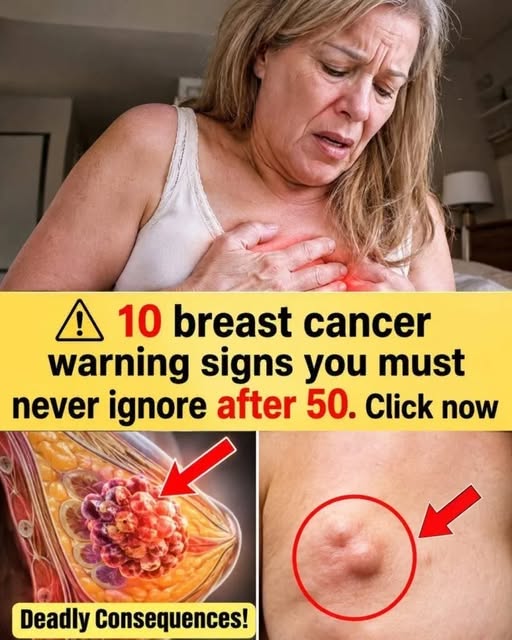
Learn 10 important breast cancer warning signs women over 50 should never ignore, including new lumps, nipple changes, skin changes, swelling, and unusual breast pain.
Breast changes can happen for many reasons, and most breast changes are not cancer. However, breast cancer becomes more common with increasing age, so women over 50 should take new or unusual changes seriously and have them evaluated rather than trying to diagnose the cause themselves.
Here are 10 signs worth discussing promptly with a healthcare professional.
1. A New Lump or Thickened Area
A new lump in the breast or underarm is one of the most important changes to have checked.
A cancerous lump may feel hard, irregular, or different from the surrounding tissue, but breast cancers can also feel soft or have other characteristics. You cannot determine whether a lump is cancer simply by feeling it.
Any new persistent lump deserves medical evaluation.
2. A Change in Breast Size or Shape
Pay attention if one breast suddenly becomes noticeably different in size or shape without an obvious explanation.
Changes can sometimes occur because of hormonal fluctuations, infection, cysts, or other benign conditions, but a persistent unexplained change should be assessed.
3. Skin Dimpling or Indentation
Skin over the breast that suddenly becomes pulled inward or develops dimples should not be ignored.
Sometimes this happens because a tumor is affecting tissues beneath the skin. It can also have other causes, so medical examination is important.
4. Skin That Looks Like an Orange Peel
A rare but important breast cancer presentation can cause the skin to become swollen, thickened, and uneven, sometimes resembling the texture of an orange peel. This is called peau d’orange.
It can occur with inflammatory breast cancer, although infection and other conditions can also produce breast swelling and redness.
5. Unexplained Nipple Discharge
Unexpected nipple discharge—particularly bloody or clear discharge from one breast—should be evaluated.
Not all nipple discharge indicates cancer. Hormonal changes, medications, infections, and benign breast conditions can also cause it.
6. A Newly Inverted Nipple
If a nipple that normally points outward suddenly becomes pulled inward, this is worth discussing with a doctor.
Some people naturally have inverted nipples, so the key concern is a new or changing inversion.
7. Persistent Breast or Nipple Pain
Breast pain alone is usually not a typical sign of breast cancer, and many benign conditions can cause tenderness.
However, persistent, localized, unexplained pain or pain accompanied by another breast change should be evaluated.
8. Redness, Warmth, or Swelling
A breast that suddenly becomes red, warm, swollen, or significantly different from the other breast may need medical attention.
Infection such as mastitis can cause similar symptoms, but persistent symptoms—especially without an obvious infection—should not be dismissed.
9. A Lump or Swelling in the Armpit
Breast tissue extends toward the armpit, and lymph nodes are located there. A new persistent lump or swelling in the armpit can have many causes, including infection, but it should be checked if it doesn’t resolve.
10. A Persistent Change That Is Simply “Not Normal” for You
Sometimes the most important warning sign is a change you cannot easily describe.
You may notice that one area feels different, the breast looks different in the mirror, or a previously familiar symptom has changed.
Knowing your normal breast appearance and feel can help you recognize unusual changes.
What Women Over 50 Should Do
Don’t wait for symptoms before taking breast health seriously.
Depending on your age, risk factors, and local medical guidelines, routine mammography may be recommended. Women with a strong family history, certain genetic mutations, previous breast conditions, or other risk factors may need a different screening plan.
If you discover a new breast lump or another concerning change, don’t wait for your next routine mammogram. Contact a healthcare professional for advice.
A Simple Reminder
A breast lump or change does not automatically mean cancer. Cysts, infections, hormonal changes, benign growths, and other conditions can produce similar symptoms.
The important message is simple:
A new, persistent, or unexplained breast change deserves professional evaluation. Early detection can make breast cancer easier to treat, so don’t ignore something that feels or looks different.