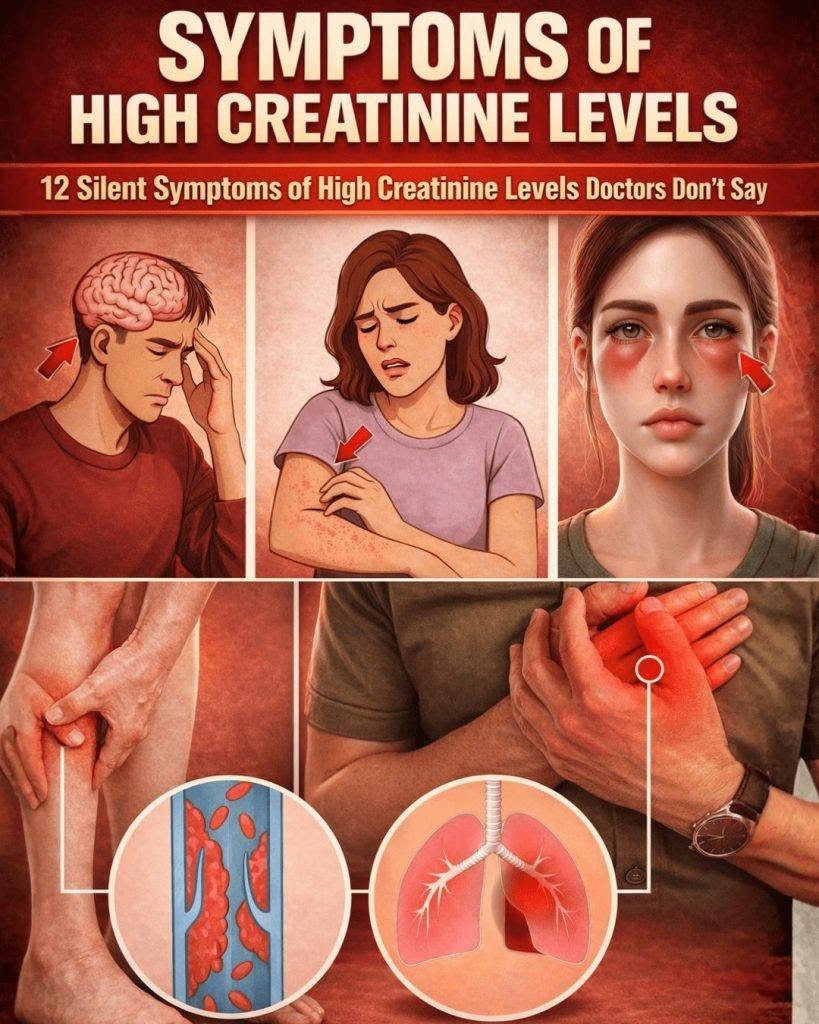
Discover 12 possible warning signs of kidney problems, why early kidney disease may cause few symptoms, and when creatinine and other kidney tests may be appropriate.
Your kidneys work continuously to filter waste and excess fluid from your blood. When kidney function begins to decline, changes can sometimes appear gradually. However, there is an important point to remember: early kidney disease often causes no noticeable symptoms. Symptoms alone cannot tell you whether your creatinine is high or whether your kidneys are functioning normally. Blood and urine tests are often needed to detect kidney problems early.
Here are 12 symptoms or changes that can occur with kidney disease and deserve medical attention when they are persistent or unexplained.
1. Feeling Tired or Weak
Persistent fatigue can occur when kidney function becomes significantly reduced. Healthy kidneys help regulate several processes involved in the production of red blood cells, and advanced kidney disease can contribute to anemia.
But tiredness has many other possible causes, including poor sleep, stress, nutritional deficiencies and other medical conditions.
2. Swelling in the Legs, Ankles or Feet
Kidney disease can cause the body to retain excess salt and fluid. This may result in swelling, particularly around the ankles, feet or legs.
Sudden or significant swelling should be evaluated because heart, liver, circulation and other problems can cause it as well.
3. Changes in Urination
Pay attention to a persistent change in your usual urination pattern.
Possible changes can include:
- Urinating much more or less frequently
- Waking repeatedly at night to urinate
- Difficulty urinating
- Changes in the amount of urine produced
These changes do not necessarily mean kidney disease, but unexplained persistent changes should be discussed with a healthcare professional.
4. Foamy or Bubbly Urine
Persistent, unusually foamy urine can sometimes be associated with protein in the urine, which may indicate kidney damage.
Occasional bubbles are not necessarily abnormal. But if urine repeatedly appears unusually foamy, a urine test can determine whether protein is present.
5. Blood in the Urine
Pink, red or cola-colored urine can sometimes indicate blood in the urinary tract.
Kidney disease is only one possible cause. Urinary infections, kidney stones, medications and other conditions can also cause blood in the urine.
Visible blood should not be ignored and warrants medical evaluation.
6. Puffiness Around the Eyes
Swelling around the eyes, particularly in the morning, can occur when excess fluid or protein loss is associated with kidney disease.
There are many other causes of facial or eye swelling, however, so this symptom alone cannot diagnose a kidney problem.
7. Nausea or Poor Appetite
When kidney function becomes substantially impaired, waste products can accumulate in the blood and contribute to nausea, reduced appetite or an unpleasant taste in the mouth.
These symptoms generally occur in more advanced kidney dysfunction rather than being reliable signs of early kidney disease.
8. Muscle Cramps
People with kidney disease can develop changes in electrolytes and mineral balance, which may contribute to muscle cramps or weakness.
Muscle cramps are extremely common and can also result from dehydration, exercise, medications and other conditions.
9. Dry or Itchy Skin
Persistent itching and unusually dry skin can occur in more advanced kidney disease, partly because impaired kidney function can affect mineral and waste-product balance.
Because dry or itchy skin is common for many reasons, it should be considered alongside other symptoms and medical findings.
10. Trouble Concentrating
Significant kidney dysfunction can contribute to difficulty concentrating, sleep problems and changes in mental alertness.
However, concentration problems are nonspecific and can also be caused by anxiety, inadequate sleep, medications, nutritional problems and many other conditions.
11. Shortness of Breath
Kidney disease can contribute to shortness of breath when fluid accumulates in the body or when severe kidney dysfunction contributes to anemia.
Sudden or severe shortness of breath is an emergency symptom and should not be assumed to be related to the kidneys.
12. High Blood Pressure
High blood pressure can be both a cause and a consequence of kidney disease.
Over time, uncontrolled hypertension can damage the blood vessels in the kidneys. Conversely, damaged kidneys may have difficulty regulating fluid and hormones involved in blood-pressure control.
Regular blood-pressure checks are therefore particularly important for people at increased risk of kidney disease.
Why Creatinine Matters
Creatinine is a waste product produced by normal muscle metabolism. Healthy kidneys remove creatinine from the blood.
When kidney filtration decreases, blood creatinine can rise. Healthcare professionals commonly use creatinine together with other information to estimate the estimated glomerular filtration rate (eGFR), an important measure of kidney function.
A single elevated creatinine result does not automatically mean chronic kidney disease. Creatinine can also be affected by factors such as muscle mass, dehydration, certain medications and recent intense exercise.
That is why doctors interpret creatinine results in context and may repeat testing.
Who Should Consider Kidney Testing?
You may have a higher risk of kidney disease if you have conditions such as:
- Diabetes
- High blood pressure
- Cardiovascular disease
- A family history of kidney disease
- Previous kidney problems
- Certain autoimmune conditions
- Long-term exposure to medicines or substances that can affect the kidneys
People with risk factors should discuss appropriate blood and urine testing with their healthcare professional.
What Tests Check Kidney Health?
A healthcare professional may use several tests rather than relying on creatinine alone.
Common assessments include:
Blood creatinine and eGFR: These help assess how well the kidneys are filtering blood.
Urine albumin-to-creatinine ratio (UACR): This checks for albumin, a type of protein, in urine. Increased albumin can be an early marker of kidney damage.
Urinalysis: This can identify blood, protein and other abnormalities.
Blood pressure measurement: Blood pressure is closely connected with kidney health.
Can You Lower Creatinine Naturally?
There is no universal “creatinine-lowering” remedy. If creatinine is elevated, the priority is to determine why.
Depending on the cause, treatment might involve managing blood pressure or diabetes, correcting dehydration, changing a medication under medical supervision, treating an infection or addressing another underlying condition.
Avoid taking herbal kidney “detoxes” or supplements simply because they claim to cleanse the kidneys. Some supplements can actually harm the kidneys or interact with medications.
When to Seek Medical Attention
Contact a healthcare professional if you have persistent changes in urination, unexplained swelling, blood in your urine, consistently foamy urine or other concerning symptoms—particularly if you have diabetes, high blood pressure or another kidney-disease risk factor.
Seek urgent medical care for severe shortness of breath, severe weakness, confusion, inability to urinate, or rapidly worsening swelling or illness.
Final Takeaway
The most important thing to remember is that early kidney disease may have no obvious symptoms. The presence or absence of the 12 signs above cannot confirm or rule out kidney disease.
If you are concerned about your kidney health, appropriate blood and urine testing—especially creatinine/eGFR and urine albumin testing—can provide much more useful information than symptoms alone.
Don’t wait for severe symptoms before discussing kidney health with a healthcare professional if you have important risk factors.
This article is for general educational purposes and is not a diagnosis or a substitute for medical advice.