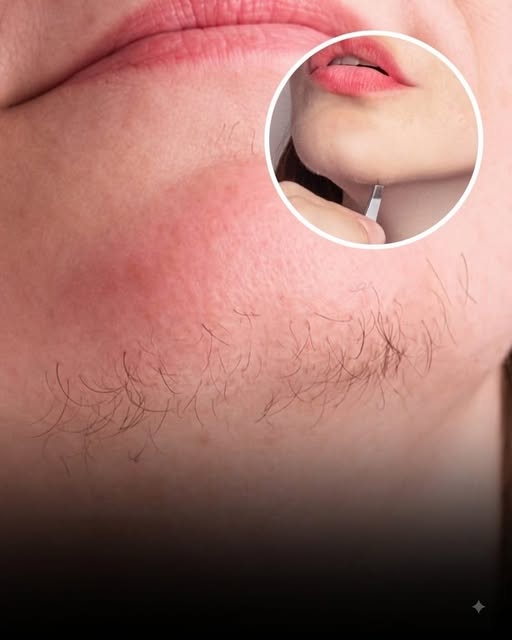
Discover five evidence-based ways women can manage unwanted facial hair, from gentle at-home hair removal to laser therapy, electrolysis and prescription treatments. Learn what actually works, how long results may take, and when excessive facial hair could signal a hormonal condition.
5 Science-Backed Ways Women Are Getting Rid of Facial Hair Naturally & Medically
Unwanted facial hair is extremely common, but when coarse, dark hair begins appearing on the chin, upper lip, jawline or cheeks, many women wonder whether it is simply cosmetic or a sign of something happening inside the body.
The medical term for excessive coarse hair growth in a male-pattern distribution is hirsutism. Hormonal factors, genetics and conditions such as polycystic ovary syndrome (PCOS) can contribute to it.
Fortunately, there are several evidence-based options. Some remove existing hair, while others slow future growth or address an underlying hormonal cause.
1. Shaving — Simple, Safe and Surprisingly Effective
Shaving is one of the easiest ways to remove facial hair.
Contrary to a common myth, shaving does not make hair grow back thicker or darker. It simply cuts the hair at the skin’s surface, which can make the newly growing hair feel slightly rough or appear more noticeable.
For sensitive facial skin, use a clean facial razor and a gentle shaving product. Avoid repeatedly going over the same area, as this can cause irritation or razor bumps.
The major disadvantage is that shaving doesn’t reduce the number of hair follicles, so the result is temporary.
2. Electrolysis — A Long-Term Hair Reduction Option
Electrolysis works differently from shaving or waxing. A very fine probe is inserted into individual hair follicles and an electrical current is used to damage the follicle.
It can be particularly useful for women with light, blonde or white facial hair, because laser treatments generally work best when there is sufficient pigment in the hair.
Multiple sessions are normally required because hairs grow in different cycles.
Electrolysis can also cause temporary redness or irritation, and treatment may be uncomfortable, so choosing a qualified professional is important.
3. Laser Hair Removal — One of the Most Effective Options for Dark Hair
Laser hair removal uses concentrated light energy to target pigment in the hair follicle.
For women with dark facial hair, laser treatment can produce substantial long-term hair reduction, although it usually requires multiple sessions and isn’t necessarily permanent.
Skin tone matters.
Women with darker skin can often be treated successfully, but the choice of laser and settings is important because inappropriate treatment can increase the risk of burns or changes in skin pigmentation. The Endocrine Society specifically recommends appropriate long-wavelength lasers, such as Nd:YAG, for women of color.
There is another consideration: women of Mediterranean or Middle Eastern background with facial hirsutism may have an increased risk of paradoxical hypertrichosis, in which treatment can stimulate additional hair growth in some areas.
That’s why professional assessment before facial laser treatment is worthwhile.
4. Eflornithine Cream — Slow Down New Facial Hair Growth
Eflornithine is a prescription topical treatment specifically used for unwanted facial hair in women.
It doesn’t remove hair that is already present. Instead, it slows the rate at which new facial hair grows. Results aren’t immediate and may take several weeks to become noticeable. Hair growth can return after treatment is stopped.
Doctors may sometimes recommend eflornithine alongside laser treatment because the combination can improve the speed of hair reduction.
Because it is a prescription treatment, women should discuss whether it is appropriate for them with a healthcare professional.
5. Treat the Hormonal Cause When One Exists
Sometimes facial hair isn’t simply a cosmetic issue.
Excess androgen activity can cause coarse facial and body hair. PCOS is one common cause and may also be associated with irregular periods, acne, difficulty with fertility and other hormonal symptoms.
When hirsutism is significant, a doctor may evaluate the woman for an underlying hormonal disorder. Depending on the cause, treatment can include hormonal medication or anti-androgen therapy.
The Endocrine Society notes that treatment may combine medication with direct hair-removal methods when appropriate.
Importantly, medications such as anti-androgens are not DIY treatments. Some can cause serious side effects and may be unsafe during pregnancy.
What About “Natural” Remedies?
You may see claims that lemon juice, turmeric, baking soda, sugar mixtures or other kitchen ingredients permanently destroy facial hair.
There isn’t strong clinical evidence that these home remedies permanently eliminate unwanted facial hair.
Some natural approaches may exfoliate the skin or temporarily make hair less noticeable, but they shouldn’t be confused with treatments that have been scientifically studied for hirsutism.
Harsh acids, abrasive scrubs and irritating mixtures can actually cause redness, burns, pigmentation problems or skin damage.
When Facial Hair Deserves Medical Attention
A few facial hairs are usually nothing to worry about.
However, speak with a healthcare professional if you suddenly develop a significant amount of coarse, dark facial or body hair—particularly if you also experience irregular periods, severe acne, scalp hair thinning or other hormonal changes. Sudden rapid hair growth accompanied by a deeper voice or increased muscle mass warrants prompt medical assessment.
The Bottom Line
There isn’t one magical treatment that works for every woman.
For quick, temporary removal, shaving is simple and inexpensive. For longer-lasting reduction, laser therapy and electrolysis are established options. Eflornithine can slow facial hair growth, while medical treatment may be appropriate when hormones are contributing to excessive hair growth.
The most effective approach is often a combination of treatments chosen according to your hair color, skin tone, symptoms and possible underlying cause.
And rather than searching for a secret overnight cure, the safest strategy is to use methods supported by evidence—and get medical advice if facial hair growth has suddenly or dramatically changed.