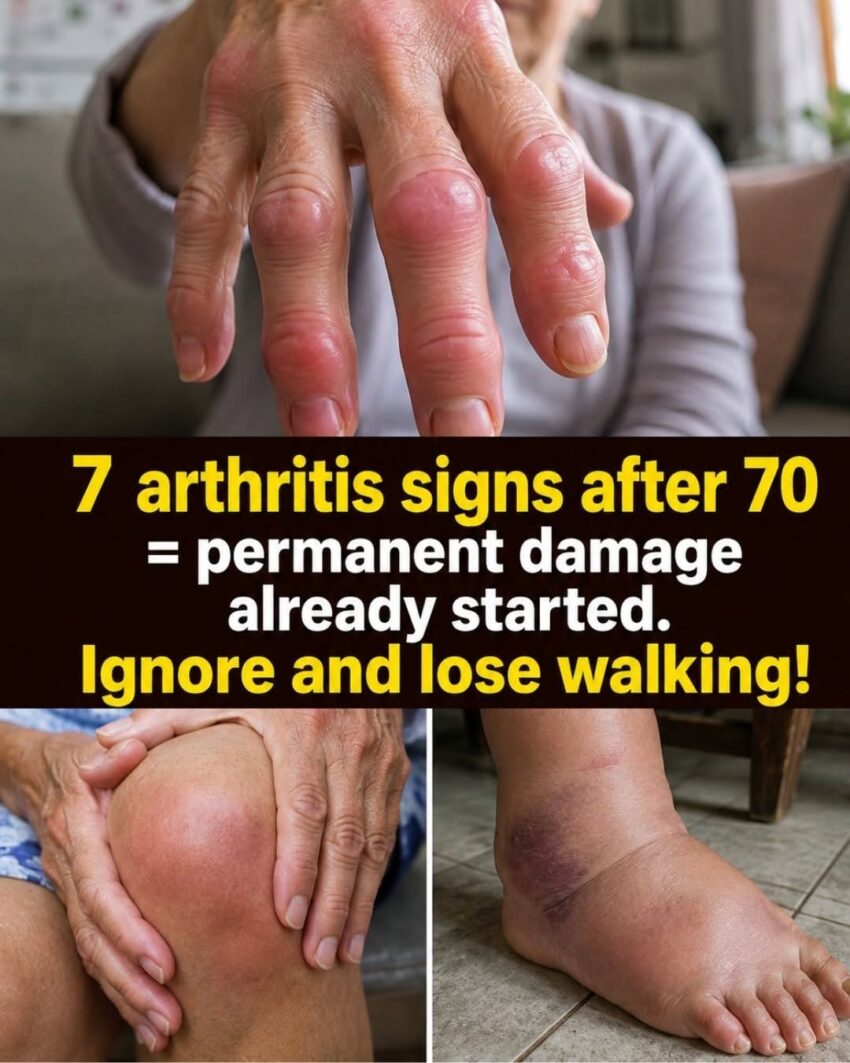
Getting older does not automatically mean you have to live with constant joint pain, stiffness, or reduced mobility. Arthritis becomes more common with age, but significant changes in your joints should not simply be dismissed as “part of getting older.”
Recognising warning signs early can make it easier to identify the type of arthritis, manage pain, protect mobility, and address conditions that may cause permanent joint damage if left untreated.
Importantly, arthritis does not mean you are destined to become disabled. Many people remain active and independent for years with appropriate treatment, exercise, weight management, physical therapy, medication when needed, and other supportive measures.
Here are seven signs worth discussing with a healthcare professional—especially after age 70.
1. Morning Stiffness That Lasts a Long Time
Some stiffness after sleeping or sitting is common, particularly with osteoarthritis. However, stiffness that lasts for a prolonged period after waking can sometimes indicate an inflammatory form of arthritis.
Pay attention to:
- How long the stiffness lasts
- Whether several joints are affected
- Whether symptoms improve as you begin moving
- Whether the stiffness is becoming more frequent or severe
Keeping a simple symptom diary can help your healthcare provider identify patterns.
2. Persistent Joint Swelling
Swollen joints shouldn’t automatically be blamed on ageing.
Inflammation can cause a joint to become visibly swollen, warm, tender, or difficult to move. Persistent swelling may occur with several forms of arthritis, including rheumatoid arthritis, gout, and osteoarthritis.
Sudden swelling—particularly if the joint is extremely painful, hot, or accompanied by fever—requires prompt medical evaluation because infection or another urgent condition can sometimes produce similar symptoms.
3. Pain That Is Getting Worse
Occasional aches after physical activity aren’t unusual. But progressively worsening pain deserves attention.
You may notice pain:
- While walking
- When climbing stairs
- When getting out of a chair
- During household activities
- At night
- Even while resting
Increasing pain can indicate that the underlying joint problem needs reassessment or that your current treatment isn’t providing adequate control.
4. Reduced Range of Motion
Difficulty fully bending, straightening, or rotating a joint can be an important warning sign.
For example, you might notice that you can no longer:
- Reach overhead comfortably
- Turn a door handle easily
- Bend your knee normally
- Grip objects securely
- Get up from a chair without assistance
Loss of mobility can gradually affect independence, so addressing it early is important.
5. New Difficulty Walking or Maintaining Balance
Joint pain can change the way you walk. You may begin favouring one leg, taking shorter steps, or avoiding certain movements.
Over time, these changes can affect balance and confidence.
If arthritis symptoms are making walking difficult, a healthcare professional or physical therapist can assess your movement and recommend exercises, assistive devices, footwear changes, or other strategies when appropriate.
A sudden inability to walk, sudden weakness, or sudden loss of balance is different and may require emergency medical attention.
6. Joint Pain Accompanied by Redness or Heat
A joint that becomes red, hot, swollen, and intensely painful deserves prompt medical assessment.
Although arthritis can cause inflammation, similar symptoms can occur with infections or gout. These conditions can require rapid treatment.
Don’t assume that a suddenly hot, painful joint is simply “old age.”
7. Pain or Stiffness That Interferes With Everyday Life
Perhaps the most important warning sign is when joint symptoms begin changing what you can do.
If pain or stiffness prevents you from:
- Dressing yourself
- Cooking
- Shopping
- Bathing
- Walking comfortably
- Sleeping well
- Socialising
- Enjoying hobbies
it’s time to discuss the problem with a healthcare professional.
Treatment isn’t only about reducing pain. Maintaining strength, flexibility, balance, and independence is an important part of healthy ageing.
What Can Happen If Arthritis Is Ignored?
The consequences depend heavily on the type of arthritis.
Osteoarthritis can progressively affect joint structure and function. Inflammatory conditions such as rheumatoid arthritis can cause joint damage when inflammation isn’t adequately controlled.
But ignoring symptoms does not mean that disability is inevitable.
Early assessment provides an opportunity to identify the cause and develop an appropriate management plan.
Arthritis Isn’t Just One Disease
The word “arthritis” describes a large group of conditions rather than one single disease.
Common types include:
Osteoarthritis
Often associated with gradual wear-related changes in joints, osteoarthritis commonly affects the knees, hips, hands, and spine.
Rheumatoid Arthritis
An autoimmune disease that can cause inflammation in multiple joints and may affect the rest of the body.
Gout
Caused by the buildup of uric acid crystals, gout can produce sudden episodes of severe pain, swelling, redness, and warmth, often beginning in a single joint.
Psoriatic Arthritis
This inflammatory arthritis can occur in people with psoriasis and may affect joints, fingers, toes, or the spine.
Because treatments differ, identifying the specific cause matters.
What Can You Do to Protect Your Mobility?
There is no single “complete method” that works for everyone, but several evidence-based habits can support joint health.
Keep Moving
Appropriate physical activity helps maintain muscle strength, joint mobility, balance, and cardiovascular health.
Walking, swimming, cycling, strength exercises, and flexibility work can all be useful depending on your abilities and medical conditions.
If exercise causes significant pain, ask a healthcare professional or physical therapist for guidance rather than becoming completely inactive.
Maintain a Healthy Weight
If you’re carrying excess weight, even modest weight reduction can reduce stress on weight-bearing joints such as the knees.
A sustainable approach is generally more useful than restrictive diets or rapid weight-loss programs.
Don’t Ignore Falls or Injuries
A fall or injury can aggravate an already painful joint or cause a fracture.
Persistent pain after an injury should be assessed, particularly in older adults.
Follow Your Treatment Plan
Depending on the diagnosis, treatment may include physical therapy, exercise, medications, injections, assistive devices, or—in selected cases—surgery.
Your treatment should be tailored to your health, symptoms, medications, and goals.
When to Seek Urgent Medical Care
Don’t wait for a routine appointment if you have a joint that suddenly becomes extremely painful, swollen, red, and hot, particularly if you also have a fever.
Seek emergency care for sudden symptoms such as:
- Weakness or numbness on one side of the body
- Difficulty speaking
- Sudden severe loss of balance
- Chest pain
- Severe shortness of breath
- A major injury or suspected fracture
These symptoms may have nothing to do with arthritis and can signal a medical emergency.
Final Thoughts
Joint pain after 70 deserves attention, but it doesn’t have to mean losing your independence.
Persistent stiffness, swelling, worsening pain, reduced movement, walking difficulties, hot or red joints, and interference with daily activities are all reasons to speak with a healthcare professional. The sooner the underlying cause is identified, the sooner an appropriate plan can be considered.
Most importantly, don’t let frightening headlines convince you that arthritis automatically leads to becoming “crippled.” Many older adults successfully manage arthritis and remain active, mobile, and independent.
Your joints may change with age, but pain and loss of function are not symptoms you simply have to accept without help.