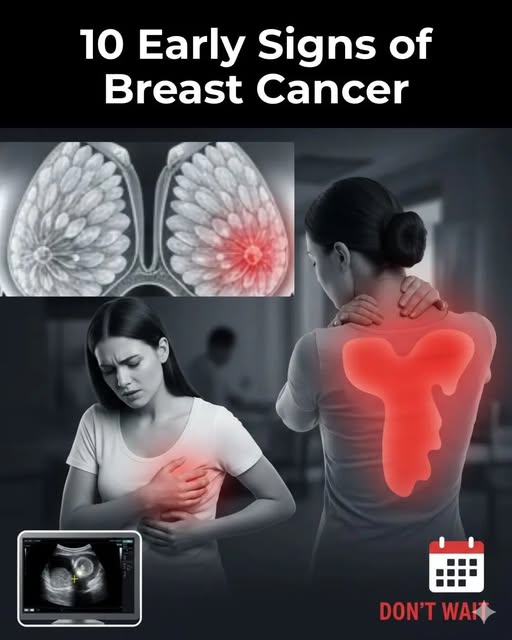
Learn 10 possible warning signs of breast cancer, including a new lump, skin changes, nipple discharge, and changes in breast shape. Discover when a breast change should be checked by a healthcare professional.
Breast cancer is one of the most common cancers affecting women, and recognizing changes in the breasts can help people seek medical attention when something unusual appears.
However, it’s important to remember that most breast changes are not caused by cancer. Breasts naturally change with age, hormonal fluctuations, pregnancy, breastfeeding, menstrual cycles, and other benign conditions.
The key is to become familiar with what is normal for you and have new or persistent changes evaluated by a healthcare professional.
Here are 10 breast changes that deserve attention.
1. A New Lump or Thickened Area
A new lump in the breast or underarm is one of the best-known warning signs of breast cancer.
A cancerous lump may feel:
- Firm or hard
- Different from the surrounding tissue
- Irregular in shape
- Relatively fixed rather than easily movable
But breast lumps can have many non-cancerous causes, including cysts and fibroadenomas.
Don’t try to diagnose a lump by touch alone. A new lump should be evaluated by a healthcare professional.
2. A Change in Breast Size or Shape
Pay attention if one breast suddenly looks noticeably different from the other or if the overall shape of a breast changes without an obvious explanation.
Breast asymmetry is common and often completely normal. What matters is a new or unusual change that persists.
3. Skin Dimpling or Indentation
Changes in the skin over the breast can sometimes be a warning sign.
You might notice an area that appears:
- Dimpled
- Pulled inward
- Puckered
- Tethered to deeper tissue
Some people describe the skin as resembling the surface of an orange, known as peau d’orange.
These changes don’t automatically mean cancer, but they should be checked.
4. Changes in the Nipple
A nipple that suddenly changes position or becomes pulled inward may warrant medical evaluation.
Some people naturally have inverted nipples, and this can be completely normal. The concern is particularly when a previously normal nipple becomes newly inverted or changes in appearance.
Other nipple changes can include persistent scaling, crusting, redness, or irritation.
5. Unusual Nipple Discharge
Nipple discharge can happen for many reasons and isn’t always related to cancer.
However, spontaneous discharge, particularly bloody discharge or discharge from only one breast, should be evaluated.
Don’t squeeze the nipple repeatedly to check for discharge, as manipulation itself can sometimes produce discharge.
6. Persistent Breast or Nipple Pain
Breast pain is common and is often associated with hormonal changes, menstrual cycles, pregnancy, breastfeeding, medications, or benign breast conditions.
Pain alone is not usually the most typical presentation of breast cancer.
Nevertheless, persistent, localized, unexplained pain or a painful area associated with another breast change deserves medical attention.
7. Redness or Unusual Skin Changes
Persistent redness, swelling, warmth, thickening, or changes in the texture of breast skin can have several causes.
One uncommon but serious form of breast cancer called inflammatory breast cancer can cause rapid breast swelling, redness, warmth, heaviness, and skin changes.
Because these symptoms can resemble an infection, they should be assessed rather than self-diagnosed.
8. Swelling in the Armpit
Breast tissue extends toward the armpit, and lymph nodes are located there.
A new lump or persistent swelling in the armpit can sometimes be associated with breast cancer, although swollen lymph nodes are much more commonly caused by infections or other conditions.
If an unexplained lump persists, have it examined.
9. A Change in Breast Texture
Sometimes a person notices that part of the breast feels different from the surrounding tissue.
It may feel:
- Thicker
- Firmer
- Harder
- Swollen
- Unusually dense
Normal breast tissue can naturally feel lumpy or uneven, particularly around menstruation. The important thing is to notice a new or persistent change from your usual breast texture.
10. A Wound or Rash That Doesn’t Heal
Persistent changes around the nipple or areola—including scaling, crusting, redness, or a sore that doesn’t heal—should be checked.
A rare type of breast cancer called Paget disease of the breast can affect the nipple and surrounding skin and may resemble eczema.
A persistent nipple or areola skin change shouldn’t simply be treated repeatedly with creams without determining its cause.
What Should You Do If You Notice a Change?
Don’t panic.
A breast change does not automatically mean you have breast cancer. Many breast symptoms are caused by harmless conditions.
Instead, make an appointment with a doctor or other qualified healthcare professional, particularly if the change is new, persistent, or getting worse.
Depending on your age, symptoms, personal history, and examination, your healthcare professional may recommend imaging such as a mammogram or ultrasound and, when appropriate, other testing.
Don’t Wait for Pain
One important misconception is that breast cancer must hurt.
Breast cancer can occur without pain, which is why waiting for a painful symptom isn’t a reliable way to decide whether something needs evaluation.
Instead, pay attention to changes in appearance, texture, the nipple, the skin, and the presence of new lumps.
Breast Self-Awareness Matters
You don’t need to constantly examine your breasts or perform complicated checks every day.
A useful approach is simply to become familiar with how your breasts normally look and feel.
That makes it easier to notice something genuinely different.
You should also follow recommended breast cancer screening guidelines for your age and individual risk factors. Screening recommendations can vary depending on where you live and your personal or family history.
When to Seek Medical Attention
Make an appointment if you notice a new breast lump, persistent skin or nipple change, unexplained swelling, or unusual nipple discharge.
Seek prompt medical attention for rapidly developing breast swelling, significant redness or warmth, a rapidly changing breast appearance, or other concerning symptoms.
The Bottom Line
There is no single symptom that proves someone has breast cancer. Many breast changes are benign.
But new, unusual, or persistent changes should not be ignored.
Knowing what is normal for your breasts and seeking professional evaluation when something changes can help ensure that potentially important problems are investigated as early as possible.