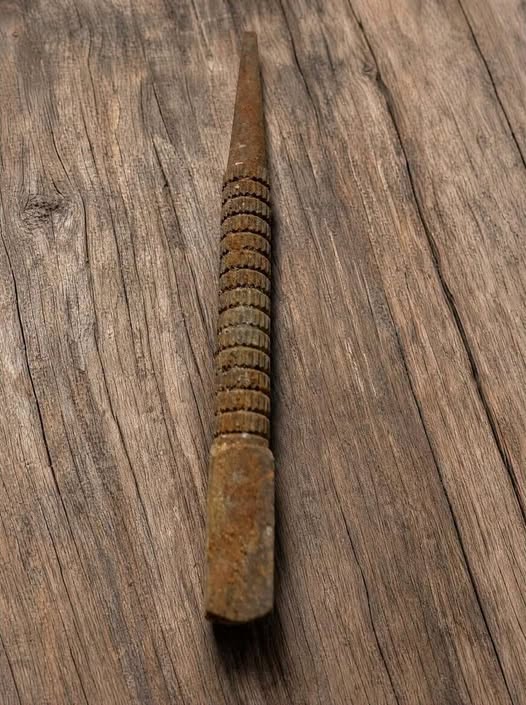
Found a strange object on a quiet country road? Learn how to safely examine an unidentified roadside discovery and what clues can help determine what it might be.
I was driving along a quiet country road yesterday when I noticed something unusual lying near the roadside.
At first, I couldn’t figure out what I was looking at. It was one of those discoveries that makes you slow down, take a second look, and wonder how it ended up there.
Naturally, the first question was: What is this?
Without a clear photograph, it’s impossible to identify an unfamiliar object with certainty, but there are several clues that can help narrow down the possibilities.
Look at Where You Found It
The location can provide useful information.
Was it:
- In the middle of the road?
- Along the grassy shoulder?
- Near a field?
- Close to a stream or ditch?
- Under a tree?
- Near a farm or wooded area?
Something found beside a field could be agricultural equipment or plant material, while something near woodland could be part of a tree, an animal, or a naturally occurring object.
Pay Attention to Its Appearance
Before touching an unfamiliar object, look closely at its shape and surroundings.
Useful details include its:
- Size
- Color
- Texture
- Shape
- Material
- Odor
- Whether it appears alive
- Whether there are similar objects nearby
Taking photographs from several angles can make identification much easier.
Don’t Touch Something You Can’t Identify
Most strange objects found outdoors are harmless, but you shouldn’t assume that every unfamiliar item is safe to handle.
Keep children and pets away, particularly if the object appears to be:
- A dead animal
- A chemical container
- Sharp or broken
- Leaking
- Unusually colored
- Electrical
- Potentially contaminated
If there is any reason to suspect a hazardous substance or dangerous material, leave it alone and contact the appropriate local authorities.
Could Nature Be Responsible?
Sometimes nature creates objects that look surprisingly strange.
Tree roots, fungi, seed pods, animal remains, feathers, stones, shells, and pieces of dried vegetation can all take unusual shapes.
Weather can also transform natural materials. Rain, wind, mud, and sunlight can change their appearance and make them difficult to recognize.
Could It Have Fallen From a Vehicle?
Roadside discoveries can also be ordinary objects that fell from cars, trucks, agricultural machinery, or trailers.
Pieces of plastic, rubber, metal, tools, packaging, and vehicle components can end up far from where they originated.
If the object looks manufactured, check whether it has markings, numbers, logos, or distinctive shapes that could help identify it.
The Best Way to Identify It
If you’re trying to solve a mystery like this, a clear photograph is usually the most useful clue.
Take one picture showing the entire object and another close-up showing its texture and details. Include something familiar nearby for scale, such as a coin or ruler, but don’t place anything next to it if doing so requires touching a potentially dangerous object.
Then note exactly where you found it and whether it was moving, damaged, wet, or giving off an unusual smell.
The Bottom Line
A mysterious roadside discovery can be anything from a completely ordinary piece of debris to an interesting natural object.
The safest approach is to observe first, photograph it, and avoid touching anything you cannot identify.
If you have a picture of the object, that’s the best place to start. The shape, texture, size, and location may provide enough clues to work out what you’ve found.