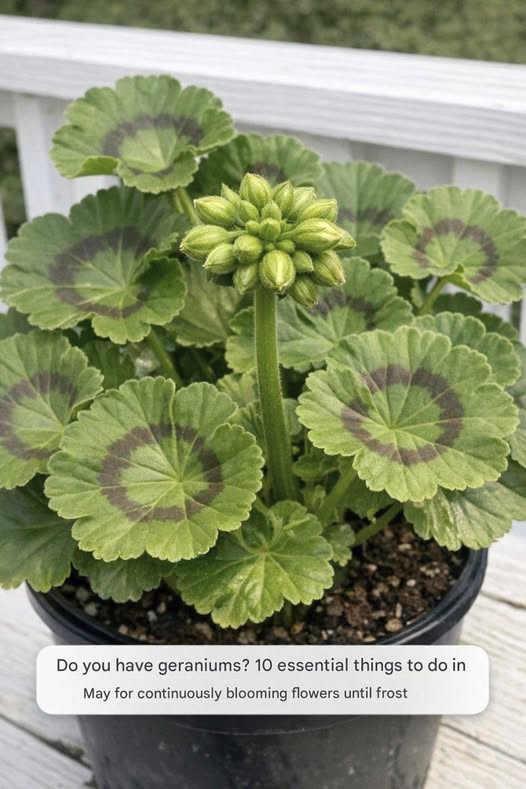
Have geraniums? Follow these 10 essential May care tips for pruning, watering, feeding, sunlight, and pest control to encourage healthy growth and abundant blooms until frost.
Geraniums are among the most rewarding flowering plants for containers, balconies, window boxes, and garden beds. With the right care in May, you can encourage strong growth and a long season of colorful blooms.
The exact timing depends on your climate and whether you grow zonal, ivy, or scented geraniums, but these 10 spring-care steps are a great starting point.
1. Give Them Plenty of Sunlight
Geraniums generally perform best with plenty of bright light.
Aim for around 6 or more hours of sunlight a day, while watching the plants during particularly hot weather.
If the stems become long and weak and flowering decreases, insufficient light may be part of the problem.
2. Remove Dead Flowers Regularly
One of the easiest ways to keep geraniums looking attractive is to deadhead spent blooms.
Remove the entire faded flower cluster and its stalk rather than simply pulling off the petals.
Regular deadheading encourages the plant to put energy into new growth and flowers instead of seed production.
3. Pinch Back Leggy Growth
If your geranium has become tall, thin, or sparse, May is a good time to encourage bushier growth.
Pinch or trim excessively long shoots just above a healthy leaf node.
This encourages branching and can create a fuller-looking plant with more potential flowering points.
Don’t remove large amounts of healthy growth at once. Gradual trimming is usually less stressful for the plant.
4. Feed Them Regularly
Geraniums growing vigorously in containers can use up available nutrients relatively quickly.
A balanced or flowering-plant fertilizer used according to its label can support continued growth and flowering.
Avoid assuming that more fertilizer means more flowers. Excess fertilizer can encourage lush foliage while creating other problems.
Always follow the product’s recommended dilution and frequency.
5. Water Thoroughly, but Don’t Keep Them Soggy
Geraniums prefer consistent moisture but generally don’t like sitting in constantly wet soil.
Check the soil before watering.
When the upper layer feels dry, water thoroughly until some moisture drains from the container.
Then allow excess water to drain away.
A pot without adequate drainage can create conditions that encourage root problems.
6. Check the Roots and Soil
If a plant looks weak despite receiving adequate light and water, inspect the growing conditions.
Container geraniums benefit from a well-draining potting mix.
If the soil has become heavily compacted or stays wet for a long time, repotting may help.
Choose a container with drainage holes and avoid placing a pot inside a decorative cover where excess water can collect.
7. Watch for Pests
Spring growth can attract pests such as aphids, whiteflies, and spider mites.
Inspect the:
- Undersides of leaves
- New shoots
- Flower buds
- Stems
Look for sticky residue, distorted leaves, webbing, or clusters of tiny insects.
For a small infestation, physically removing pests or washing foliage with water may help. If you use an insect-control product, choose one appropriate for the plant and follow the label carefully.
8. Provide Good Air Circulation
Avoid packing geranium containers too tightly together.
Good airflow helps foliage dry more quickly after watering or rain and can reduce conditions favorable to certain fungal problems.
Remove damaged or diseased leaves promptly and avoid routinely wetting the foliage when watering.
9. Protect Them From Late Cold Weather
Geraniums are generally frost-sensitive.
If your area still experiences occasional cold nights in May, keep an eye on the forecast.
Container plants are easier to protect because you can move them indoors or into a sheltered location when temperatures threaten.
Don’t rush tender plants outdoors permanently until the risk of frost has passed for your area.
10. Keep Harvesting Flowers and Enjoy the Growth
Don’t be afraid to cut flowers for indoor arrangements.
Regularly removing faded blooms and lightly trimming overly long shoots can help maintain a neat, productive plant.
With adequate sunlight, appropriate watering, nutrition, and regular maintenance, geraniums can continue producing flowers for months.
A Simple May Geranium Routine
For an easy routine, check your geraniums once or twice a week.
Look at the soil, inspect the leaves for pests, remove faded flowers, and check for damaged growth.
Then adjust watering and feeding according to the plant’s actual needs rather than following a rigid schedule.
Common Geranium Mistakes to Avoid
Overwatering: Constantly wet soil can damage roots.
Too little light: Insufficient sunlight can lead to weak, stretched growth and fewer flowers.
Neglecting deadheading: Old flower clusters can make plants look untidy and may reduce their flowering potential.
Overfertilizing: More fertilizer isn’t automatically better.
Ignoring pests: Small infestations are generally easier to manage before they become widespread.
Leaving plants exposed to frost: Geraniums can be damaged or killed by freezing temperatures.
Final Thoughts
May is an excellent time to give geraniums the attention they need for a long flowering season. Sunlight, proper watering, regular deadheading, occasional feeding, pruning, good drainage, pest monitoring, and protection from cold can all contribute to healthier, more productive plants.
There is no single trick that guarantees uninterrupted flowering until frost, but consistent care can make a dramatic difference in how well your geraniums perform throughout the growing season.