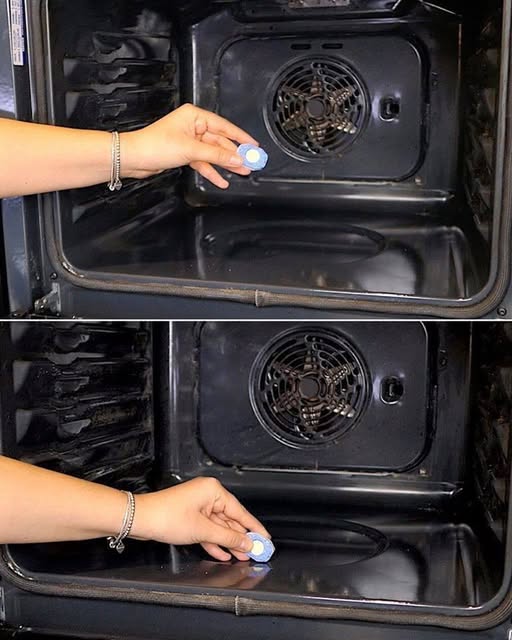
Discover how a dishwasher tablet can help loosen stubborn oven grease and baked-on residue. Learn the safest way to use this simple oven-cleaning trick without damaging your appliance.
All You Need Is a Dishwasher Tablet! The Oven Will Be Like New Again
Cleaning an oven can feel like one of those household jobs that gets postponed again and again. Grease splatters, baked-on food, and sticky residue can become surprisingly difficult to remove—especially when they’ve been sitting there for weeks.
One popular cleaning trick involves using a dishwasher tablet and warm water to help soften stubborn grime.
It can work well for certain types of residue, but there’s an important point: dishwasher tablets contain concentrated cleaning chemicals and aren’t designed specifically for every oven surface. Used incorrectly, they can irritate skin, damage certain finishes, or leave residue behind.
Here’s a safer way to approach the trick.
What You’ll Need
- 1 dishwasher tablet
- A bowl or heat-resistant container
- Very warm water
- Rubber cleaning gloves
- A soft sponge or microfiber cloth
- An old towel or cloth
Avoid mixing the dishwasher tablet with bleach, ammonia, vinegar, or other cleaning chemicals.
Step 1: Make Sure the Oven Is Off
Turn the oven off completely and allow it to cool.
Never begin cleaning while the heating elements are hot. You don’t want to burn yourself or cause cleaning chemicals to react with a hot surface.
Step 2: Dissolve the Dishwasher Tablet
Place one dishwasher tablet in a container of very warm—not boiling—water.
Allow it to soften and dissolve.
If you’re using a powder or gel tablet, follow the product’s instructions rather than assuming it should be dissolved in water.
Step 3: Protect Your Hands
Put on rubber gloves before handling the solution.
Dishwasher detergents are formulated to break down food and grease, but that also means they can be irritating to skin and eyes.
Keep the solution away from children and pets.
Step 4: Apply It to the Grimy Areas
Dip a sponge or microfiber cloth into the solution and gently work it over greasy areas.
Pay particular attention to:
- The oven floor
- Grease-splattered walls
- Areas around the door
- Baked-on food residue
Don’t scrub aggressively at first.
The goal is to soften the buildup before removing it.
Step 5: Let the Moisture Do the Work
For stubborn residue, place a damp cloth over the affected area for several minutes.
This gives the warm solution time to loosen the grease.
You may find that old residue becomes much easier to wipe away afterward.
Step 6: Wipe Everything Thoroughly
Use a clean damp cloth to remove the loosened grime.
Then wipe the surfaces several more times with fresh water to remove detergent residue.
This step is particularly important because you don’t want cleaning chemicals remaining inside an oven where they could potentially come into contact with food or produce fumes when the oven is heated.
Step 7: Dry the Oven
Finish with a clean, dry microfiber cloth.
Leave the oven door open for a while so the interior can air-dry completely before using the appliance again.
What About Putting the Tablet Directly on the Oven?
You’ll sometimes see cleaning hacks recommending rubbing a dishwasher tablet directly over the oven surface.
It’s better not to do this blindly.
Dishwasher tablets can be abrasive or highly concentrated, and some oven surfaces have special coatings that can be damaged by inappropriate cleaners.
Before using any dishwasher detergent, check your oven manufacturer’s cleaning instructions.
Don’t Use This Trick on Every Oven Surface
Extra caution is needed with:
- Self-cleaning oven interiors
- Catalytic liners
- Special enamel coatings
- Aluminum surfaces
- Heating elements
- Door seals
- Electrical components
Never scrub heating elements or deliberately soak electrical parts.
Also avoid getting cleaning solution into vents, openings, fans, or control panels.
The Oven Door Needs Special Attention
The glass door can accumulate layers of grease that make the oven look dirty even after you’ve cleaned the interior.
Use a damp cloth and an appropriate oven-safe cleaner for the glass.
Avoid flooding the edges of the door or allowing liquid to seep between glass panels.
If grease has collected inside a double-pane oven door, don’t dismantle the door unless the manufacturer’s instructions specifically explain how to do it safely.
Why Does a Dishwasher Tablet Work on Grease?
Dishwasher detergents are designed to break down food residues and grease during the dishwashing process.
They commonly contain ingredients that help:
- Break down fats
- Loosen food residue
- Suspend grime in water
- Remove stubborn deposits
That’s why people sometimes find them useful for household cleaning.
But effective doesn’t automatically mean universally safe. A product designed for dishes isn’t necessarily suitable for every oven surface.
A Better Rule: Check the Manufacturer’s Instructions
Before trying a viral cleaning hack, look at your oven’s manual.
Some modern ovens have specialized interiors that should only be cleaned using particular methods.
If your oven has a self-cleaning function, for example, the manufacturer may specifically advise against using certain chemical cleaners.
How Often Should You Clean Your Oven?
There’s no single schedule that works for everyone.
If you cook frequently, wipe up fresh spills once the oven has cooled. A deeper cleaning may be needed every few months.
If you regularly roast greasy foods or bake foods that spill over, you may need to clean it more often.
The easiest oven to clean is usually the one that doesn’t have months of accumulated grease.
Final Thoughts
A dishwasher tablet can be a surprisingly effective grease-loosening household hack, but it isn’t magic—and it shouldn’t be treated as a universal oven cleaner.
The safest approach is simple:
Check the oven manual → use gloves → avoid heating elements and sensitive surfaces → loosen the grime → wipe thoroughly → rinse away all detergent residue.
With the right technique, even a heavily greasy oven can look dramatically cleaner without hours of exhausting scrubbing.